November 2025

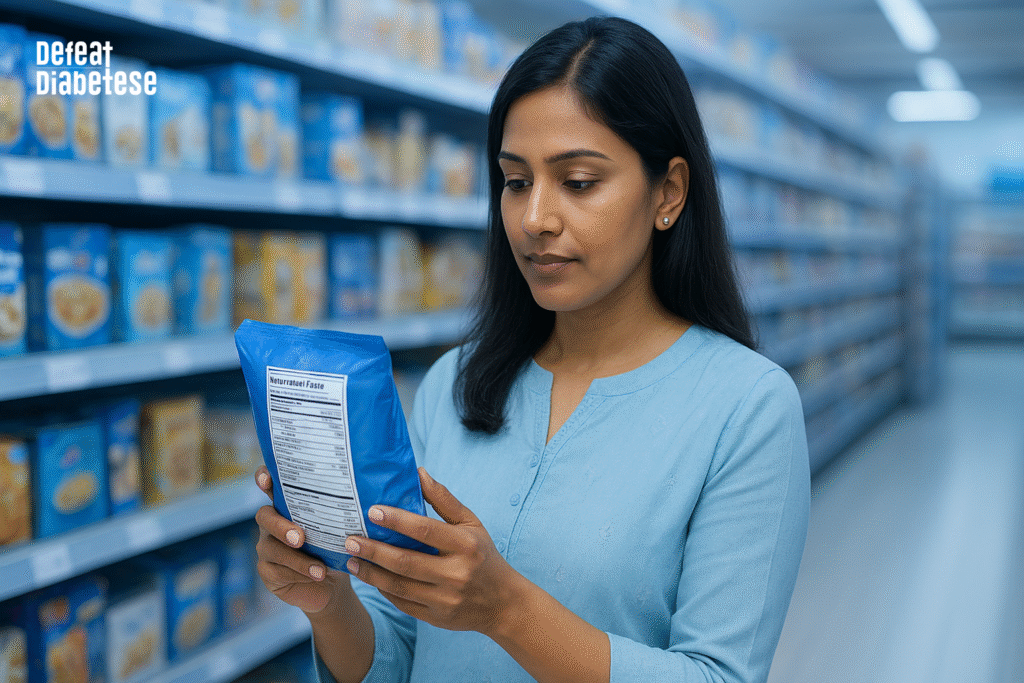
Indian woman in blue top reading a food label carefully in a supermarket aisle, promoting diabetes awareness and mindful eating – Defeat Diabetese.

Hidden Sugars in Indian Packaged Foods

INTRODUCTION Managing diabetes isn’t just about cutting down sugar  it’s about understanding what’s really inside your food. In today’s fast-paced world, we often pick packaged foods without realizing they can spike blood sugar faster than we expect. If you live in India, where even “healthy” products are often loaded with hidden sugars, refined carbs, and sodium, learning to read food labels is not a choice  it’s a superpower for diabetics. Also read: Diabetes in India – The Silent Epidemic You Can Control 1. Check the Serving Size First Before you even look at calories or sugar, always check the serving size. Food brands often list nutrition for just one serving, while the packet may contain two or more. For example, a 200ml soft drink bottle may list “per 100ml”  meaning if you drink the whole thing, you’re actually consuming double the sugar and calories. Tip: Multiply the nutrition values by the total servings you consume. 2. Spot the Hidden Sugars in Indian Packaged Foods  Many Indian brands hide sugar behind fancy names like: Sucrose, glucose, maltose, dextrose Jaggery (gur) or cane juice Corn syrup, honey, fruit concentrate Maltodextrin Even “no added sugar” products may contain artificial sweeteners or refined carbs that still affect your blood sugar.  Learn more: Are Artificial Sweeteners Safe for Diabetics?  Tip: Always look for “Total Carbohydrates”  not just sugar  since carbs are also broken down into glucose. 3. Understand Total Carbohydrates vs. Fiber When reading the “Nutrition Facts” section: Total Carbohydrates = Sugars + Starches + Fiber Dietary Fiber slows down glucose absorption Sugars and Refined starches raise blood sugar quickly Choose foods that have:  More fiber (3g or above per serving)  Less added sugar (below 5g per serving) A diet rich in fiber can help manage blood sugar and even support natural diabetes reversal.  Read more: Reverse Type 2 Diabetes Naturally 4. Don’t Ignore Sodium and Fat Content People with diabetes are at higher risk of heart disease, so keeping an eye on sodium and bad fats is essential. Avoid foods with: Trans fats or hydrogenated oils Palm oil as the main ingredient Sodium above 300mg per serving Look for heart-healthy options like olive oil, flaxseed oil, or sunflower oil. 5. Be Careful With “Sugar-Free” and “Low-Fat” Labels Many “sugar-free” biscuits, beverages, and yogurts in India are loaded with refined carbs or artificial sweeteners that may cause cravings and affect insulin sensitivity. Also, “low-fat” doesn’t always mean “healthy.” These products often compensate with extra sugar or starch for taste.  Learn the truth: Are Artificial Sweeteners Safe for Diabetics? 6. Check the Ingredients List Not Just the Nutrition Table The ingredients list tells you what’s really inside. They’re listed in descending order by weight, meaning the first few are the most used. If the first three ingredients include sugar, refined flour (maida), or oil, it’s not a diabetic-friendly product  no matter what the marketing says. Instead, look for natural ingredients like: Whole grains (oats, millets, brown rice) Seeds (chia, flax, sunflower) Natural fibers 7. Watch Out for Emotional Triggers While Shopping Many people buy “comfort foods” when they feel stressed or tired  a common emotional response for diabetics. But remember, emotional eating can sabotage your blood sugar goals.  Read this: The Emotional Effects of Diabetes  and How to Cope Better Try mindful eating  pause before buying or eating, and ask yourself: “Will this food help me control my diabetes or make it worse?”   8. Choose Locally Made, Less Processed Foods Indian kitchens have powerful natural ingredients  millets, pulses, lentils, vegetables, and spices  that can help regulate blood sugar naturally. Instead of packaged snacks, opt for: Homemade poha or upma made with millets Sprouted moong chaat Buttermilk with methi seeds These are healthier and closer to what your body truly needs. Key Takeaways Always read the serving size carefully Spot hidden sugars in ingredient lists Prefer high-fiber, low-carb foods Avoid trans fats and excess sodium Don’t trust “sugar-free” marketing blindly Rely on home-cooked and whole foods whenever possible Conclusion Understanding food labels isn’t just a diet skill  it’s an act of self-care and empowerment. Every time you check a label, you’re taking a step closer to defeating diabetes naturally.   Small daily changes in awareness can lead to big improvements in your blood sugar control, your energy, and your overall health. Frequently Asked Questions What should I check first when reading a food label? Start with the serving size it tells you how much the nutrition facts apply to. Many people eat more than the listed serving, which means they consume more calories, sugar, and fat than they realize. What are “hidden sugars” in packaged foods? Hidden sugars appear under many names like maltose, dextrose, corn syrup, fructose, jaggery, or honey. Even foods that don’t taste sweet like sauces, bread, or cereals can have added sugars. What should I look for on food labels if I have diabetes? When reading food labels, focus on total carbohydrates, added sugars, fiber content, and serving size. These directly affect your blood sugar levels. Choose foods that are high in fiber and low in added sugar for better diabetes management. Is it okay to eat packaged snacks if I have diabetes? Yes, but choose wisely. Read the labels carefully and pick low-sugar, high-fiber, and low-fat options. Avoid items that list sugar, glucose syrup, or refined flour among the top ingredients. Can emotional eating affect my food choices as a diabetic? Absolutely. Stress or emotions can lead to impulsive eating. Learn how emotions affect your blood sugar in this article Emotional Effects of Diabetes Share: Tags: artificial sweeteners for diabetics, avoid hidden sugars, carb counting for diabetes, diabetes awareness India, diabetes diet tips, diabetes-friendly groceries, diabetic food shopping guide, diabetic lifestyle tips, emotional effects of diabetes, food label guide for diabetics, healthy choices for diabetics, healthy eating diabetes, healthy Indian food for diabetics, hidden sugar names, hidden sugars in food, how to read nutrition labels diabetes, Indian packaged food diabetes, manage blood sugar India, nutrition facts for diabetics, reading food labels diabetes, Reverse

Hidden Sugars in Indian Packaged Foods Read More »
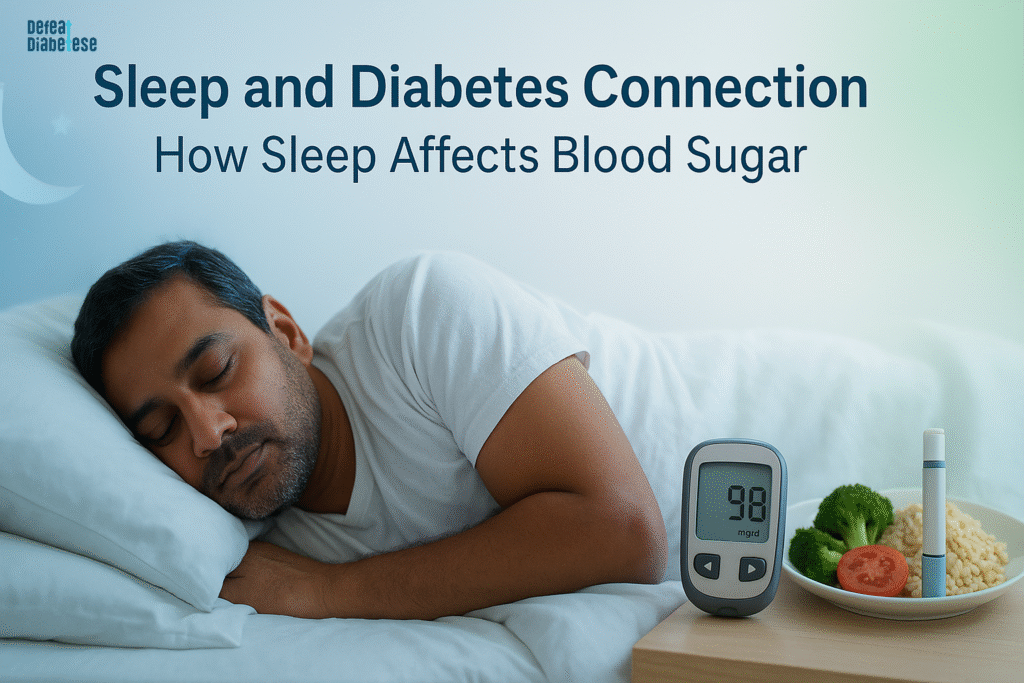
Indian man sleeping peacefully beside a glucose meter showing healthy blood sugar levels, symbolizing the connection between good sleep and diabetes control.

Sleep and Diabetes Connection

INTRODUCTION Did you know that poor sleep can directly affect your blood sugar levels? In India, where more than 101 million people are living with diabetes, sleep problems are becoming a silent risk factor that most ignore. Studies show that both too little and poor-quality sleep can increase the risk of developing type 2 diabetes and make diabetes management more difficult for those already diagnosed. Let’s understand how your sleep habits and diabetes are connected  and how you can take steps to improve both. The Science Behind Sleep and Blood Sugar When you sleep, your body restores energy, balances hormones, and regulates blood sugar. Lack of sleep disturbs this natural rhythm and increases levels of stress hormones like cortisol, which can raise blood glucose. Poor sleep also reduces the body’s sensitivity to insulin  the hormone responsible for controlling blood sugar. This means your body has to work harder to maintain balance, eventually leading to insulin resistance. Key takeaway: Even one or two nights of poor sleep can temporarily raise blood sugar levels  imagine what years of inadequate sleep can do! Common Sleep Problems in People with Diabetes People with diabetes often face specific sleep challenges, such as: Frequent urination (nocturia) – High blood sugar causes the kidneys to work overtime, leading to disturbed sleep. Sleep apnea – Overweight or obese individuals with type 2 diabetes are more likely to suffer from obstructive sleep apnea (OSA). Restless legs syndrome (RLS) – A tingling or crawling sensation in the legs can prevent restful sleep. Neuropathy pain – Nerve damage from uncontrolled diabetes can cause discomfort that interferes with deep sleep. If you’re facing any of these issues, it’s essential to talk to a diabetes specialist or a sleep consultant. How Poor Sleep Increases Diabetes Risk Here’s how inadequate sleep may lead to diabetes or worsen existing diabetes:               ·         Raises insulin resistance  making it harder for your body to manage sugar levels.               ·         Increases appetite hormones (ghrelin) and decreases satiety hormones (leptin), causing overeating.               ·         Triggers stress responses that raise blood pressure and glucose levels.               ·         Reduces energy and motivation to exercise, worsening weight gain and insulin resistance.   Related Read: Emotional Effects of Diabetes  Understanding the Mind-Body Connection How to Improve Sleep for Better Blood Sugar Control Healthy sleep is not just about duration  it’s about quality. Here’s how you can       improve both: Maintain a consistent sleep schedul Go to bed and wake up at the same time every day to regulate your circadian rhythm. Avoid caffeine and heavy meals before bedtime These can elevate blood sugar and interfere with deep sleep. Practice relaxation techniques Try meditation, breathing exercises, or yoga before bed. Limit screen time Blue light exposure from phones and TVs reduces melatonin, a sleep hormone. Eat diabetes-friendly meals Choose low-GI foods to keep your glucose stable. 📖 Recommended: Glycemic Index for Diabetes  Eat Smart, Stay Balanced Consult your doctor If you suspect sleep apnea or chronic sleep disturbance, talk to a specialist. You can also book an online consultation with our diabetes experts at Defeat Diabetese Sleep and Diabetes Management The Holistic Approach Managing diabetes goes beyond diet and exercise. It’s about a holistic lifestyle  balancing your mind, body, and sleep. By improving your sleep hygiene, you can: Lower fasting glucose levels Improve insulin sensitivity Reduce cravings and stress Feel more energetic during the day Explore more: Reverse Type 2 Diabetes Naturally  A Complete Guide The Indian Perspective In India, irregular work hours, stress, and screen exposure are leading causes of poor sleep. Combined with increasing fast-food habits and sedentary lifestyles, the result is a rising diabetes epidemic. To reverse this trend, awareness and preventive lifestyle changes are crucial. Learn more about the national diabetes situation here:  Diabetes in India  Current Trends and Awareness Conclusion The Sleep and Diabetes Connection is more than just a lifestyle link it’s a vital part of your long-term diabetes management. Consistent, high-quality sleep helps your body use insulin effectively, keeps your blood sugar stable, and restores hormonal balance. Poor sleep, on the other hand, can silently raise your glucose levels and weaken your ability to manage diabetes naturally. By improving your sleep habits from creating a calm bedtime routine to eating balanced, low-GI meals you take a strong step toward reversing the impact of diabetes. Remember, sleep is not a luxury; it’s a powerful tool to control diabetes naturally. At Defeat Diabetese our mission is to help every individual in India understand the true importance of lifestyle choices like sleep, diet, and stress management. Together, let’s build healthier habits, spread awareness, and defeat diabetes one night of good sleep at a time. Frequently Asked Questions Can lack of sleep increase blood sugar levels? Yes. Poor or inadequate sleep increases stress hormones like cortisol, which can raise your blood sugar. Even a few nights of poor sleep can make your body more resistant to insulin, leading to higher glucose levels. How many hours of sleep should a diabetic person get? Most adults with diabetes should aim for 7 to 8 hours of quality sleep per night. Less than 6 hours or more than 9 hours of irregular sleep may affect blood sugar control and insulin sensitivity. Why do people with diabetes wke up frequently at night? Frequent urination (nocturia) is common when blood sugar is high. The kidneys try to remove excess glucose through urine, which can disturb sleep. It’s important to check your sugar levels if you notice this happening regularly. Does poor sleep cause type 2 diabetes? Yes. Long-term sleep deprivation can increase the risk of developing type 2 diabetes by affecting insulin resistance, appetite hormones, and stress levels. People who consistently sleep less than 6 hours are more likely to develop diabetes. How can I sleep better if I have diabetes? To improve your sleep: Maintain a fixed bedtime and

Sleep and Diabetes Connection Read More »

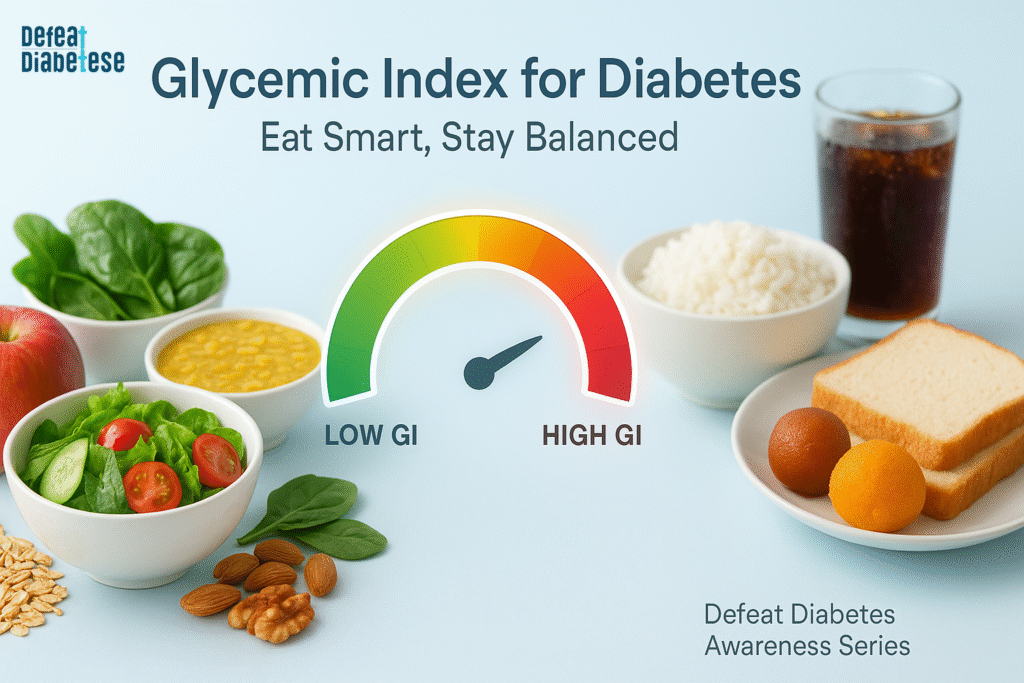
“Low and high glycemic index foods for diabetes awareness Indian foods like brown rice, dal, salad, apple, oats, almonds versus white rice, sweets, and bread shown with GI scale indicating healthy balance.”

Glycemic Index for Diabetes

INTRODUCTION In India, over 101 million people are living with diabetes, and the number continues to rise each year. But did you know that not just what you eat, but how fast your food raises blood sugar can make all the difference? This is where the Glycaemic Index (GI) comes in a powerful tool that helps you make smarter food choices and keep your blood sugar levels stable throughout the day. At Defeat Diabetes our mission is to spread awareness and guide people toward smarter, science-backed food choices that truly help control blood sugar levels. If you’ve already read our guide on Reversing Type 2 Diabetes Naturally, you’ll know that mindful eating plays a key role in managing diabetes. The Glycemic Index takes that idea even further. What Is the Glycemic Index (GI)? The Glycemic Index (GI) ranks foods on a scale of 0 to 100 based on how quickly they raise your blood glucose (sugar) levels after eating. Low GI (55 or less): Raises blood sugar slowly Medium GI (56–69): Moderate effect on blood sugar High GI (70+): Causes a quick spike in blood sugar So, a bowl of brown rice (GI 50) keeps you full longer and maintains steady energy, while white rice (GI 80+) can cause sudden sugar spikes. Why GI Matters for Diabetics? For people with diabetes, blood sugar management is a daily challenge. Choosing low GI foods can: Prevent sugar spikes and crashes Improve insulin sensitivity Support weight loss and reduce belly fat Lower risk of heart disease Help reverse Type 2 diabetes naturally  That’s why many diabetologists and nutritionists recommend including low GI foods in your everyday meals especially for Indians who rely heavily on carbohydrates. Examples of Low and High GI Foods Category Low GI Foods (Good Choices) High GI Foods (Limit/Avoid) Grains Brown rice, quinoa, whole wheat roti, oats White rice, maida, white bread Fruits Fruits Apple, guava, orange, berries Mango, banana, watermelon Vegetables Leafy greens, beans, carrots Potatoes, beets (in large portions Dairy Milk, curd (unsweetened) Flavoured yogurt, milkshakes Snacks Roasted chana, nuts, seeds Chips, biscuits, sweets Want to explore how Indian meals can be made diabetes-friendly? Check our post on Artificial Sweeteners: Are They Safe for Diabetics? How to Follow a Low GI Indian Diet        1  Replace white rice with brown rice or millets.   2  Add fiber to every meal salads, dal, or sprouts help slow down sugar                 absorption.        3  Pair carbs with protein  roti + paneer, idli + sambar, or dal + brown rice.        4  Avoid sugary drinks and refined snacks. 5  Choose whole fruits over juices. A low GI diet doesn’t mean you can’t enjoy your favorite foods  it’s about balance and smart combinations.  Pro Tip: Combine GI with Portion Control The Glycemic Load (GL)  which considers both quantity and quality of carbs  also matters. For example, watermelon has a high GI but low GL (since it has little actual sugar per serving). So, moderation and meal balance are key. Natural Ways to Support GI Balance Pairing your diet with lifestyle habits makes a huge impact. Here are some science-backed ways: Stay active: 30 minutes of walking daily improves insulin response. Stay hydrated and sleep 7–8 hours. Try a short Post-Diwali Diabetes Detox to reset your body. Consult a diabetes specialist for a personalized GI-based meal plan. At Defeat Diabetes, we offer online consultations with expert diabetologists and nutritionists who can guide you with customized meal and lifestyle plans. Conclusion Understanding the Glycemic Index empowers you to make smarter food choices every day. When combined with balanced nutrition, regular exercise, and medical guidance, it can significantly reduce your blood sugar levels and even help reverse Type 2 diabetes naturally. If you’re ready to take control of your health, book your online diabetes consultation today at DefeatDiabetese.com and start your journey toward a healthier, sugar-balanced life. Frequently Asked Questions What is the Glycemic Index and how does it affect diabetes? The Glycemic Index (GI) measures how quickly a food raises your blood sugar. For people with diabetes, choosing low GI foods helps prevent sugar spikes, improves insulin sensitivity, and supports long-term glucose control. What are the best low GI foods for diabetics in India? Some excellent low GI Indian foods include brown rice, millets, whole wheat roti, lentils, green moong, oats, apples, guavas, and curd. These foods release energy slowly and help maintain steady blood sugar levels. Is brown rice better than white rice for diabetics? Yes. Brown rice has a lower Glycemic Index (around 50) compared to white rice (around 80–90). This means brown rice causes a slower rise in blood sugar and keeps you full longer. Can low GI foods help in reversing Type 2 diabetes? Yes. A low GI diet, when combined with exercise and medical guidance, can help reverse insulin resistance and support Type 2 diabetes reversal naturally. Read more in our blog on Reversing Type 2 Diabetes Naturally How can I include low GI foods in my daily Indian diet? Start small: Swap white rice for millets or brown rice. Choose whole fruits over juices. Add dal, sprouts, or paneer to meals. Avoid sugary snacks and refined carbs. Share: Tags: chronic condition awareness, chronic illness support, coping with chronic illness, coping with diabetes, defeat diabetes, diabetes acceptance, diabetes and depression, diabetes anxiety, Diabetes Awareness, diabetes burnout, diabetes challenges, diabetes community, diabetes counseling, diabetes education, diabetes empowerment, diabetes family support, diabetes inspiration, diabetes lifestyle, diabetes mental health, diabetes mindfulness, diabetes motivation, diabetes motivation stories, diabetes positivity, diabetes self-care, diabetes stress relief, diabetes support system, emotional balance, emotional healing, emotional health, emotional well-being, holistic diabetes management, living healthy with diabetes, managing emotions diabetes, mental resilience, mental strength, mental wellness, mind body connection, psychological effects of diabetes, self compassion diabetes, stress and diabetes Related Posts Glycemic Index for Diabetes November 8, 2025/ INTRODUCTION In India, over 101 million people are living with diabetes, and the number continues to rise each

Glycemic Index for Diabetes Read More »

A smiling middle-aged Indian woman sits at a kitchen table holding a cup of tea and reading a sugar-free product label, with Stevia, Monk Fruit, and Sucralose packets on the table beside her. Overlay text reads “Are Artificial Sweeteners Safe for Diabetics? The Truth You Need to Know.”

Are Artificial Sweeteners Safe for Diabetics? | Defeat Diabetes

INTRODUCTION If you’ve been diagnosed with diabetes, you’ve probably wondered “Can I have something sweet without spiking my sugar?” That’s where artificial sweeteners come in. From Diet Coke to sugar-free desserts, they promise sweetness without the guilt.But are they safe for diabetics? Or is there more to the story? Let’s uncover the facts backed by research and simplified for everyday understanding. Related Read: Understanding Diabetes – Types, Causes, and Symptoms What Are Artificial Sweeteners? If you’re learning about sugar alternatives as part of your diabetes management, also exploreManaging Diabetes Confidently – A Complete Guide Artificial sweeteners are low- or zero-calorie sugar substitutes that provide sweetness without affecting blood sugar like regular sugar.    They’re commonly found in: Diet sodas (like Diet Coke) Sugar-free gums and candies Packaged foods labeled “diabetic-friendly”    The most common ones include: Aspartame (Equal, NutraSweet) Sucralose (Splenda) Stevia (natural plant-based) Saccharin Monk Fruit Extract (Luo Han Guo) a natural option gaining  popularity If you’re learning about sugar alternatives as part of your diabetes management, also explore Managing Diabetes Confidently – A Complete Guide How Do They Affect Blood Sugar Levels? Most artificial sweeteners have a Glycaemic Index (GI) of zero, meaning they don’t cause blood sugar spikes. That’s why they’re often recommended for people managing diabetes or prediabetes. However, not all sweeteners are the same and long-term use raises different health questions. Let’s look closer. Want to balance taste and health? Try these Delicious and Diabetes-Friendly Indian Recipes⚖ Sweetener Comparison Table   Sweetener Type Calories Glycemic Index (GI) Safe for Diabetics? Notes Stevia Natural (plant-based) 0 0 Yes May improve insulin sensitivity in some studies. Sucralose (Splenda) Artificial 0 0 Yes (in moderation) Stable when heated; may alter gut bacteria with overuse. Aspartame Artificial 4 per gram 0 Yes (moderation only) Avoid if you have PKU disorder; not heat-stable. The Rise of Monk Fruit The “New Natural Sweetener” Monk Fruit sweetener is extracted from a small green melon found in Southeast Asia.It’s 200 times sweeter than sugar, zero-calorie, and doesn’t raise blood sugar making it one of the best sweeteners for diabetics today. Why experts like it:    •100% natural (no artificial chemicals)    •Doesn’t affect insulin or glucose levels    •No known harmful side effects    •Adds a mild fruity sweetness without bitterness (unlike stevia) Monk Fruit is often blended with erythritol for baking or beverages.It’s slowly becoming a favourite among dietitians for those managing Type 2 Diabetes naturally. What About Diet Coke and “Sugar-Free” Drinks? Diet Coke and other sugar-free beverages use aspartame or sucralose to replace sugar.They don’t raise blood sugar immediately, but long-term use is still debated. Studies show that regular consumption of artificially sweetened drinks might:Disrupt gut microbiome balance Increase sweet cravings over timeBe linked (in some studies) to metabolic issues if overused. In simple terms:An occasional Diet Coke is fine. But relying on it daily isn’t the healthiest habit especially if you’re trying to reverse Type 2 Diabetes.Stick to water, herbal teas, lemon water, or infused water for everyday hydration.Detox naturally after festive eating: Post-Diwali Diabetes Detox The Mind-Body Connection Artificial sweeteners can trick the brain into expecting sugar, increasing cravings for sweets later. That’s why awareness not just substitution is key. It’s not only about what’s safe but also about what’s sustainable. Replacing sugar shouldn’t just be about calories; it should be about building mindful habits. Key Takeaways Artificial sweeteners can be safe when used in moderation. Natural options like Stevia and Monk Fruit are better long-term choices. Limit Diet Coke and packaged sugar-free foods they may still affect your metabolism. Focus on real food, hydration, and lifestyle awareness to manage diabetes effectively. CONCLUSION Sweetness doesn’t have to come with fear it just needs awareness. Knowing what’s behind your “sugar-free” label can help you make smarter, safer choices every day. Take Charge of Your Diabetes Journey If you’re unsure about what’s right for your body our expert diabetologists and nutritionists are here to help. Book your online diabetes consultation today at DefeatDiabetese and take the first step toward a healthier, more informed life. Frequently Asked Questions What are artificial sweeteners, and how do they work for diabetics? Artificial sweeteners are low- or zero-calorie sugar substitutes that provide sweetness without increasing blood glucose levels. They work by activating the same taste receptors as sugar but are not metabolized in the same way, making them safer options for people with diabetes. Are artificial sweeteners completely safe for diabetics? Most artificial sweeteners approved by the FDA and FSSAI—such as Stevia, Sucralose, Aspartame, and Monk Fruit—are considered safe when used in moderation. However, excessive use can sometimes affect gut health or taste preferences. Always check labels and use them as part of a balanced diet. Which artificial sweeteners are best for diabetics? Stevia and Monk Fruit are considered the best natural sweeteners for diabetics because they don’t raise blood sugar levels and have antioxidant benefits.Sucralose and Aspartame are also widely used, but some people may experience sensitivity or digestive discomfort. Can artificial sweeteners help in weight management for diabetics? Yes — artificial sweeteners can help reduce calorie intake and support weight management, which is crucial for people with type 2 diabetes. However, relying too heavily on them may lead to increased cravings for sweet foods. Balance is key. Do artificial sweeteners affect blood sugar levels? Most artificial sweeteners, including Stevia, Sucralose, and Aspartame, have little to no impact on blood sugar levels. They can be safely used by diabetics when consumed within recommended daily limits. Share: Tags: are artificial sweeteners safe for diabetics, artificial sweeteners and diabetes, artificial sweeteners blood sugar, aspartame and diabetes, best sweeteners for diabetics, can diabetics drink diet coke, Defeat Diabetes blog, diabetes and sugar substitutes, diabetes awareness India, diabetes management tips, diet coke and diabetes, low glycemic sweeteners, monk fruit for diabetes, natural sweeteners for diabetics, safe sweeteners for diabetes, stevia and diabetes, sucralose and diabetes, sugar alternatives for diabetics, sugar-free drinks diabetes, sweeteners that don’t raise blood sugar Related Posts Are Artificial Sweeteners Safe for Diabetics?

Are Artificial Sweeteners Safe for Diabetics? | Defeat Diabetes Read More »

Indian man checking blood sugar with a glucometer reading 115 mg/dL, surrounded by icons showing early signs of prediabetes such as unhealthy diet, belly fat, stress, poor sleep, chai with sugar, and dark neck patch.

Emotional effects of diabetes

INTRODUCTION How Does Diabetes Affect You Emotionally? Understanding the Mind-Body Connection Living with diabetes isn’t just about keeping your blood sugar in check it’s also about managing how it makes you feel. From the moment of diagnosis to everyday challenges, diabetes can affect not only your body but also your emotions, mindset, and relationships. Most people talk about diet, exercise, and medication but few discuss the silent struggle of stress, anxiety, or burnout that often comes with diabetes. The truth is, your mind and body are deeply connected. Emotional ups and downs can influence your blood sugar levels, and fluctuating glucose can affect how you feel emotionally. To understand why diabetes has become such a widespread issue in India, read our blog on How India Became the Diabetes Capital of the World . It reveals how lifestyle, genetics, and stress contribute to the rise and why emotional well-being must be part of the solution. How Does Diabetes Affect You Emotionally? Understanding the Mind-Body Connection Living with diabetes isn’t just about controlling blood sugar  it’s also about managing how it makes you feel. While the physical aspects often get attention, the emotional effects of diabetes can be equally powerful, influencing your mindset, relationships, and motivation to stay healthy. What Happens Emotionally When You Have Diabetes? A diabetes diagnosis can feel overwhelming. It’s common to experience: -Shock or fear about the future. -Frustration from constant self-care routines. -Guilt over diet or lifestyle changes. -Sadness or anxiety about long-term management. These emotions are completely normal. Living with a lifelong condition brings emotional adjustments  and understanding them helps you heal better, both physically and mentally. The Mind and Blood Sugar Connection Your emotions directly affect your body. When stressed, the body releases cortisol and adrenaline, which raise blood sugar levels. Over time, this emotional stress can make diabetes management harder, creating a frustrating cycle: Stress → High Blood Sugar → More Stress Balancing emotional health is not optional  it’s part of successful diabetes management. Stress and negative emotions can lead to hormonal changes that raise blood sugar levels. Learn more about how stress management impacts diabetes control in our guide on Tips for Managing Diabetes Stress Common Emotional Challenges in Diabetes 1. Diabetes Burnout Checking sugar, managing food, and tracking every step can feel exhausting. This mental fatigue, called diabetes burnout, often leads to neglecting care  skipping meds or ignoring glucose checks. 2.Anxiety and Fear Worries about low sugar (hypoglycemia), health complications, or social judgment can create persistent anxiety. 3. Depression and Hopelessness People with diabetes are up to 3 times more likely to face depression. It’s okay to seek emotional support  managing your mind is part of managing diabetes. 4.Social Withdrawal Avoiding events because of food restrictions or discomfort can lead to loneliness. Remember  diabetes doesn’t define your social life; balance does. How to Manage the Emotional Effects of Diabetes 1. Talk About It Discussing your struggles with family, friends, or a diabetes coach helps release emotional weight. You don’t have to handle it all alone. 2. Practice Mindfulness Yoga, meditation, or breathing exercises can lower stress hormones and stabilize sugar levels. Mindfulness not only helps emotionally it also improves your body’s response to insulin. Discover how you can naturally balance your sugar levels in our post on Reverse Type 2 Diabetes Naturally 3. Seek Professional Help Therapists specializing in chronic illness can help reframe your thoughts and emotions around diabetes. 4. Set Realistic Goals Small steps count  one healthy meal, one positive thought, one sugar check at a time. 5. Build Emotional Resilience Read, learn, and connect with communities like Defeat Diabetes  awareness brings empowerment. Conclusion Diabetes is not just a medical journey  it’s an emotional one too. Understanding the emotional effects of diabetes allows you to manage it holistically  balancing both body and mind. At Defeat Diabetes, we believe real wellness comes from strength, awareness, and emotional balance. Remember  taking care of your feelings is also taking care of your sugar. Frequently Asked Questions Can diabetes cause emotional changes? Yes. Fluctuating blood sugar levels can impact mood, causing irritability, fatigue, or sadness. Managing stress and maintaining stable glucose levels can improve emotional balance. Why do people with diabetes feel depressed? Living with a long-term condition like diabetes brings constant pressure and fear of complications, which can lead to depression. Support groups, counseling, and self-care can help manage it. Does stress increase blood sugar levels? Absolutely. When stressed, your body releases hormones that raise blood glucose levels. Relaxation practices and mindfulness are key to reducing stress related sugar spikes. How can I support someone emotionally with diabetes? Be patient, listen, and avoid judgment. Help them follow routines, remind them of their progress, and focus on encouragement instead of criticism. . What’s the best way to stay emotionally strong with diabetes? Consistency and self-compassion. Follow small, achievable goals, connect with others who understand, and prioritize your mental well being as much as physical health. Share: Tags: chronic condition awareness, chronic illness support, coping with chronic illness, coping with diabetes, defeat diabetes, diabetes acceptance, diabetes and depression, diabetes anxiety, Diabetes Awareness, diabetes burnout, diabetes challenges, diabetes community, diabetes counseling, diabetes education, diabetes empowerment, diabetes family support, diabetes inspiration, diabetes lifestyle, diabetes mental health, diabetes mindfulness, diabetes motivation, diabetes motivation stories, diabetes positivity, diabetes self-care, diabetes stress relief, diabetes support system, emotional balance, emotional healing, emotional health, emotional well-being, holistic diabetes management, living healthy with diabetes, managing emotions diabetes, mental resilience, mental strength, mental wellness, mind body connection, psychological effects of diabetes, self compassion diabetes, stress and diabetes Related Posts Diabetes in India: How We Became the Diabetes Capital of the World And How to Change It October 31, 2025/ Introduction India’s Sweet Tooth and the Growing Health Crisis India, known for its colours, celebrations, and sweets, is now facing… Read More Reverse type 2 diabetes naturally October 29, 2025/ Introduction Can you really reverse type 2 diabetes naturally? Science says yes – remission is possible for many through smart… Read More Post-Diwali Diabetes

Emotional effects of diabetes Read More »

Doctor Partnership

Reach us

1
Scan the code