
December 2025

A young man and an elderly man sitting together on a sofa, looking at a tablet during a video call with a female doctor who is presenting health charts.

Diabetes Online Consultation in Ahmedabad

INTRODUCTION 5 Common Misconceptions About Online Diabetes Consultations With the growing popularity of diabetes online consultation, many patients are benefiting from expert care without frequent clinic visits. However, misconceptions still prevent people from using this effective healthcare option. Let’s clear the confusion and uncover the truth with insights from Ahmedabad’s famous diabetes doctors. Misconception 1: Online Diabetes Consultations Are Not Effective One of the biggest myths is that online consultations cannot match in-person visits. In reality, a diabetes expert doctor can review reports, analyse glucose readings, and guide treatment effectively through telecommunication. Many patients managing diabetes in Ahmedabad achieve excellent results with doctor on video call follow-ups, proving that expert care doesn’t always require physical presence. 2: Online Consultations Are Only for Minor Issues Diabetes is a chronic condition that requires ongoing monitoringnot just emergency care. A best diabetes doctor uses online consultation for: Regular follow-ups Medication adjustments Diet and lifestyle planning Preventive care A diabetologist in Ahmedabad can manage most aspects of diabetes remotely, ensuring continuous care. 3: You Can’t Get Personalized Treatment Online Many believe online consultations are generic. On the contrary, diabetes online consultation allows doctors to track sugar levels, lifestyle habits, and medical history over time. A diabetologist near me offering online services can provide highly personalized plans, often more consistently than occasional clinic visits. 4: Online Diabetes Care Is Unsafe or Unreliable Modern healthcare platforms use secure systems to protect patient data. When you consult a certified diabetes expert doctor or Ahmedabad’s famous diabetes doctor, online care is both safe and reliable. In fact, regular doctor on video call interactions help doctors identify issues early, improving patient safety. 5: Online Consultations Are Only for Tech-Savvy People Online diabetes care is designed for simplicity. Whether you’re young, elderly, or managing diabetes for the first time, online consultation platforms are easy to use. Many patients searching for a diabetologist near me in Ahmedabad prefer online care because it saves time, effort, and travel—without compromising quality. Why Online Diabetes Consultations Are the Future Patients across Ahmedabad are embracing online care because it offers: Access to a diabetologist in Ahmedabad from home Guidance from a best diabetes doctor Faster support via telecommunication Convenient doctor on video call follow-ups Better consistency in diabetes management Conclusion Misconceptions should never stop you from receiving quality healthcare. Diabetes online consultation is safe, effective, and personalized when guided by a qualified diabetes expert doctor. If you’re managing diabetes in Ahmedabad and looking for a trusted diabetologist near me, online consultation offers expert care that fits your lifestyle. Frequently Asked Questions Are online diabetes consultations effective? Yes. Diabetes online consultations allow expert doctors to review reports, track sugar levels, and adjust treatment just like in-clinic visits. Can a diabetologist in Ahmedabad treat diabetes online? Absolutely. A certified diabetologist in Ahmedabad can manage medications, diet plans, and follow-ups through online consultation and video calls. Is online diabetes consultation safe? Yes. Reputed platforms use secure telecommunication systems, making online diabetes care safe and reliable. Who should opt for online diabetes consultation? Yes, medications like SGLT2 inhibitors and GLP-1 receptor agonists can aid in weight loss by reducing glucose absorption and appetite. Can I get personalized diabetes treatment online? Yes. A diabetes expert doctor provides customized treatment plans based on medical history, lifestyle, and glucose readings. Share: Tags: Affordable Diabetes Consultation, Ahmedabad’s Famous Diabetes Doctor, Best Diabetes Doctor, Best Diabetologist Near Me, Blood Sugar Monitoring Online, Certified Diabetes Doctor, Chronic Disease Management Online, Continuous Glucose Monitoring Support, Diabetes Expert Doctor, Diabetes Follow-up Online, Diabetes in Ahmedabad, diabetes online consultation, Diabetes Specialist Online, Diabetes Treatment Ahmedabad, Diabetologist in Ahmedabad, Diabetologist Near Me, Diet Planning for Diabetes, digital diabetes care, Digital Healthcare India, Doctor on Video Call, Doctor Video Consultation, Elderly Diabetes Care Online, Expert Diabetes Advice, Home Based Diabetes Care, Lifestyle Management for Diabetes, Long Term Diabetes Care, Medication Adjustment Online, Modern Diabetes Treatment, Online Consultation, online diabetes care, Online Doctor Consultation India, Online Health Consultation, Online Medical Consultation Ahmedabad, Personalized Diabetes Care, Preventive Diabetes Care, Remote Diabetes Monitoring, Safe Online Healthcare, Smart Diabetes Management, Technology in Diabetes Care, Telecommunication, telemedicine for diabetes, Trusted Diabetologist Ahmedabad, type 2 diabetes management, Urban Diabetes Care Ahmedabad, Virtual Diabetes Consultation Related Posts Online diabetes care India December 26, 2025/ INTRODUCTION Managing diabetes effectively requires regular monitoring, lifestyle adjustments, and expert guidance. But what if you could get professional diabetes… Read More Why diabetes patients gain or lose weight December 24, 2025/ INTRODUCTION Weight changes whether unexpected gain or sudden loss are common concerns for people living with diabetes. Understanding why this… Read More Exercise for diabetes complications December 17, 2025/ INTRODUCTION Diabetes is often called a “silent killer” because it can damage vital organs without showing obvious symptoms. If you… Read More Silent killer diabetes December 16, 2025/ INTRODUCTION Diabetes is often called a silent killer because it can silently damage your organs long before you notice any… Read More   Explore Other Categories Blog Download our App

Diabetes Online Consultation in Ahmedabad Read More »

A smiling woman sitting in a kitchen holding a glucose meter showing a reading, with a tablet displaying a video call with a female doctor.

Diabetes Online Consultation

INTRODUCTION Diabetes care is evolving rapidly, and 2025 marks a major shift in how patients manage this chronic condition. With busy lifestyles, rising healthcare costs, and growing awareness, more patients are choosing diabetes online consultation over traditional clinic visits. For people managing diabetes in Ahmedabad, consulting a diabetes expert doctor online has become the smartest, most practical choice. The Changing Face of Diabetes Care in 2025 In 2025, healthcare is more digital, patient-centric, and data-driven than ever before. Telecommunication technologies now allow seamless interaction between patients and doctors, making expert care accessible anytime, anywhere. Patients no longer need to search endlessly for a diabetologist near me—they can connect instantly with a trusted diabetologist in Ahmedabad through a doctor on video call. Faster Access to the Best Diabetes Doctors Time is critical in diabetes management. Delayed consultations often lead to uncontrolled blood sugar levels and complications. With online consultation, patients can get quick access to a best diabetes doctor or even Ahmedabad’s famous diabetes doctor without long waiting periods. This speed of care ensures early intervention, timely medication adjustments, and better long-term outcomes. Personalized, Data-Driven Treatment Modern diabetes online consultation platforms allow patients to share glucose readings, lab reports, lifestyle data, and medical history digitally. A diabetes expert doctor can analyze trends, identify risks early, and create personalized treatment plans that fit each patient’s lifestyle. This level of personalization was difficult to achieve with occasional in-clinic visits alone. Consistent Follow-Ups Without Clinic Visits One of the biggest challenges in diabetes care is inconsistency. Online consultations make follow-ups easy and stress-free. Patients can stay regularly connected with a diabetologist in Ahmedabad through scheduled doctor on video call sessions. This continuity of care improves medication adherence, lifestyle consistency, and overall health outcomes. Reduced Cost, Stress, and Travel In 2025, smart healthcare also means cost-effective healthcare. Online consultation helps reduce: Travel expenses Missed workdays Long waiting times Stress related to hospital visits Patients managing diabetes in Ahmedabad can now receive expert care comfortably from home, making treatment more sustainable in the long run Why Ahmedabad Patients Prefer Online Diabetes Specialists   More patients are switching to online diabetes care because it offers: Easy access to a diabetologist near me Expert advice from a diabetes expert doctor Convenience of doctor on video call Continuous support through telecommunication Better control over diabetes in Ahmedabad This approach combines medical expertise with modern convenience. The Future of Diabetes Care Is Online As technology continues to advance, online consultations will become even more powerful. AI-based monitoring, predictive analytics, and integrated health apps will further strengthen diabetes online consultation. In 2025 and beyond, digital care is not a replacement—it’s an enhancement to quality healthcare. Conclusion Consulting a diabetes specialist online in 2025 is no longer just convenient—it’s the smart, responsible choice. With easy access to a diabetologist in Ahmedabad, personalized care from a diabetes expert doctor, and the comfort of doctor on video call consultations, managing diabetes has never been easier. If you’re searching for a diabetologist near me or want expert guidance from a best diabetes doctor, embrace online consultation and take control of your diabetes journey today. Frequently Asked Questions Is diabetes online consultation effective in 2026? Yes. Studies show that telehealth consultations combined with remote monitoring can effectively manage blood sugar levels, reduce complications, and improve patient adherence. Can I consult a diabetologist in Ahmedabad online? Absolutely. You can connect with a trusted diabetologist in Ahmedabad through a doctor on video call without visiting the clinic. How do I find the best diabetes doctor near me online? By using verified healthcare platforms, patients can easily search for a diabetologist near me and consult Ahmedabad’s famous diabetes doctors online. What data can I share during an online diabetes consultation? Patients can share glucose readings, lab reports, diet logs, medication history, and lifestyle data for personalized care from a diabetes expert doctor.c Share: Tags: blood glucose levels, blood sugar control, Diabetes Awareness, diabetes blog, diabetes care India, diabetes causes, diabetes complications, diabetes diet, diabetes education, diabetes exercise, diabetes FAQ, diabetes health tips, diabetes lifestyle tips, Diabetes Management, diabetes medications, Diabetes Prevention, diabetes risks, diabetes support, Diabetes Symptoms, diabetes weight gain, diabetes weight loss, diet for diabetes, fitness and diabetes, health and diabetes, healthy weight diabetes, hormonal imbalance diabetes, Indian diabetes guide, insulin and weight, insulin function, Insulin Resistance, managing diabetes naturally, metabolic health, obesity and diabetes, prediabetes india, stress and diabetes, sudden weight loss diabetes, sugar control tips, type 2 diabetes, weight management diabetes Related Posts Diabetes Online Consultation December 27, 2025/ INTRODUCTION Diabetes care is evolving rapidly, and 2025 marks a major shift in how patients manage this chronic condition. With… Read More Blood sugar monitoring guide December 27, 2025/ INTRODUCTION Managing diabetes starts with knowing your blood sugar levels. Whether you have prediabetes, type 2 diabetes, or simply want… Read More Online diabetes care India December 26, 2025/ INTRODUCTION Managing diabetes effectively requires regular monitoring, lifestyle adjustments, and expert guidance. But what if you could get professional diabetes… Read More Why diabetes patients gain or lose weight December 24, 2025/ INTRODUCTION Weight changes whether unexpected gain or sudden loss are common concerns for people living with diabetes. Understanding why this… Read More Explore Other Categories Blog Download our App

Diabetes Online Consultation Read More »

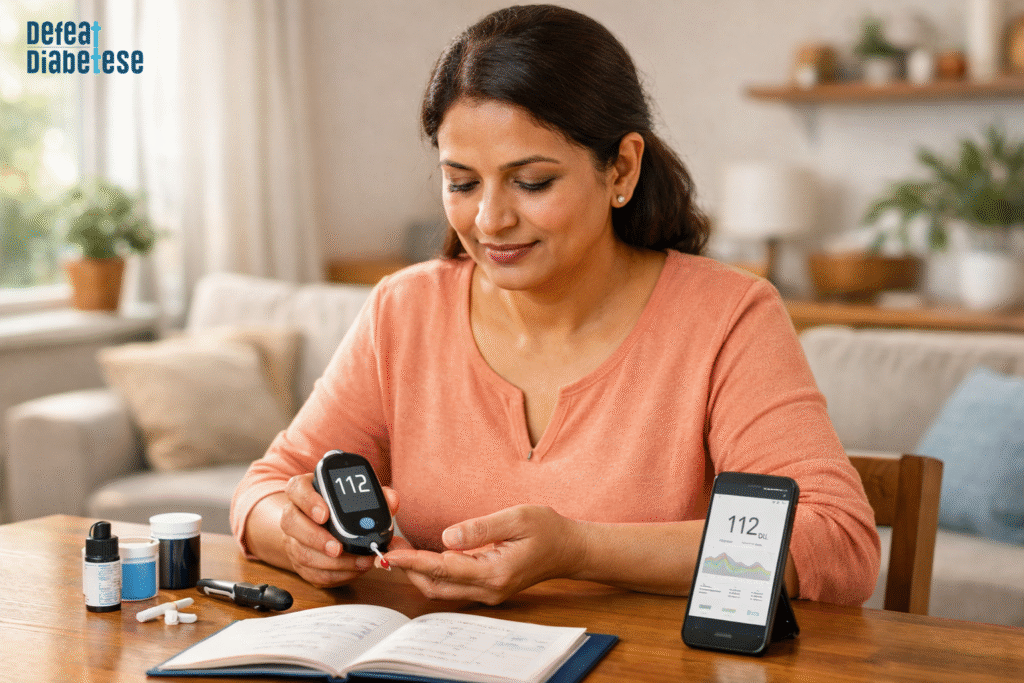
A woman checking her blood sugar with a glucose meter showing a reading of 112, while tracking the data on a smartphone app and a paper logbook.

Blood sugar monitoring guide

INTRODUCTION Managing diabetes starts with knowing your blood sugar levels. Whether you have prediabetes, type 2 diabetes, or simply want to maintain optimal health, monitoring blood sugar at home is crucial. In this comprehensive guide, we’ll show you how to track your glucose levels accurately, understand the results, and use the data to make smarter lifestyle choices. Why Monitoring Blood Sugar at Home is Essential Monitoring blood sugar at home helps you: Detect high or low blood sugar levels early Adjust your diet, exercise, and medication effectively Prevent diabetes complications like kidney damage, nerve issues, and heart problems Stay motivated and in control of your healthIf you’re unsure about your risks, check out our guide on Prediabetes in India: Symptoms, Risk Factors & Treatment to understand warning signs before it’s too late Tools You Need for Home Blood Sugar Monitoring To monitor your blood sugar at home like a pro, you’ll need: Glucometer – Digital or smart glucometers are easy to use and provide accurate readings. Test Strips – Make sure the strips are compatible with your glucometer and not expired. Lancets – Small needles used for finger-pricking. Always use sterile, single-use lancets. Logbook or App – Record your readings to track patterns and trends. Step-by-Step Guide to Checking Blood Sugar at Home Step-by-Step Guide to Checking Blood Sugar at Home Prepare Your Equipment Wash your hands thoroughly and ensure your glucometer, strips, and lancets are ready. Prick Your Finger Use a new lancet each time to avoid infection. A small drop of blood is enough. Apply Blood to Test Strip Insert the strip into your glucometer and apply the blood drop as instructed. Read Your Results Most glucometers provide results in seconds. Record your reading in your logbook or app. Interpret Your Results Understanding your numbers is key: Fasting blood sugar: 70–100 mg/dL (normal) Post-meal blood sugar: Less than 140 mg/dL (normal) Consult your doctor if your readings consistently exceed recommended levels. For more insights on how your diet affects blood sugar, read our article on Indian Breakfast Foods That Spike Blood Sugar Tips to Monitor Blood Sugar Effectively Check at the Same Time Daily – Helps track trends. Record Your Meals and Activity – Identify patterns between food, exercise, and glucose levels. Don’t Panic with Minor Fluctuations – Blood sugar naturally varies throughout the day. Maintain Your Equipment – Replace strips and batteries as needed for accurate readings. Use Continuous Glucose Monitors (CGMs) if recommended by your doctor for advanced tracking. Common Mistakes to Avoid Skipping Hand Washing – Dirty fingers can give inaccurate readings. Reusing Lancets – Increases infection risk. Ignoring Patterns – One reading doesn’t tell the full story; consistent tracking matters. Over-Reliance on Glucometers – Consult your doctor regularly. Benefits of Consistent Home Monitoring Early detection of hyperglycemia or hypoglycemia Better management of diabetes complications like kidney damage, heart disease, and neuropathy Motivation to stick to healthy eating habits and exercise routines If you’ve noticed unusual sweating while sitting, it could be related to blood sugar fluctuations. Learn more in our article on Why Do I Sweat Excessively While Sitting? Conclusion Monitoring blood sugar at home is not just about numbers—it’s about taking control of your health. With the right tools, consistent tracking, and understanding of your results, you can prevent complications, manage diabetes effectively, and improve your quality of life. Start today by setting up your home monitoring system, and combine it with healthy eating, exercise, and regular medical check-ups. For more guidance on prediabetes management, check our article Prediabetes in India: Symptoms, Risk Factors & Treatment Remember, knowledge is power, and monitoring your blood sugar is the first step to defeating diabetes! Frequently Asked Questions 1: How often should I check my blood sugar at home? Frequency depends on your condition and doctor’s advice. Typical recommendations: Type 2 diabetes on medication: 1–2 times daily Prediabetes or lifestyle management: a few times a week 2: What is the best time to check blood sugar? Usually fasting in the morning and 2 hours after meals provide the most useful data. 3: Can I use a glucometer on other parts of my body? Finger-prick tests are most accurate, but some glucometers allow alternate sites like the forearm. 4: Are home glucometers reliable? Yes, if used correctly. Ensure proper calibration and follow manufacturer guidelines. 5: How do I track trends over time? Use apps or a physical logbook to note readings, meals, and activity levels. This helps identify patterns and adjust lifestyle choices. Share: Tags: accurate blood sugar readings, avoid hypoglycemia, blood sugar control, blood sugar insights, blood sugar logbook, blood sugar monitoring guide, blood sugar tracker app, blood sugar tracking, blood sugar trends, check blood sugar, continuous glucose monitor, Diabetes Awareness, diabetes checkup, diabetes health tips, diabetes home care tips, diabetes lifestyle, Diabetes Management, diabetes motivation, diabetes prevention tips, diabetes self-care, diet for diabetes, effective diabetes management, exercise and diabetes, fasting blood sugar, glucometer tips, glucometer use, glucose monitoring tips, healthy lifestyle tips, home diabetes tools, home glucose monitoring, home monitoring tips, Indian diabetes guide, managing blood sugar, monitor blood sugar at home, monitor glucose levels, post-meal blood sugar, prediabetes monitoring, prevent diabetes complications, smart glucometer, track meals and activity, track sugar levels at home, type 2 diabetes home care Related Posts Exercise for diabetes complications December 17, 2025/ INTRODUCTION Diabetes is often called a “silent killer” because it can damage vital organs without showing obvious symptoms. If you… Read More Silent killer diabetes December 16, 2025/ INTRODUCTION Diabetes is often called a silent killer because it can silently damage your organs long before you notice any… Read More Burning feet and diabetes December 13, 2025/ INTRODUCTION Do your feet feel hot, burning, or on fire at night especially when you lie down to sleep? Many… Read More Diabetes myths in India December 12, 2025/ INTRODUCTION India has become the diabetes capital of the world, yet millions of people still follow outdated beliefs, family advice,… Read More   Explore Other Categories Blog Download our App

Blood sugar monitoring guide Read More »

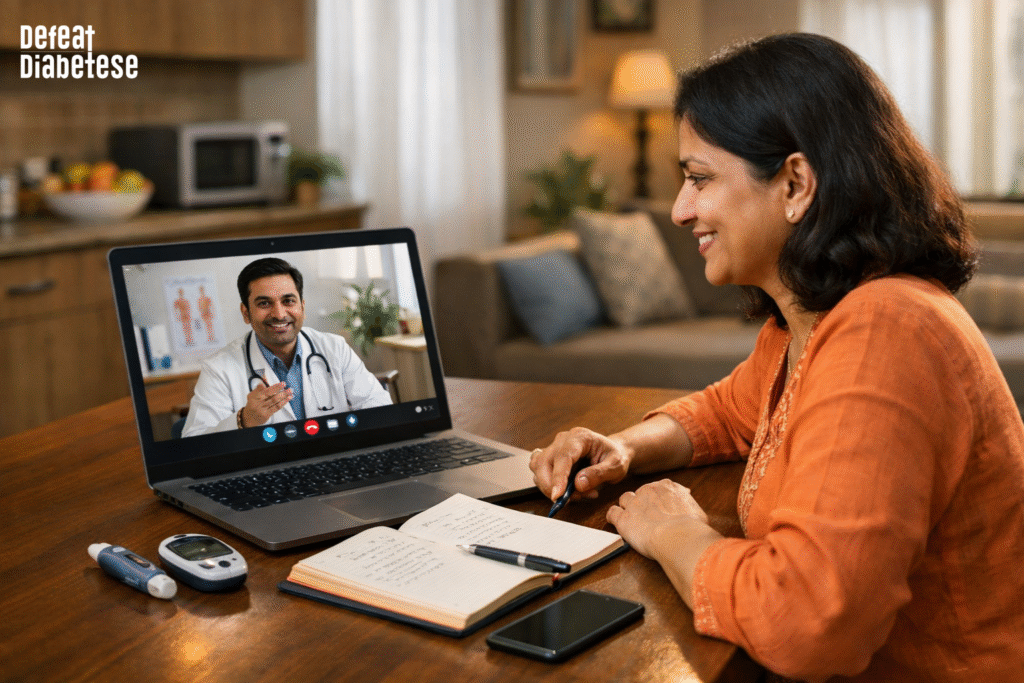
Indian woman consulting a doctor online from home for virtual diabetes care and blood sugar management

Online diabetes care India

INTRODUCTION Managing diabetes effectively requires regular monitoring, lifestyle adjustments, and expert guidance. But what if you could get professional diabetes care without stepping out of your home? Thanks to virtual diabetes care, this is now possible. Telehealth and online consultations are transforming diabetes management, making it easier, safer, and more convenient for millions of people in India. In this guide, we’ll explore the top 5 benefits of virtual diabetes care and why it’s becoming the preferred choice for patients managing blood sugar levels from home. 1. Convenience and Comfort: Healthcare Comes to Your Home One of the biggest advantages of virtual diabetes care is the convenience it offers. You can consult endocrinologists, dieticians, and diabetes educators from the comfort of your home, without worrying about travel time or waiting in crowded clinics. For Indian patients, especially those living in tier-2 or tier-3 cities, virtual care ensures access to specialist advice without geographical limitations. This makes it easier to track blood sugar levels, monitor diet, and get timely interventions. 2. Personalized Care and Expert Guidance Virtual diabetes care allows doctors to offer personalized treatment plans, focusing on your unique health conditions, lifestyle, and diet. Through video consultations and online tracking, your healthcare provider can monitor your blood sugar trends, insulin usage, and diet patterns. This personalized approach helps prevent diabetes complications like heart disease, kidney damage, and nerve problems, which are common among diabetics in India. For more insights on preventing diabetes complications, you can read our article How Exercise Can Drastically Lower Your Risk of Diabetes Complications 3. Cost-Effective Diabetes Management Virtual care eliminates travel costs, parking fees, and sometimes even consultation charges. Patients can schedule shorter, more frequent follow-ups without worrying about the expense of in-person visits. In India, where diabetes prevalence is rising, this cost-effective approach allows more people to manage diabetes consistently, reducing long-term healthcare costs. 4. Continuous Monitoring and Accountability With virtual care, you can integrate smart devices, mobile apps, and wearable glucose monitors into your diabetes management plan. Doctors can access real-time data, provide instant feedback, and adjust medications or diet plans as needed. This continuous monitoring ensures better glycemic control, reducing the risk of sudden spikes or drops in blood sugar levels. Curious about foods that spike blood sugar? Our article Indian Breakfast Foods That Spike Blood Sugar can help you make smarter dietary choices. 5. Safe and Reduced Risk of Exposure Especially in today’s context, visiting clinics can expose patients to infections. Virtual consultations minimize exposure, making it safer for elderly patients or those with multiple health conditions. Home-based diabetes care also allows patients to adhere to treatment plans consistently without the risk of missing appointments due to illness, weather, or travel issues. Conclusion Virtual diabetes care is revolutionizing diabetes management in India, offering convenience, affordability, safety, and personalized guidance. Whether you’re newly diagnosed or have been managing diabetes for years, telehealth provides an effective way to stay on top of your health from the comfort of your home. Embrace digital healthcare solutions to maintain better blood sugar control, prevent complications, and live a healthier life. Start exploring virtual diabetes care today and take charge of your health journey without leaving home! Frequently Asked Questions 1. Is virtual diabetes care effective? Yes. Studies show that telehealth consultations combined with remote monitoring can effectively manage blood sugar levels, reduce complications, and improve patient adherence. 2. Can I get a prescription through virtual diabetes care? Absolutely. Doctors can prescribe medications digitally, and many pharmacies in India offer home delivery for convenience. 3. What technology do I need for virtual diabetes care? A smartphone, internet connection, and a blood glucose monitor are typically sufficient. Some patients may also use apps or wearable devices for continuous monitoring. 4. How often should I have virtual check-ups for diabetes? It depends on your condition. For most patients, a monthly or bi-weekly consultation works, but your doctor may recommend more frequent follow-ups during periods of medication adjustment. Share: Tags: blood sugar control online, blood sugar tracking online, diabetes care apps India, diabetes care from home, diabetes care tips online, diabetes lifestyle management online, diabetes management at home, diabetes monitoring at home, diabetes prevention india, diabetes self-management online, diabetes telehealth services, diabetes telemedicine India, digital diabetes care, digital health for diabetes, effective diabetes care, home diabetes treatment, home-based diabetes management, manage blood sugar online, manage diabetes remotely, online blood sugar control, online diabetes checkup India, Online diabetes consultation, online diabetes doctor India, online diabetes program, online diabetes resources India, online diabetic support India, online dietitian diabetes India, online endocrinologist India, online glucose monitoring, online health consultation diabetes, remote diabetes management, remote diabetic care, safe diabetes care India, telehealth diabetes care, telemedicine for diabetes, virtual blood sugar monitoring, virtual diabetes care India, virtual diabetes education India, virtual diabetes management India, virtual doctor consultation diabetes, virtual healthcare India, virtual insulin management Related Posts Exercise for diabetes complications December 17, 2025/ INTRODUCTION Diabetes is often called a “silent killer” because it can damage vital organs without showing obvious symptoms. If you… Read More Silent killer diabetes December 16, 2025/ INTRODUCTION Diabetes is often called a silent killer because it can silently damage your organs long before you notice any… Read More Burning feet and diabetes December 13, 2025/ INTRODUCTION Do your feet feel hot, burning, or on fire at night especially when you lie down to sleep? Many… Read More Diabetes myths in India December 12, 2025/ INTRODUCTION India has become the diabetes capital of the world, yet millions of people still follow outdated beliefs, family advice,… Read More   Explore Other Categories Blog Download our App

Online diabetes care India Read More »

A woman standing on a weighing scale holding a digital glucose monitor, illustrating why diabetes patients experience weight gain or loss.

Why diabetes patients gain or lose weight

INTRODUCTION Weight changes whether unexpected gain or sudden loss are common concerns for people living with diabetes. Understanding why this happens is crucial for managing blood sugar levels, preventing complications, and maintaining overall health. In this article, we explore why diabetes patients often experience changes in body weight, how it relates to blood sugar, and what you can do about it. How Diabetes Affects Body Weight Diabetes, especially type 2, is closely linked with metabolism and insulin function. Insulin is a hormone that helps your body use glucose for energy. When insulin does not work properly or is insufficient, it can cause fluctuations in your weight. Here are the main reasons diabetes patients gain or lose weight: 1. Insulin Resistance and Weight Gain Many people with type 2 diabetes experience insulin resistance, which means the body doesn’t use insulin effectively. To compensate, the pancreas produces more insulin. High insulin levels can lead to increased fat storage, particularly around the abdomen, causing weight gain. Tip: A balanced diet and regular exercise can help improve insulin sensitivity and prevent unwanted weight gain. Learn more about foods that spike blood sugar in our Indian Breakfast Foods That Spike Blood Sugar article. 2. Uncontrolled Blood Sugar and Weight Loss If diabetes is poorly managed, glucose isn’t absorbed effectively by the cells and is lost through urine. This causes the body to burn fat and muscle for energy, leading to unintentional weight loss. Sudden weight loss is often an early warning sign of uncontrolled diabetes. Tip: Regular monitoring of blood sugar levels is essential. Check out our Prediabetes India: Symptoms, Risk Factors, and Treatment guide to prevent diabetes progression. 3. Medications and Their Role Some diabetes medications, like insulin therapy or certain oral drugs, can cause weight gain as a side effect. On the other hand, medications like SGLT2 inhibitors may result in weight loss by helping the body excrete excess glucose. Always consult your doctor before making any medication changes. 4. Diet and Lifestyle Factors Overeating, poor food choices, and sedentary lifestyle habits can lead to weight gain. Conversely, strict calorie restriction without guidance can cause unhealthy weight loss. Maintaining a balanced, diabetes-friendly diet is key to healthy weight management. 5. Other Health Issues Thyroid disorders, hormonal imbalances, and stress can also affect weight in diabetes patients. Additionally, excessive sweating, fatigue, and other symptoms (like those discussed in our Why Do I Sweat Excessively While Sitting? article) may indicate underlying metabolic changes affecting body weight. Practical Tips for Managing Weight with Diabetes Monitor Blood Sugar Regularly: Keep track of fluctuations to understand how your body responds to food and medications. Adopt a Balanced Diet: Focus on high-fiber foods, lean proteins, and low-glycemic carbs. Exercise Consistently: Combine cardio and strength training to improve insulin sensitivity and maintain healthy weight. Consult Your Healthcare Provider: For medication adjustments and personalized diet plans. Stay Hydrated and Rested: Proper sleep and hydration help regulate hormones affecting weight. Conclusion Weight changes in diabetes are not just cosmetic—they are a vital sign of your metabolic health. Whether it’s weight gain from insulin resistance or weight loss from uncontrolled glucose, understanding the underlying causes is essential for managing diabetes effectively. By monitoring your blood sugar, maintaining a balanced diet, exercising regularly, and staying informed, you can achieve healthier weight management and reduce the risk of diabetes-related complications. Frequently Asked Questions 1: Can type 2 diabetes cause sudden weight loss? Yes, uncontrolled diabetes can lead to rapid weight loss due to the body breaking down fat and muscle for energy. 2: Why do some diabetes patients gain weight even while dieting? Weight gain can occur due to insulin resistance, medication side effects, or hormonal imbalances. A tailored diet and exercise plan can help. 3: How can I prevent weight gain with diabetes? Monitor your blood sugar, follow a diabetes-friendly diet, exercise regularly, and work closely with your healthcare provider. 4: Are there medications that cause weight loss in diabetes? Yes, medications like SGLT2 inhibitors and GLP-1 receptor agonists can aid in weight loss by reducing glucose absorption and appetite. 5: Is weight change a sign of poorly managed diabetes? Often, yes. Sudden or unexplained weight changes can indicate poor blood sugar control and should be addressed promptly. Share: Tags: blood glucose levels, blood sugar control, Diabetes Awareness, diabetes blog, diabetes care India, diabetes causes, diabetes complications, diabetes diet, diabetes education, diabetes exercise, diabetes FAQ, diabetes health tips, diabetes lifestyle tips, Diabetes Management, diabetes medications, Diabetes Prevention, diabetes risks, diabetes support, Diabetes Symptoms, diabetes weight gain, diabetes weight loss, diet for diabetes, fitness and diabetes, health and diabetes, healthy weight diabetes, hormonal imbalance diabetes, Indian diabetes guide, insulin and weight, insulin function, Insulin Resistance, managing diabetes naturally, metabolic health, obesity and diabetes, prediabetes india, stress and diabetes, sudden weight loss diabetes, sugar control tips, type 2 diabetes, weight management diabetes Related Posts Exercise for diabetes complications December 17, 2025/ INTRODUCTION Diabetes is often called a “silent killer” because it can damage vital organs without showing obvious symptoms. If you… Read More Silent killer diabetes December 16, 2025/ INTRODUCTION Diabetes is often called a silent killer because it can silently damage your organs long before you notice any… Read More Burning feet and diabetes December 13, 2025/ INTRODUCTION Do your feet feel hot, burning, or on fire at night especially when you lie down to sleep? Many… Read More Diabetes myths in India December 12, 2025/ INTRODUCTION India has become the diabetes capital of the world, yet millions of people still follow outdated beliefs, family advice,… Read More   Explore Other Categories Blog Download our App

Why diabetes patients gain or lose weight Read More »

Yoga and pranayama help reduce stress and improve blood sugar control in people with diabetes

Exercise for diabetes complications

INTRODUCTION Diabetes is often called a “silent killer” because it can damage vital organs without showing obvious symptoms. If you have ever wondered, “Can exercise really help manage diabetes?,” the answer is a resounding yes! Incorporating regular physical activity into your daily routine can significantly reduce your risk of diabetes complications, including heart disease, kidney damage, nerve damage, and eye problems. Why Exercise is a Game-Changer for People with Diabetes Exercise improves insulin sensitivity, allowing your body to use glucose more efficiently. This helps keep blood sugar levels stable and reduces the strain on your pancreas. Combining aerobic exercises with strength training can lower HbA1c levels by up to 1%, which is significant for preventing complications. Here’s how exercise benefits your body: Heart Health: Regular workouts reduce the risk of diabetic heart disease by improving circulation and lowering blood pressure. Kidney Protection: Exercise enhances blood flow, supporting kidney function and lowering the risk of diabetic nephropathy. Nerve Health: Physical activity stimulates nerves and can prevent or reduce diabetic neuropathy symptoms. Weight Management: Maintaining a healthy weight through exercise reduces insulin resistance, a major factor in diabetes progression. For more insights into how diet impacts your blood sugar, check out our article on Indian Breakfast Foods That Spike Blood Sugar Best Exercises for Preventing Diabetes Complications   Walking & Brisk Walking: Low-impact and effective for stabilizing blood sugar. Strength Training: Lifting weights or doing bodyweight exercises improves muscle mass and glucose absorption. Yoga & Stretching: Reduces stress, improves flexibility, and supports better glucose control. High-Intensity Interval Training (HIIT): Short bursts of intense activity followed by rest dramatically improve insulin sensitivity For personalized tips, read our detailed guide on Prediabetes Symptoms, Risk Factors, and Treatment in India to understand how early interventions, including exercise, can change the course of diabetes. Daily Habits to Complement Your Exercise Routine Monitor Blood Sugar: Track your readings before and after workouts to find what works best. Stay Hydrated: Water supports kidney function and overall metabolism. Balanced Diet: Pair workouts with a diabetes-friendly diet. Learn more in Indian Breakfast Foods That Spike Blood Sugar Avoid Sedentary Lifestyle: Sitting for long hours can spike blood sugar. Read why in Why Do I Sweat Excessively While Sitting? Conclusion Exercise is not just a recommendation for people with diabetes—it’s a lifeline. By combining regular physical activity with a balanced diet, monitoring blood sugar, and adopting healthy daily habits, you can drastically lower your risk of diabetes complications. Start small, stay consistent, and make exercise a part of your lifestyle. Every step you take brings you closer to defeating diabetes. Frequently Asked Questions 1. Can exercise alone prevent diabetes complications? Exercise significantly reduces the risk, but combining it with a healthy diet, regular check-ups, and lifestyle management gives the best results. 2. How often should a person with diabetes exercise? Aim for at least 30 minutes of moderate exercise 5 days a week, including a mix of aerobic and strength-training activities. 3. Which exercise is best for controlling blood sugar? A combination of walking, strength training, yoga, and HIIT works best for maintaining stable blood sugar and preventing complications. 4. Is it safe to exercise if my blood sugar is high? Yes, moderate exercise is generally safe, but avoid intense workouts if your blood sugar is very high (>250 mg/dL) or you have ketones in your urine. Consult your doctor first. 5. Can exercise reverse prediabetes? Yes! Regular physical activity, along with dietary changes, can reverse prediabetes and prevent the progression to type 2 diabetes. Learn more in our Prediabetes India Symptoms, Risk Factors & Treatment guide. Share: Tags: blood sugar control, daily exercise benefits, defeat diabetes, Diabetes Awareness, Diabetes Care, diabetes complications, diabetes education, diabetes fitness routine, diabetes health tips, diabetes heart health, diabetes lifestyle, diabetes management India, diabetes patient care, diabetes prevention tips, diabetic nephropathy, diabetic neuropathy, exercise benefits, exercise for diabetes, fitness for diabetics, glucose control naturally, HbA1c control, healthy lifestyle diabetes, HIIT and diabetes, home diabetes care, insulin sensitivity, natural diabetes control, prediabetes reversal, reduce diabetes risk, strength training diabetes, type 2 diabetes exercise, virtual diabetes care, walking for diabetes, yoga for diabetes Related Posts Exercise for diabetes complications December 17, 2025/ INTRODUCTION Diabetes is often called a “silent killer” because it can damage vital organs without showing obvious symptoms. If you… Read More Silent killer diabetes December 16, 2025/ INTRODUCTION Diabetes is often called a silent killer because it can silently damage your organs long before you notice any… Read More Burning feet and diabetes December 13, 2025/ INTRODUCTION Do your feet feel hot, burning, or on fire at night especially when you lie down to sleep? Many… Read More Diabetes myths in India December 12, 2025/ INTRODUCTION India has become the diabetes capital of the world, yet millions of people still follow outdated beliefs, family advice,… Read More Explore Other Categories Blog Download our App

Exercise for diabetes complications Read More »

Adult man appearing healthy on the outside with transparent body view showing heart, kidneys, liver, and digestive organs affected by diabetes, illustrating silent internal organ damage caused by diabetes.

Silent killer diabetes

INTRODUCTION Diabetes is often called a silent killer because it can silently damage your organs long before you notice any symptoms. Millions of people live with high blood sugar without realizing the serious complications it may cause. If left unmanaged, diabetes can harm your heart, kidneys, eyes, nerves, and liver. In this article, we’ll explore how diabetes affects your body, the warning signs to watch for, and how a certified diabetologist can help you manage your condition through online consultation from the comfort of your home. Why Diabetes Is Called a Silent Killer Many people think diabetes shows obvious signs, like frequent urination or extreme thirst. However, Type 2 diabetes often develops gradually, and by the time symptoms appear, organs may already be damaged. During this silent phase: Blood sugar spikes quietly damage blood vessels. Organs like the heart, kidneys, and eyes weaken slowly. Minor symptoms, like fatigue or tingling in hands and feet, are often ignored. Early detection is essential. Ignoring diabetes is like ignoring a ticking time bomb in your body. How Diabetes Affects Your Organs 1. Heart – The Silent Victim High blood sugar damages blood vessels and nerves controlling the heart. This increases the risk of: Heart attack and stroke due to plaque buildup in arteries High blood pressure from stiffened arteries Heart failure from chronic strain Warning Signs: Shortness of breath, chest discomfort, irregular heartbeat, fatigue. Prevention: Maintain a healthy lifestyle, monitor blood sugar regularly, and consult a diabetologist even through online consultation. 2. Kidneys – Filtering Under Pressure Diabetes is a leading cause of kidney disease. High glucose strains the kidneys, causing: Diabetic nephropathy (damage to kidney blood vessels) Proteinuria (excess protein in urine) Chronic kidney disease (CKD) and possible kidney failure Warning Signs: Swelling in hands and feet, fatigue, frequent urination, foamy urine. Prevention: Stay hydrated, maintain blood sugar, and consult your diabetologist. Learn more about diabetes in young adults in India 3. Eyes – Vision at Risk High blood sugar damages retinal blood vessels, leading to diabetic retinopathy. Other complications include: Cataracts (clouding of the lens) Glaucoma (optic nerve damage) Permanent vision loss if untreated Warning Signs: Blurry vision, dark spots, difficulty reading or seeing at night. Prevention: Annual eye exams, blood sugar control, and timely guidance from a diabetologist. For diet-related advice, check out Indian breakfast foods that spike blood sugar. 4. Nerves – Tingling and Pain Diabetic neuropathy damages nerves, especially in hands and feet, causing: Tingling, numbness, or burning sensations Reduced ability to feel pain, increasing injury risk Digestive issues (gastroparesis) and sexual dysfunction Warning Signs: Persistent tingling, pain, slow-healing wounds. Learn more about slow-healing wounds in diabetes and burning feet and diabetes Prevention: Control blood sugar, inspect feet daily, and consult a diabetologist, including via online consultation. 5. Liver – Hidden Fat Accumulation High sugar and insulin resistance can cause non-alcoholic fatty liver disease (NAFLD), leading to liver inflammation and cirrhosis. Effects include: Fat buildup in liver cells Impaired metabolism of fats and sugars Increased risk of cardiovascular complications Warning Signs: Fatigue, abdominal discomfort, unexplained weight loss, jaundice in severe cases. Prevention: Maintain a healthy diet, exercise regularly, and schedule liver function monitoring with your diabetologist. How Online Consultation Can Help Managing diabetes doesn’t always require hospital visits. With online consultation, you can: Monitor blood sugar from home Get personalized diet and lifestyle guidance Detect complications early Adjust medications safely under professional supervision Consult a certified diabetologist online today to prevent serious complications and protect your organs. For more insights, check our post on what is diabetic foot in Indiaand world diabetes day awareness. Conclusion Take Control Before It’s Too Late Diabetes may be silent, but its consequences are not. Regular monitoring, healthy habits, and online consultation with a diabetologist can protect your organs and improve quality of life. Don’t wait for symptoms to appear take action today. Frequently Asked Questions 1. Which organs are most affected by diabetes? The most commonly affected organs include the heart, kidneys, eyes, nerves, and liver. Long-term uncontrolled diabetes increases the risk of damage to all these organs. 2.How does diabetes affect the heart?? Diabetes increases the risk of heart attack, stroke, and high blood pressure by damaging blood vessels and causing plaque buildup in arteries. 3. What is diabetic kidney disease? Diabetic kidney disease, also known as diabetic nephropathy, occurs when high blood sugar damages kidney blood vessels, leading to protein leakage in urine and, in severe cases, kidney failure. 4. Can diabetes cause vision problems? Yes. Diabetes can lead to diabetic retinopathy, cataracts, and glaucoma, which may cause blurred vision or permanent vision loss if not treated early. 5. What are the nerve-related complications of diabetes? Diabetes can cause diabetic neuropathy, leading to tingling, numbness, burning feet, pain, and slow-healing wounds, especially in the hands and feet. Share: Tags: blood sugar control, burning feet diabetes, chronic diabetes complications, consult diabetologist online, defeat diabetes, Diabetes, Diabetes Awareness, diabetes complications, diabetes diet tips, diabetes education, diabetes health checkup, diabetes in India, Diabetes Management, diabetes organ damage, diabetes patient care, Diabetes Prevention, Diabetes Symptoms, diabetes treatment online, diabetes without symptoms, diabetic foot india, diabetic kidney disease, diabetic nephropathy, diabetic neuropathy, diabetic retinopathy, diabetologist online, early signs of diabetes, fatty liver and diabetes, heart disease and diabetes, high blood sugar effects, how diabetes affects organs, Lifestyle Changes for Diabetes, online consultation for diabetes, online diabetes care, silent killer diabetes, slow healing wounds diabetes, type 2 diabetes, world diabetes day Related Posts Silent killer diabetes December 16, 2025/ INTRODUCTION Diabetes is often called a silent killer because it can silently damage your organs long before you notice any… Read More Burning feet and diabetes December 13, 2025/ INTRODUCTION Do your feet feel hot, burning, or on fire at night especially when you lie down to sleep? Many… Read More Diabetes myths in India December 12, 2025/ INTRODUCTION India has become the diabetes capital of the world, yet millions of people still follow outdated beliefs, family advice,… Read More Diabetic Foot: Symptoms, Risks & Prevention

Silent killer diabetes Read More »

Indian adult experiencing burning feet at night, a possible sign of diabetes-related nerve damage

Burning feet and diabetes

INTRODUCTION Do your feet feel hot, burning, or on fire at night especially when you lie down to sleep? Many Indians ignore this discomfort, blaming heat, tiredness, or walking too much. However, burning feet and diabetes are often connected, especially when blood sugar levels start affecting the nerves. This symptom can be an early warning sign that should not be ignored. Is Burning Feet at Night Related to Diabetes? Yes, burning feet at night can be related to diabetes, particularly due to nerve damage caused by prolonged or fluctuating high blood sugar levels. This condition is commonly known as diabetic neuropathy and is very common in India. People often search: “Why do my feet burn at night?” “Burning feet diabetes?” “Feet burning while sleeping causes” How Diabetes Causes Burning Sensation in Feet 1. Diabetic Neuropathy (Most Common Cause) High blood sugar damages nerves over time. The feet are usually affected first because they are farthest from the brain. Common symptoms include: Burning or hot sensation in feet Tingling or pins-and-needles Numbness Pain that worsens at night This is one of the most ignored diabetes complications in India. 2. Poor Blood Sugar Control at Night At night, blood circulation slows and nerve sensitivity increases. If sugar levels are high or fluctuating, the burning sensation becomes more noticeable. Here is the information for sleep and diabetes conncetion  3. Vitamin B12 Deficiency (Common in Diabetics) Many people with diabetes especially those on long-term medication develop vitamin B12 deficiency, which can worsen nerve pain and burning. Symptoms include: Burning feet Weakness Tingling Fatigue 4. Poor Blood Circulation Diabetes affects blood vessels, reducing circulation to the feet. Reduced oxygen supply can cause pain, warmth, and burning sensations, especially at night. Other Causes of Burning Feet (Not Always Diabetes) To maintain trust and medical accuracy, it’s important to mention other possible causes: Iron deficiency Excessive standing or walking Tight footwear Fungal infections Dehydration Thyroid imbalance However, if burning feet occur along with frequent urination, thirst, fatigue, or blurry vision, diabetes should be ruled out. When Should Burning Feet Concern You? You should not ignore burning feet if: It happens regularly at night The sensation worsens over time You also feel numbness or tingling Sleep is disturbed due to pain You have diabetes or prediabetes Early attention can prevent serious foot complications. What Can Help Reduce Burning Feet in Diabetes? Maintain stable blood sugar levels Improve sleep routine Avoid long gaps between meals Check vitamin levels Wear comfortable footwear Manage stress and emotional health Conclusion Burning feet at night is not just a minor discomfort it can be a silent warning sign of diabetes-related nerve damage. In India, where diabetes is often diagnosed late, paying attention to such symptoms is crucial. Early detection, proper lifestyle changes, and blood sugar control can protect your feet and overall health. Frequently Asked Questions Is burning feet at night an early sign of diabetes? Yes, especially if caused by nerve damage or uncontrolled blood sugar. Why is foot burning worse at night? Nerves are more sensitive at rest, and circulation slows at night. Can burning feet be reversed in diabetes? Early-stage nerve damage can improve with better blood sugar control and lifestyle changes. Should I get my sugar tested for burning feet? Yes. Persistent burning feet should always be evaluated for diabetes. Share: Tags: blood sugar complications, burning feet and diabetes, burning feet at night, burning feet treatment diabetes, burning feet while sleeping, burning sensation in feet diabetes, chronic high blood sugar effects, diabetes and circulation problems, diabetes awareness India, diabetes complications India, diabetes health blog India., diabetes lifestyle India, diabetes nerve pain, diabetes pain symptoms, diabetes patient education, diabetes prevention india, diabetes symptoms India, diabetes warning signs, diabetic foot problems, diabetic nerve damage symptoms, diabetic neuropathy India, early diabetes symptoms, foot burning causes, foot care for diabetics, foot pain diabetes, high blood sugar symptoms, Indian diabetes health, insulin resistance symptoms, low blood sugar symptoms, metabolic health diabetes, nerve damage diabetes, nerve health diabetes, night burning feet, numbness in feet diabetes, prediabetes signs India, restless legs diabetes, sugar level imbalance symptoms, tingling feet diabetes, type 2 diabetes symptoms, uncontrolled diabetes symptoms Related Posts Diabetes myths in India December 12, 2025/ INTRODUCTION India has become the diabetes capital of the world, yet millions of people still follow outdated beliefs, family advice,… Read More Diabetic Foot: Symptoms, Risks & Prevention Guide for India December 6, 2025/ What Is Diabetic Foot? Diabetic Foot is a serious but silent complication of diabetes where high blood sugar damages the… Read More excessive sweating while sitting December 5, 2025/ INTRODUCTION Excessive sweating while doing nothing  sitting at your desk, watching TV, in an AC room, or even during sleep … Read More slow healing diabetes November 29, 2025/ INTRODUCTION Be honest have you noticed that your scratches, rashes, shoe bites, pimples, or skin cracks take longer to heal… Read More   Explore Other Categories Blog Download our App

Burning feet and diabetes Read More »

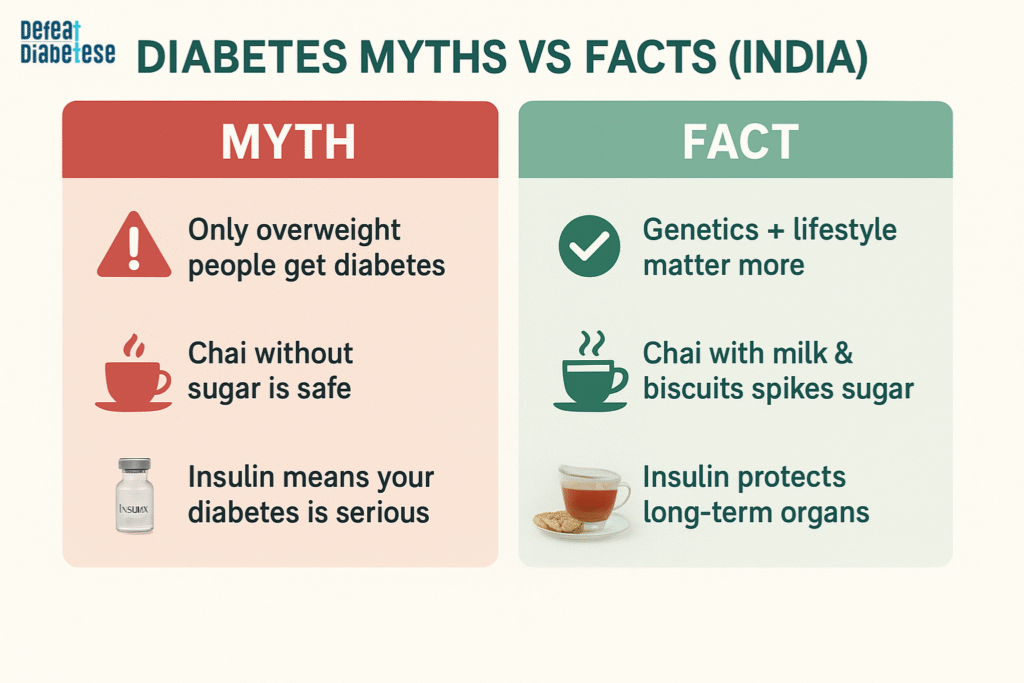
Diabetes Myths vs Facts infographic for India showing common misconceptions like chai without sugar being safe and insulin meaning serious diabetes, with accurate facts about genetics, lifestyle, sugar spikes, and insulin benefits. Clean red–green medical design, suitable for Indian healthcare education.

Diabetes myths in India

INTRODUCTION India has become the diabetes capital of the world, yet millions of people still follow outdated beliefs, family advice, and WhatsApp myths when it comes to managing diabetes. As a doctor, I see this every week: People are taking insulin, medicines, and dieting strictly yet their sugars remain high because of wrong beliefs. These myths cost Indians: higher sugar spikes early diabetes complications poor lifestyle choices delayed diagnosis Let’s break the most dangerous myths that are still extremely common in Indian households. 1. “I don’t eat sugar… so how can I get diabetes?” This is the #1 myth in India. Diabetes is not caused only by visible table sugar.For most Indians, the real problem is: Excess carbohydrates (rice, roti, paratha, poha, idli, dosa) Hidden sugars in packaged foods Fried snacks High-calorie traditional meals Most Indian breakfasts look “healthy”, but they spike sugar massively. Read this: Indian Breakfast Foods That Spike Blood Sugar Truth:Even if you don’t add sugar to food, high-carb diets raise blood sugar quickly. 2. Chai with just 1 spoon sugar is harmless. Indians consume 3–6 cups of chai daily.Even 1 spoon per cup = 3–6 spoons per day. Plus: milk tea powder biscuits rusk namkeen These create glucose spikes throughout the day.  Must-read: Chai & Blood Sugar Spikes in India Truth:Small daily sugar doses add up and damage insulin over years. 3. Walking 30 minutes daily is enough to control diabetes. Walking is good but NOT enough for Indians who consume high-carb diets. Why? Because Indians develop insulin resistance earlier, especially with: desk jobs belly fat stress poor sleep Strength training is essential, not just walking. Related: Sleep & Diabetes Connection Truth:Walking helps, but without muscle building, metabolism stays slow. 4. Ghee is a superfood eat as much as you want. Social media made ghee look magical. Yes, small quantities are healthy.But excess ghee is dangerous for: overweight people high triglycerides fatty liver insulin resistance Indian diets already heavy in fats Truth:1–2 teaspoons daily is enough. More can worsen blood sugar and cholesterol. 5. Fruits are always safe they’re natural. Many fruits shoot sugar up instantly: Mango Banana Grapes Sapota (chikoo) Watermelon Pain Point:Indians eat fruits after meals, which causes double sugar spikes. A related article: Why You Feel Sleepy After Lunch Truth:Fruits must be portion-controlled and timed properly. 6. Brown bread, cornflakes, oats biscuits all are healthy. This is a marketing trap. Most “healthy-looking foods” contain: refined flour sugar hidden carbs preservatives Must-read: Unhealthy ‘Healthy’ Snacks Indians Eat Learn more: How to Read Food Labels for Diabetes Truth:Always check labels not packaging. 7. Diabetes only happens after age 40. Not true anymore. India is now seeing diabetes in: teenagers young adults even 20–30 age group Poor lifestyle + genetics = early onset. Read: Diabetes in Young Indians Truth:Anyone with belly fat, poor sleep, or sedentary lifestyle is at risk. 8. Festivals and parties don’t matter… it’s just one day. For Indians, it’s never “just one day”.It becomes: festivals family functions office parties weekend outings All featuring high-calorie foods, sweets & overeating. Read: How Indian Weddings & Festivals Increase Diabetes Risk Truth:Frequent social eating leads to consistently elevated glucose. 9. Diabetes cannot be controlled without medicines. Lifestyle is the biggest factor.Medicines help, but they don’t fix: poor sleep excess carbs stress eating zero protein intake inconsistent meals Related: World Diabetes Day: India’s Rising Numbers Truth:Correct lifestyle + proper diet can drastically reduce medication in many cases. 10. Diabetes doesn’t hurt… so it’s fine. This is the most dangerous myth. Diabetes is silent but it causes: heart disease kidney failure eye damage nerve damage foot ulcers Indians often ignore early symptoms until it’s too late. Conclusion Diabetes in India is rising not just because of lifestyle, but because of misinformation and daily habits we ignore. Most people follow family advice, rely on WhatsApp tips, or believe food myths that actually worsen blood sugar. The truth is simple: Diabetes becomes manageable the moment you replace myths with medical facts. Fixing small habits reducing carbs, limiting chai, adding protein, improving sleep, and walking after meals can dramatically improve blood sugar control. If you’re noticing early symptoms or struggling with uncontrolled sugar, don’t wait.Get proper, evidence-based guidance with Defeat Diabetese Online Consultation and start improving your health confidently and correctly. Right information → Right action → Better health. Frequently Asked Questions 1. Which diabetes myth is most common in India? The belief that “I don’t eat sugar, so I can’t get diabetes.” 2. Can Indians get diabetes even if they are thin? Yes. Thin-fat body type + genetics = high risk. 3. Does ghee increase or reduce diabetes risk? Small amount is okay; excess worsens insulin resistance. 4. Are Indian traditional breakfasts unhealthy? Many are high-carb and cause morning sugar spikes. Share: Tags: Blood Sugar Management, blood sugar spikes Indian foods, carb counting India, chai and diabetes India, Defeat Diabetese blog, diabetes awareness India, diabetes blog india, diabetes breakfast tips, diabetes care India, diabetes control tips, diabetes cure myths, diabetes diet mistakes, diabetes diet planning, diabetes doctor tips, diabetes education India, diabetes exercise tips, diabetes facts India, diabetes health blog India., diabetes health tips, diabetes lifestyle changes, diabetes management myths, diabetes misconceptions, diabetes myths India, diabetes online consultation, diabetes prevention india, diabetes reversal myths, diabetes routine mistakes, diabetes sleep connection, diabetes weight control, diabetes wellness India, diabetes-friendly foods India, diabetes-friendly lifestyle India, diabetic diet guide, food labels diabetes India, glucose spikes India, glycemic index India, healthy eating for diabetes, hidden sugar foods India, Indian Diet & Diabetes, Indian festivals diabetes risk, Indian food diabetes safe, Indian meals blood sugar, insulin myths, low GI foods India, post-meal sugar spikes, prediabetes india, sugar substitutes India, type 2 diabetes truth, unhealthy healthy snacks India Related Posts Diabetes myths in India December 12, 2025/ INTRODUCTION What Is Prediabetes? Prediabetes is a condition where your blood sugar levels are higher than normal but not high… Read More Diabetic Foot: Symptoms, Risks & Prevention Guide for India December 6, 2025/ What Is Diabetic Foot? Diabetic

Diabetes myths in India Read More »

Diabetic foot ulcer stages and complications including superficial ulcer, deep ulcer, abscess osteitis, gangrene, callus formation, cracked skin, reduced blood flow, and nerve damage in diabetes patients

Diabetic Foot: Symptoms, Risks & Prevention Guide for India

What Is Diabetic Foot? Diabetic Foot is a serious but silent complication of diabetes where high blood sugar damages the nerves, skin, and blood vessels in your feet.This leads to: Numbness Burning feet Tingling Dry, cracked heels Slow healing Non-healing wounds Foot ulcers Infections And in severe cases… amputation The scariest part?You don’t feel pain.Nerves get damaged quietly, and small injuries turn into big problems without you realizing it. Do You Have Diabetes? Then You MUST Read This…Most diabetics in India know about sugar levels, insulin, diet, HbA1c…But almost no one knows about diabetic foot until it becomes a problem. Even if your sugar is “a little high,” even if you think “I’m managing it,” diabetic foot can start developing without any symptoms. This article will help you understand: what diabetic foot really is early signs you should NEVER ignore example of what we see in real patients what you can do today how Defeat Diabetese helps you prevent it Here’s Something I’ve Observed While Working With Patients This is not a single case this is a pattern we see repeatedly. Case-Style Example (Based on Real Patient Patterns We See) Ramesh, 44, walked in for a consultation.His complaints: Tingling at night Burning feet Post-lunch tiredness Cracked heels High fasting sugars He didn’t think any of this was a “foot problem.”He thought it was just “normal diabetic issues.” But during his check-up, we found:A small cut on his right foot He had no sensation thereIt had been there for a week without him realizingIt had already started showing signs of infection His first reaction?“But I didn’t feel any pain…” Exactly.That’s how diabetic foot starts in silence. After 3 months of working with Defeat Diabetese: His sugars came under control The wound healed Burning & tingling reduced Cracks healed Sensation improved Foot habits changed This is why awareness matters more than fear.  Why Does Diabetic Foot Happen?  1.Nerve Damage – Diabetic Neuropathy High blood sugar damages your nerves.You stop feeling pain, heat, pressure, or injuries. 2. Poor Blood Circulation Your feet get less blood → slower healing → high risk of infection. 3. Weak Immune Response Diabetes reduces your body’s healing capability. 4. Indian Lifestyle Factors This is WHY diabetic foot is very common in India: Walking barefoot at home Using cheap, hard chappals High-carb breakfast culture Too much tea + biscuits Post-lunch sleepiness after heavy meals Ignoring foot dryness & cracks Eating “healthy snacks” that still spike sugars Not reading food labels properly Important reads: Breakfast foods that spike sugars  Unhealthy “healthy” Indian snacks  Chai & Diabetes Post-lunch sleepiness explained  How to read food labels Sleep & blood sugar  Early Warning Signs of Diabetic Foot If you have diabetes and even ONE of these signs, it’s a red flag: Burning feet Numbness Tingling Dry, cracked heels Frequent foot pain Electric-shock feeling Darkened skin Swelling Bad smell Non-healing wounds Feeling cold feet Loss of sensation If caught early, diabetic foot is 100% manageable. Biggest Danger: Foot Ulcers A foot ulcer is a wound that does not heal because of poor circulation + nerve damage.Most ulcers begin from: Cracked heels Small cuts Tight footwear Blisters Walking barefoot Ignored dryness If not treated early → infection → deep ulcers → possible amputation. How to Protect Your Feet 1. Inspect Your Feet Daily Use a mirror. Look for wounds, cracks, or color changes. 2. Never Walk Barefoot Not inside the house, not outside. 3. Wear Diabetes-Friendly Footwear Soft soles, wide toe box, no pointed ends. 4. Moisturise Daily (But NOT between the toes) Keeps skin healthy and prevents cracks. 5. Control Your Blood Sugar This is the #1 factor behind diabetic foot. 6. Trim Nails Properly Straight across. Avoid curved edges. 7. Avoid Home Remedies Haldi, toothpaste, or heating pads worsen the wound. 8. Regular Check-Ups Get a foot exam every 3–6 months. Conclusion Diabetic foot does NOT start with a big wound.It starts with small things: Minor tingling Slight burning A tiny crack A small cut you didn’t feel Awareness + prevention + sugar control = safe feet for life. You can protect yourself.And we’re here to help you every step of the way. Frequently Asked Questions What is diabetic foot? Foot damage caused by high sugar, nerve damage, poor blood flow, and slow healing. Can diabetic foot be reversed? Nerve damage cannot be fully reversed, but symptoms can improve and complications can be prevented. What causes foot ulcers in diabetics? Small injuries + nerve damage + poor blood circulation. How can I prevent diabetic foot? Daily inspection, good footwear, moisturising, and keeping sugar levels under control. Share: Tags: blood sugar control India, burning feet diabetes, cracked heels diabetes, diabetes awareness India, diabetes circulation problems, diabetes complications India, diabetes diet India, diabetes foot checkup, diabetes foot complications guide, diabetes foot exercises, diabetes foot health, diabetes foot infection, diabetes foot risk factors, diabetes foot treatment, diabetes lifestyle India, diabetes nerve damage, diabetes nerve damage prevention, diabetes neuropathy management, diabetes patient tips India, diabetes self-care India, diabetes wound healing tips, diabetic foot, diabetic foot care, diabetic foot care routine, diabetic foot infection signs, diabetic foot prevention, diabetic foot symptoms, diabetic foot ulcers, diabetic neuropathy, early signs diabetic foot, foot care tips for diabetics, foot complications in diabetes, foot pain in diabetes, healthy habits for diabetes, high blood sugar complications, how to prevent diabetic foot ulcers, Indian diabetic patient education, Indian footwear for diabetics, non-healing wounds diabetes, numbness in feet diabetes, prevent foot ulcers diabetes India, safe footwear diabetes, tingling feet diabetes, walking barefoot diabetes Related Posts Diabetic Foot: Symptoms, Risks & Prevention Guide for India December 6, 2025/ INTRODUCTION What Is Prediabetes? Prediabetes is a condition where your blood sugar levels are higher than normal but not high… Read More excessive sweating while sitting December 5, 2025/ INTRODUCTION Excessive sweating while doing nothing  sitting at your desk, watching TV, in an AC room, or even during sleep … Read More slow healing diabetes November 29, 2025/ INTRODUCTION Be honest have you noticed that your scratches, rashes,

Diabetic Foot: Symptoms, Risks & Prevention Guide for India Read More »

Doctor Partnership

Reach us

1
Scan the code