7 Critical Symptoms of Diabetic Ketoacidosis: Prevention Guide
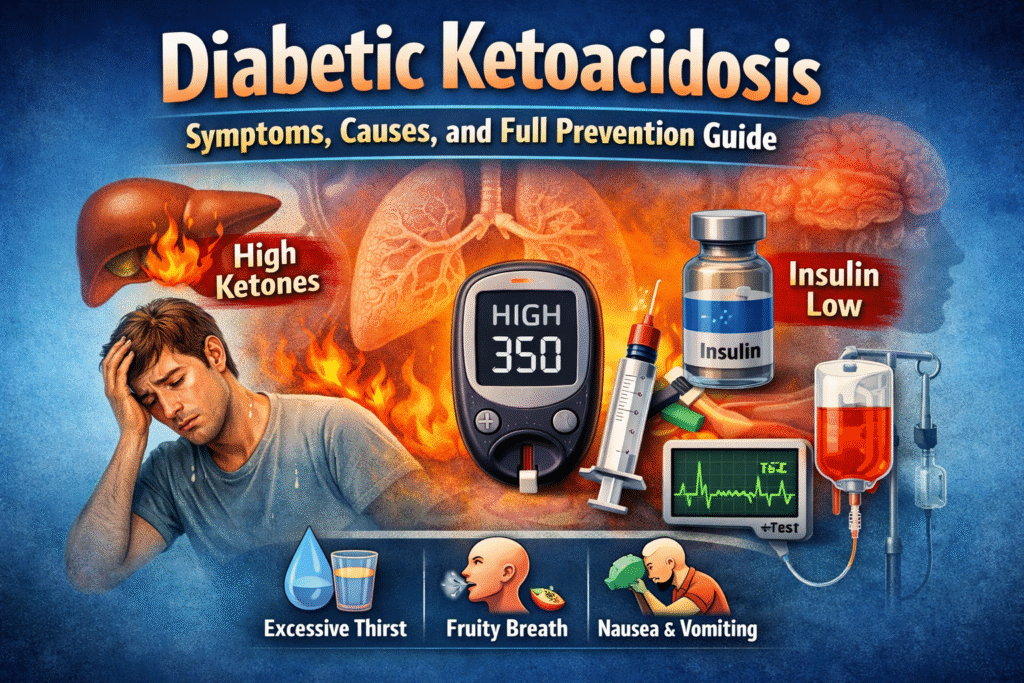
Diabetic Ketoacidosis: Symptoms, Causes, and Full Prevention Guide Diabetic Ketoacidosis (DKA) is a serious and life-threatening complication that primarily affects people with diabetes. When your body doesn’t have enough insulin to allow blood sugar into your cells for use as energy, it starts burning fat for fuel instead. This process creates a buildup of acids in the bloodstream called ketones, eventually leading to Diabetic Ketoacidosis if left untreated. What Exactly is Diabetic Ketoacidosis? In simple terms, Diabetic Ketoacidosis occurs when the chemical balance of your blood becomes too acidic. This happens because of a severe lack of insulin. Without insulin, your body cannot process glucose (sugar), which is its main energy source. To compensate, the liver begins breaking down fat at a rapid rate, producing ketones. High levels of ketones are toxic to the human body. Why is it a Medical Emergency? If the blood becomes too acidic, it can lead to organ failure, cerebral edema (brain swelling), or even a coma. Understanding the triggers of Diabetic Ketoacidosis is the first step toward staying safe. Symptoms of Diabetic Ketoacidosis You Should Not Ignore Recognizing the signs of Diabetic Ketoacidosis early can save your life. Many symptoms can develop quickly, sometimes within 24 hours. Excessive Thirst (Polydipsia): You may feel like no matter how much water you drink, your mouth stays dry. Frequent Urination: Your kidneys try to flush out the excess sugar and ketones. Fruity-Smelling Breath: A distinct, sweet smell (like fruit or nail polish remover) is a classic sign of ketones. Nausea and Vomiting: Often accompanied by severe abdominal pain. Shortness of Breath: Also known as Kussmaul breathing, where the body tries to exhale carbon dioxide to balance acidity. Confusion and Fatigue: High ketone levels affect brain function, making you feel disoriented. Common Causes and Triggers What leads to Diabetic Ketoacidosis? There are usually two main culprits: Infection or Illness: When you are sick (pneumonia, UTI, or flu), your body produces higher levels of certain hormones like adrenaline and cortisol. These hormones work against insulin. Problems with Insulin Therapy: Missing a dose, a clogged insulin pump, or using expired insulin can leave your body with zero protection. Risk Factors to Consider Risk Factor Why it Matters Type 1 Diabetes The body produces little to no insulin naturally. Skipping Meals Can cause a sudden shift in glucose and insulin balance. Physical Trauma Surgery or severe injury increases body stress. Heart Attack Stress on the cardiovascular system can trigger DKA. How to Test for Ketones at Home If your blood sugar is consistently above 240 mg/dL, you should test for Diabetic Ketoacidosis markers using: Urine Strips: A simple dipstick test that changes color based on ketone concentration. Blood Ketone Meter: Similar to a glucose meter, but it specifically measures beta-hydroxybutyrate (the main ketone). Effective Prevention Strategies To keep your Rank Math score high and your health better, follow these preventive steps for Diabetic Ketoacidosis: 1. Consistent Monitoring Check your blood sugar at least four times a day—especially when you feel tired or stressed. Knowledge is power when managing diabetes. 2. Adjust Your Insulin Dose Work with your doctor to have a “sick day plan.” This plan tells you how to adjust your insulin when you aren’t feeling well to prevent Diabetic Ketoacidosis. 3. Stay Hydrated Water helps the kidneys filter out excess glucose. Aim for at least 2–3 liters of water daily, especially if your sugar levels are creeping up. Treatment: What Happens at the Hospital? If you are diagnosed with Diabetic Ketoacidosis, you will be admitted to the hospital for: Fluid Replacement: To rehydrate you and dilute the excess sugar in your blood. Electrolyte Replacement: Replacing minerals like potassium, sodium, and chloride which are lost during DKA. Insulin Therapy: Usually delivered intravenously (IV) until your ketone levels drop and your blood pH returns to normal. Conclusion Diabetic Ketoacidosis is a daunting complication, but it is manageable and preventable. By staying proactive with your testing, following your insulin regimen, and knowing the warning signs, you can lead a long, healthy life despite diabetes. Always consult your healthcare provider if you notice any persistent high sugar readings.
7 Critical Symptoms of Diabetic Ketoacidosis: Prevention Guide Read More »