
Diabetic Foot: Symptoms, Risks & Prevention Guide for India
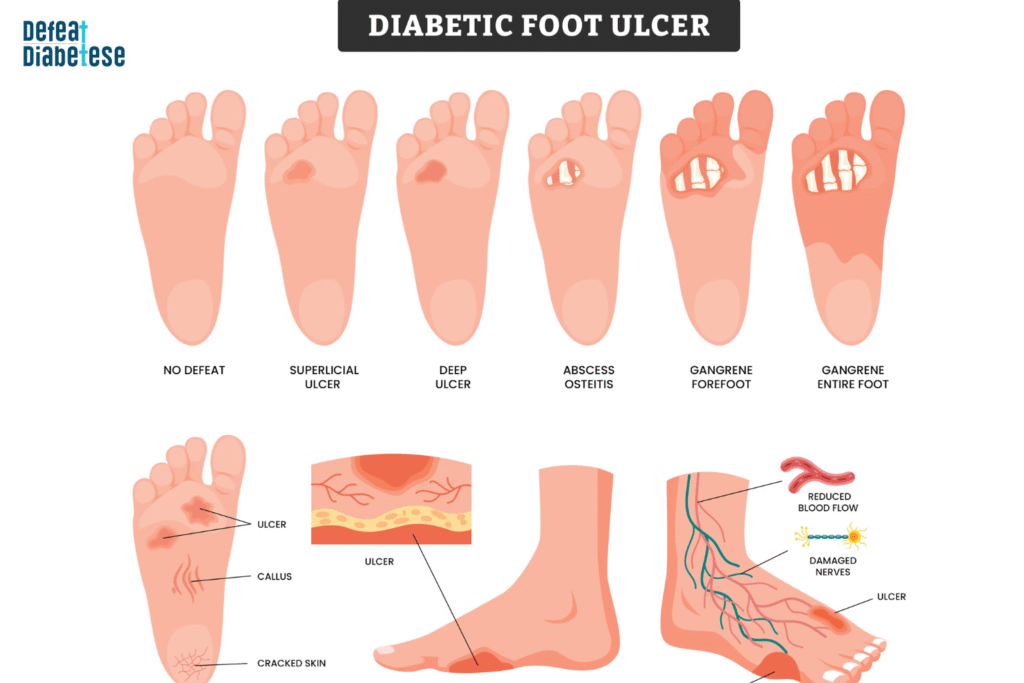
- By Defeat Diabeteas
- At
Table of Contents
ToggleDiabetic Foot: Symptoms, Risks & Prevention Guide for India
What Is Diabetic Foot?
Diabetic Foot is a serious but silent complication of diabetes where high blood sugar damages the nerves, skin, and blood vessels in your feet.
This leads to:
- Numbness
- Burning feet
- Tingling
- Dry, cracked heels
- Slow healing
- Non-healing wounds
- Foot ulcers
- Infections
And in severe cases… amputation
The scariest part?
You don’t feel pain.
Nerves get damaged quietly, and small injuries turn into big problems without you realizing it.
Do You Have Diabetes?
Then You MUST Read This…
Most diabetics in India know about sugar levels, insulin, diet, HbA1c…
But almost no one knows about diabetic foot until it becomes a problem.
Even if your sugar is “a little high,” even if you think “I’m managing it,” diabetic foot can start developing without any symptoms.
This article will help you understand:
- what diabetic foot really is
- early signs you should NEVER ignore
- example of what we see in real patients
- what you can do today
- how Defeat Diabetese helps you prevent it
Here’s Something I’ve Observed While Working With Patients
This is not a single case this is a pattern we see repeatedly.
Case-Style Example (Based on Real Patient Patterns We See)
Ramesh, 44, walked in for a consultation.
His complaints:
- Tingling at night
- Burning feet
- Post-lunch tiredness
- Cracked heels
- High fasting sugars
He didn’t think any of this was a “foot problem.”
He thought it was just “normal diabetic issues.”
- But during his check-up, we found:
A small cut on his right foot He had no sensation there
It had been there for a week without him realizing
It had already started showing signs of infection
His first reaction?
“But I didn’t feel any pain…”
Exactly.
That’s how diabetic foot starts in silence.
After 3 months of working with Defeat Diabetese:
- His sugars came under control
- The wound healed
- Burning & tingling reduced
- Cracks healed
- Sensation improved
- Foot habits changed
This is why awareness matters more than fear.
Why Does Diabetic Foot Happen?
1.Nerve Damage – Diabetic Neuropathy
High blood sugar damages your nerves.
You stop feeling pain, heat, pressure, or injuries.
2. Poor Blood Circulation
Your feet get less blood → slower healing → high risk of infection.
3. Weak Immune Response
Diabetes reduces your body’s healing capability.
4. Indian Lifestyle Factors
This is WHY diabetic foot is very common in India:
- Walking barefoot at home
- Using cheap, hard chappals
- High-carb breakfast culture
- Too much tea + biscuits
- Post-lunch sleepiness after heavy meals
- Ignoring foot dryness & cracks
- Eating “healthy snacks” that still spike sugars
- Not reading food labels properly
Important reads:
Early Warning Signs of Diabetic Foot
If you have diabetes and even ONE of these signs, it’s a red flag:
- Burning feet
- Numbness
- Tingling
- Dry, cracked heels
- Frequent foot pain
- Electric-shock feeling
- Darkened skin
- Swelling
- Bad smell
- Non-healing wounds
- Feeling cold feet
- Loss of sensation
If caught early, diabetic foot is 100% manageable.
Biggest Danger: Foot Ulcers
A foot ulcer is a wound that does not heal because of poor circulation + nerve damage.
Most ulcers begin from:
- Cracked heels
- Small cuts
- Tight footwear
- Blisters
- Walking barefoot
- Ignored dryness
If not treated early → infection → deep ulcers → possible amputation.
How to Protect Your Feet
1. Inspect Your Feet Daily
Use a mirror. Look for wounds, cracks, or color changes.
2. Never Walk Barefoot
Not inside the house, not outside.
3. Wear Diabetes-Friendly Footwear
Soft soles, wide toe box, no pointed ends.
4. Moisturise Daily (But NOT between the toes)
Keeps skin healthy and prevents cracks.
5. Control Your Blood Sugar
This is the #1 factor behind diabetic foot.
6. Trim Nails Properly
Straight across. Avoid curved edges.
7. Avoid Home Remedies
Haldi, toothpaste, or heating pads worsen the wound.
8. Regular Check-Ups
Get a foot exam every 3–6 months.
Conclusion
Diabetic foot does NOT start with a big wound.
It starts with small things:
- Minor tingling
- Slight burning
- A tiny crack
- A small cut you didn’t feel
Awareness + prevention + sugar control = safe feet for life.
You can protect yourself.
And we’re here to help you every step of the way.
Frequently Asked Questions
Foot damage caused by high sugar, nerve damage, poor blood flow, and slow healing.
Nerve damage cannot be fully reversed, but symptoms can improve and complications can be prevented.
Small injuries + nerve damage + poor blood circulation.
Daily inspection, good footwear, moisturising, and keeping sugar levels under control.
Share:
Tags:
- blood sugar control India, burning feet diabetes, cracked heels diabetes, diabetes awareness India, diabetes circulation problems, diabetes complications India, diabetes diet India, diabetes foot checkup, diabetes foot complications guide, diabetes foot exercises, diabetes foot health, diabetes foot infection, diabetes foot risk factors, diabetes foot treatment, diabetes lifestyle India, diabetes nerve damage, diabetes nerve damage prevention, diabetes neuropathy management, diabetes patient tips India, diabetes self-care India, diabetes wound healing tips, diabetic foot, diabetic foot care, diabetic foot care routine, diabetic foot infection signs, diabetic foot prevention, diabetic foot symptoms, diabetic foot ulcers, diabetic neuropathy, early signs diabetic foot, foot care tips for diabetics, foot complications in diabetes, foot pain in diabetes, healthy habits for diabetes, high blood sugar complications, how to prevent diabetic foot ulcers, Indian diabetic patient education, Indian footwear for diabetics, non-healing wounds diabetes, numbness in feet diabetes, prevent foot ulcers diabetes India, safe footwear diabetes, tingling feet diabetes, walking barefoot diabetes
Related Posts

Specialist Diabetes Doctor Near Me: अहमदाबाद में डायबिटीज स्पेशलिस्ट हर दिन हज़ारों लोग अपने फोन पर घबराहट में एक ही...
How to Reduce Insulin Resistance Naturally Understanding how to reduce insulin resistance naturally is the single most vital skill required...
Is Mounjaro for Diabetes or Weight Loss? The explosive popularity of next-generation metabolic injections has triggered massive consumer confusion globally...

Ozempic Guideline 2026: The Physician’s Perspective The landscape of metabolic healthcare in 2026 has been utterly transformed by the widespread...