
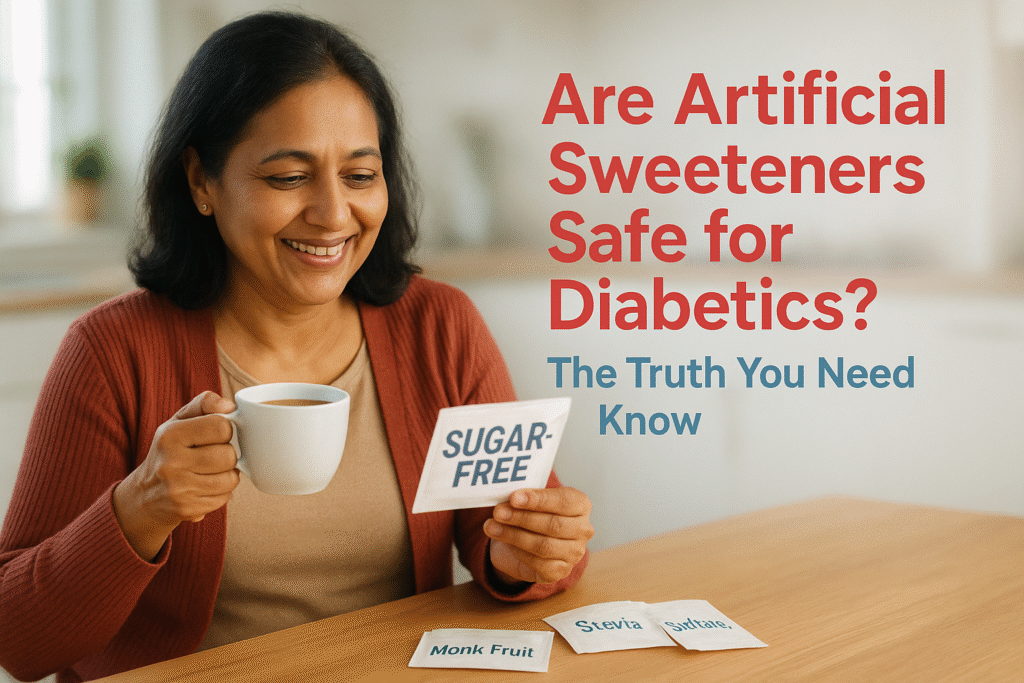
Are Artificial Sweeteners Safe for Diabetics? | Defeat Diabetes
- By Defeat Diabeteas
- At
Table of Contents
ToggleAre Artificial Sweeteners Safe for Diabetics? | Defeat Diabetes
INTRODUCTION
If you’ve been diagnosed with diabetes, you’ve probably wondered “Can I have something sweet without spiking my sugar?”
That’s where artificial sweeteners come in. From Diet Coke to sugar-free desserts, they promise sweetness without the guilt.
But are they safe for diabetics? Or is there more to the story?
Let’s uncover the facts backed by research and simplified for everyday understanding.
Related Read: Understanding Diabetes – Types, Causes, and Symptoms
What Are Artificial Sweeteners?
If you’re learning about sugar alternatives as part of your diabetes management, also explore
Managing Diabetes Confidently – A Complete Guide Artificial sweeteners are low- or zero-calorie sugar substitutes that provide sweetness without affecting blood sugar like regular sugar.
They’re commonly found in:
- Diet sodas (like Diet Coke)
- Sugar-free gums and candies
- Packaged foods labeled “diabetic-friendly”
The most common ones include:
- Aspartame (Equal, NutraSweet)
- Sucralose (Splenda)
- Stevia (natural plant-based)
- Saccharin
- Monk Fruit Extract (Luo Han Guo) a natural option gaining popularity
If you’re learning about sugar alternatives as part of your
diabetes management, also explore
Managing
Diabetes Confidently – A Complete Guide
How Do They Affect Blood Sugar Levels?
Most artificial sweeteners have a Glycaemic Index (GI) of zero, meaning they don’t cause blood sugar spikes.
That’s why they’re often recommended for people managing diabetes or prediabetes.
However, not all sweeteners are the same and long-term use raises different health questions.
Let’s look closer.
Want to balance taste and health? Try these Delicious and Diabetes-Friendly Indian Recipes
⚖ Sweetener Comparison Table
| Sweetener | Type | Calories | Glycemic Index (GI) | Safe for Diabetics? | Notes |
|---|---|---|---|---|---|
|
Stevia |
Natural (plant-based) |
0
|
0
|
Yes |
May improve insulin sensitivity in some studies. |
|
Sucralose (Splenda) |
Artificial |
0
|
0
|
Yes (in moderation) |
Stable when heated; may alter gut bacteria with overuse. |
|
Aspartame |
Artificial |
4 per gram |
0
|
Yes (moderation only) |
Avoid if you have PKU disorder; not heat-stable. |
The Rise of Monk Fruit The “New Natural Sweetener”
Monk Fruit sweetener is extracted from a small green melon found in Southeast Asia.
It’s 200 times sweeter than sugar, zero-calorie, and doesn’t raise blood sugar making it one of the best sweeteners for diabetics today.
Why experts like it:
•100% natural (no artificial chemicals)
•Doesn’t affect insulin or glucose levels
•No known harmful side effects
•Adds a mild fruity sweetness without bitterness (unlike stevia)
Monk Fruit is often blended with erythritol for baking or beverages.
It’s slowly becoming a favourite among dietitians for those managing Type 2 Diabetes naturally.
What About Diet Coke and “Sugar-Free” Drinks?
Diet Coke and other sugar-free beverages use aspartame or sucralose to replace sugar.
They don’t raise blood sugar immediately, but long-term use is still debated.
Studies show that regular consumption of artificially sweetened drinks might:
Disrupt gut microbiome balance
Increase sweet cravings over time
Be linked (in some studies) to metabolic issues if overused.
In simple terms:
An occasional Diet Coke is fine.
But relying on it daily isn’t the healthiest habit especially if you’re trying to reverse Type 2 Diabetes.
Stick to water, herbal teas, lemon water, or infused water for everyday hydration.Detox naturally after festive eating: Post-Diwali Diabetes Detox
The Mind-Body Connection
Artificial sweeteners can trick the brain into expecting sugar, increasing cravings for sweets later.
That’s why awareness not just substitution is key.
It’s not only about what’s safe but also about what’s sustainable.
Replacing sugar shouldn’t just be about calories; it should be about building mindful habits.
Key Takeaways
Artificial sweeteners can be safe when used in moderation.
Natural options like Stevia and Monk Fruit are better long-term choices.
Limit Diet Coke and packaged sugar-free foods they may still affect your metabolism.
Focus on real food, hydration, and lifestyle awareness to manage diabetes effectively.
CONCLUSION
Sweetness doesn’t have to come with fear it just needs awareness.
Knowing what’s behind your “sugar-free” label can help you make smarter, safer choices every day.
Take Charge of Your Diabetes Journey
If you’re unsure about what’s right for your body
our expert diabetologists and nutritionists are here to help.
Book your online diabetes consultation today at DefeatDiabetese
and take the first step toward a healthier, more informed life.
Frequently Asked Questions
Artificial sweeteners are low- or zero-calorie sugar substitutes that provide sweetness without increasing blood glucose levels. They work by activating the same taste receptors as sugar but are not metabolized in the same way, making them safer options for people with diabetes.
Most artificial sweeteners approved by the FDA and FSSAI—such as Stevia, Sucralose, Aspartame, and Monk Fruit—are considered safe when used in moderation. However, excessive use can sometimes affect gut health or taste preferences. Always check labels and use them as part of a balanced diet.
Stevia and Monk Fruit are considered the best natural sweeteners for diabetics because they don’t raise blood sugar levels and have antioxidant benefits.
Sucralose and Aspartame are also widely used, but some people may experience sensitivity or digestive discomfort.
Yes — artificial sweeteners can help reduce calorie intake and support weight management, which is crucial for people with type 2 diabetes. However, relying too heavily on them may lead to increased cravings for sweet foods. Balance is key.
Most artificial sweeteners, including Stevia, Sucralose, and Aspartame, have little to no impact on blood sugar levels. They can be safely used by diabetics when consumed within recommended daily limits.
Share:
Tags:
- are artificial sweeteners safe for diabetics, artificial sweeteners and diabetes, artificial sweeteners blood sugar, aspartame and diabetes, best sweeteners for diabetics, can diabetics drink diet coke, Defeat Diabetes blog, diabetes and sugar substitutes, diabetes awareness India, diabetes management tips, diet coke and diabetes, low glycemic sweeteners, monk fruit for diabetes, natural sweeteners for diabetics, safe sweeteners for diabetes, stevia and diabetes, sucralose and diabetes, sugar alternatives for diabetics, sugar-free drinks diabetes, sweeteners that don’t raise blood sugar
Related Posts
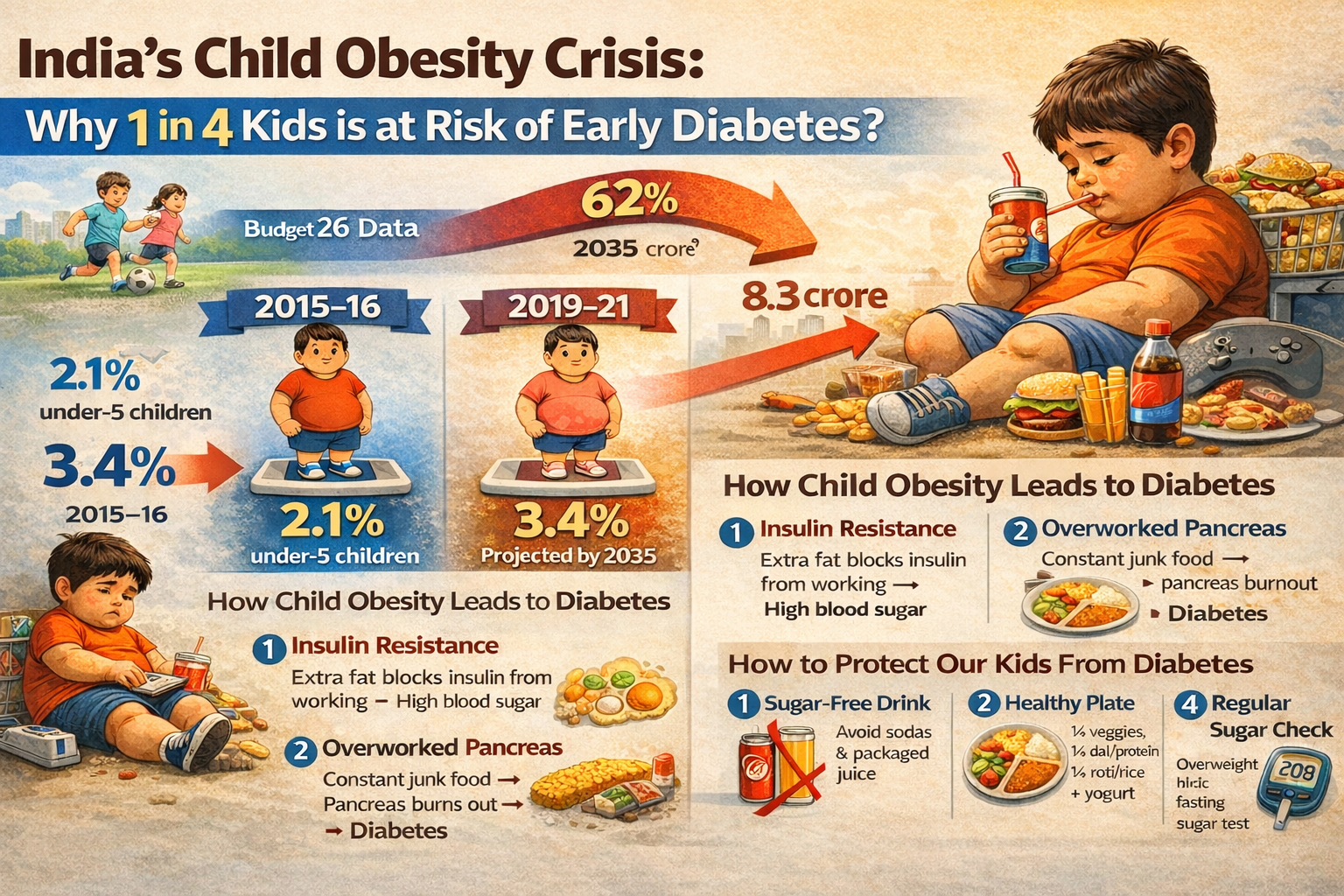
India’s Child Obesity Crisis: Why 1 in 4 Kids is at Risk of Early Diabetes? India ki growth story tab...
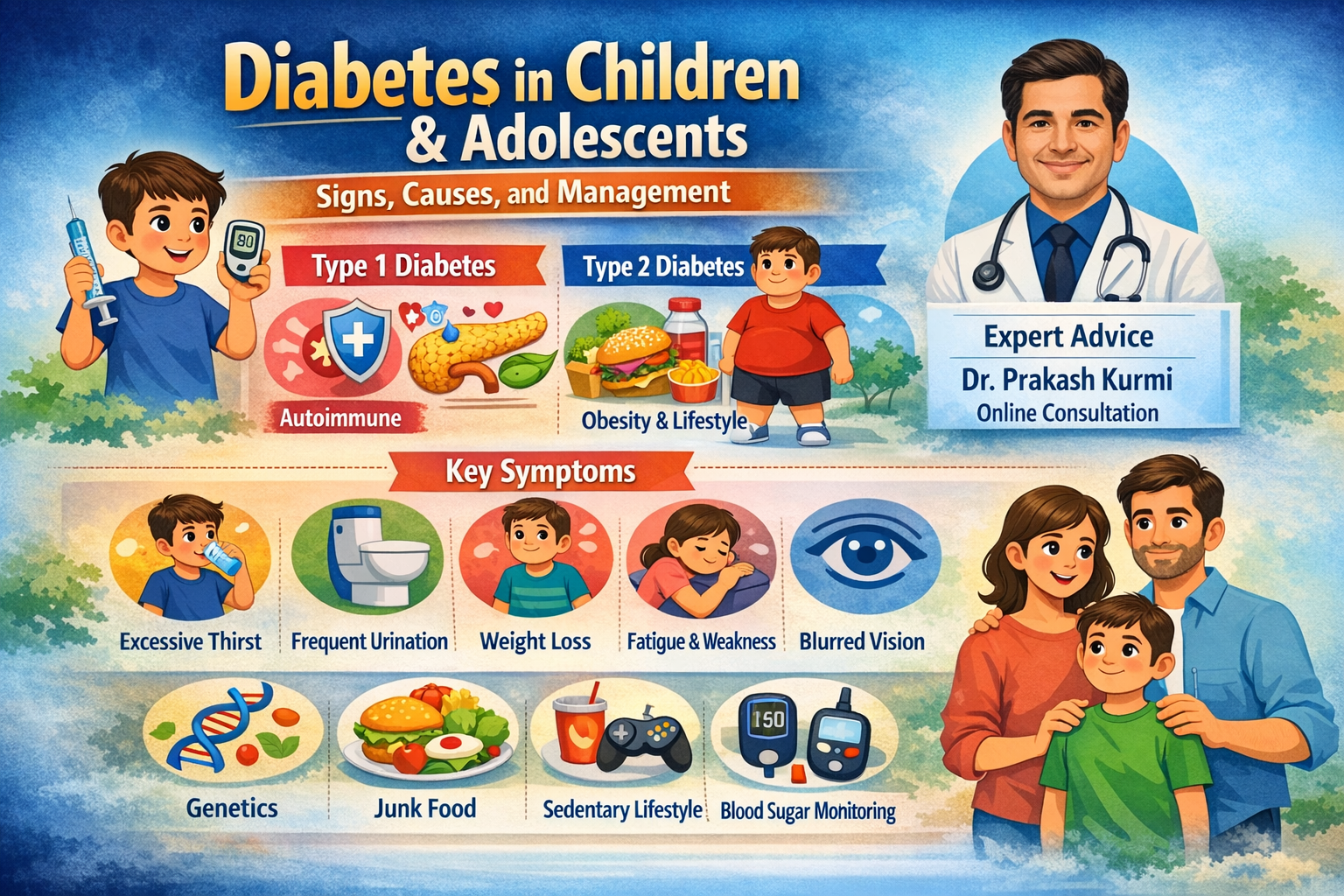
Diabetes in Children and Adolescents: 5 Signs, Causes, and Management Aaj ke daur mein Diabetes in Children and Adolescents...
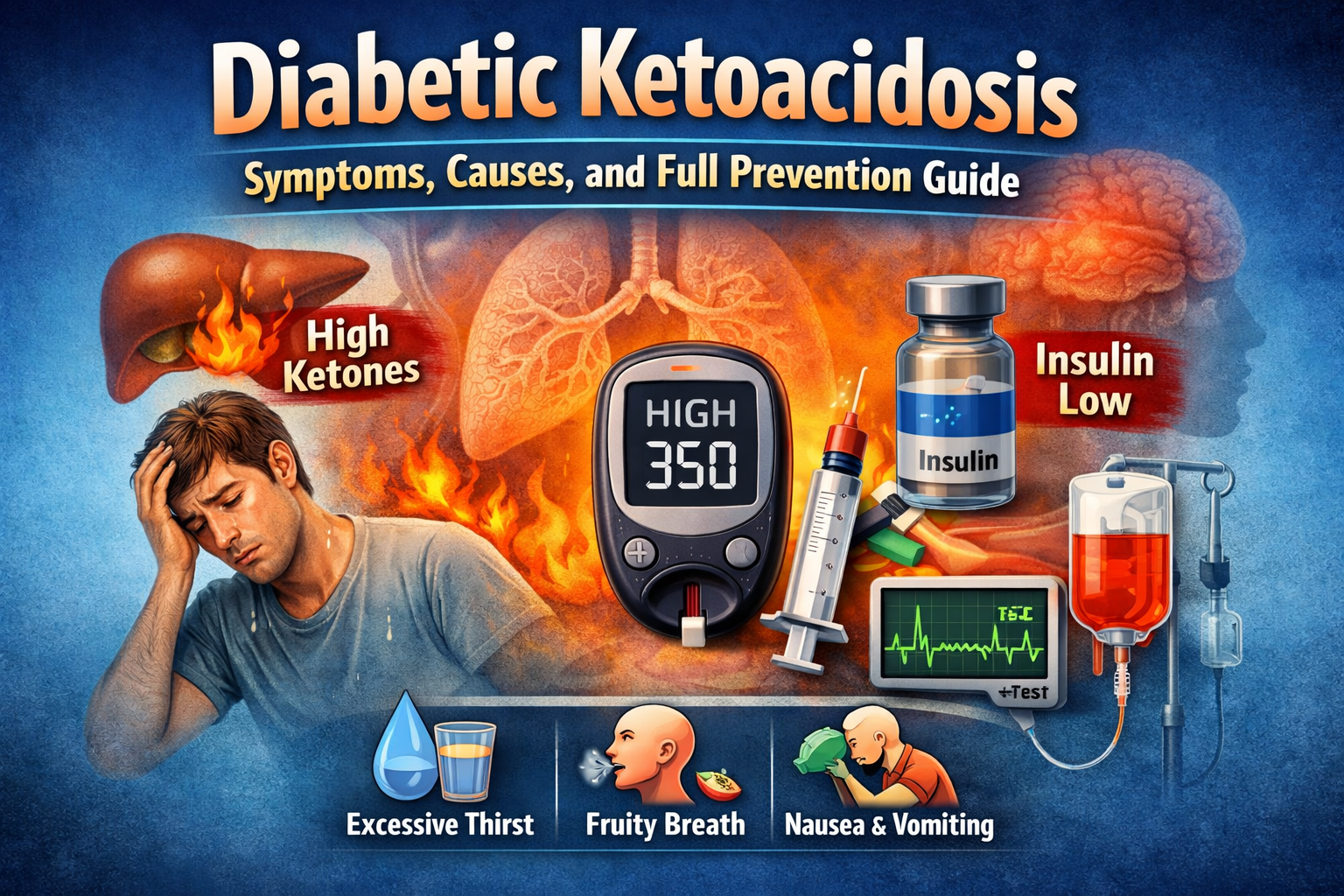
Diabetic Ketoacidosis: Symptoms, Causes, and Full Prevention Guide Diabetic Ketoacidosis (DKA) is a serious and life-threatening complication that primarily affects...
Diabetic Foot Care Tips: 7 Proven Ways to Prevent Complications Diabetes sirf blood sugar ki bimari nahi hai, balki ye...