
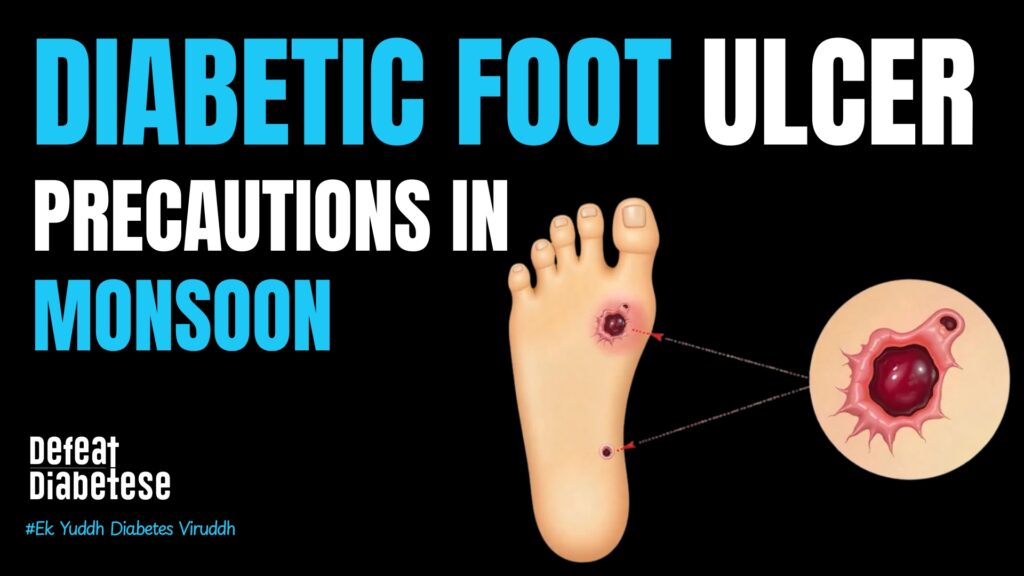
Diabetic Foot Ulcer: Precautions in Monsoon
Implementing strict diabetic foot ulcer precautions during the monsoon season is a matter of absolute clinical survival for anyone living with long-standing Type 2 Diabetes. In my 30 years of clinical legacy in Ahmedabad, monsoon is the period where we witness the highest spike in emergency foot infections at Shivam Hospital. Rainwater mixed with street sewage carries billions of aggressive pathogens. When these pathogens come into contact with a diabetic foot—which often suffers from blunted nerve sensation and reduced blood flow—the results can lead directly to irreversible tissue breakdown.
At DEFEAT DIABETESE, we approach healthcare through rigid biological logic. To win this ek yuddh diabetese viruddh, we must establish an unbreachable defensive perimeter around our feet during the rainy season, keeping our community safe as we march toward our national Vision 2040 milestones.
1. The Biological Vulnerability: Why Monsoon Multiplies the Risk
To understand why the rainy season demands hyper-vigilance, we must dissect the cellular triad of the diabetic foot: Neuropathy, Ischemia, and Infection.
-
The Silent Nerve Damage (Neuropathy): Chronically high glucose levels corrode the delicate myelin sheath protecting your peripheral nerves. This triggers Peripheral Neuropathy Foot Protection failure, meaning a patient can step on a sharp stone, develop a blister from wet shoes, or get a small cut without feeling any physical pain.
-
The Poor Blood Supply (Ischemia): Diabetes causes structural narrowing of the small blood vessels in the lower limbs. Because the blood supply is restricted, oxygen, nutrients, and immune cells cannot reach the foot efficiently to heal a minor scratch.
-
The High-Moisture Breeding Ground: Fungi and bacteria thrive in warm, humid, and wet environments. If a diabetic foot remains damp inside wet socks or open sandals for just a few hours, pathogens easily breach the softened skin barrier.
2. 5 Critical Monsoon Precautions to Prevent Foot Ulcers
To completely safeguard your feet from infection and assist in Preventing Diabetic Gangrene, enforce this clinical sanitation protocol strictly throughout the rainy season:
1. Execute the 3-Step Wash and Dry Ritual
-
The Protocol: Every single time you step indoors from the rain or muddy streets, immediately wash your feet with a mild, pH-neutral antiseptic soap and lukewarm water.
-
The Critical Step: Do not just air-dry your feet. Use a clean, dry, white towel to meticulously pat dry the skin—paying extreme attention to the gaps between your toes. Trapped moisture between the toes is the number one cause of fungal intertrigo, which splits the skin open for bacterial invasion.
2. The Mirror Inspection Rule (Look for Hidden Flaws)
-
The Protocol: Since you cannot rely on your nerves to feel pain, you must use your eyes. Every single night before bed, inspect the soles of your feet, your heels, and the tips of your toes under bright light.
-
The Hack: Use a small hand-mirror to view the hard-to-reach curves of your soles, or ask a family member to check. Look for early warning indicators: minor redness, new blisters, skin peeling, changes in nail color, or warm swelling.
3. Banish Open Rain Sandals and Barefoot Walking
-
The Protocol: Never walk barefoot, even inside your own home or on clean-looking carpets. During monsoon, avoid open rubber sandals, flip-flops, or plastic footwear that allows muddy water to splash directly onto your feet.
-
The Correct Choice: Wear closed, breathable, water-resistant footwear with deep cushioning. Always pair your shoes with seamless, moisture-wicking cotton or bamboo socks that absorb sweat and reduce friction against the skin.
4. Hydrate the Skin (But Avoid the Toe Gaps)
-
The Protocol: The metabolic shifts in diabetes dry out the sweat glands of the feet, leading to cracked heels and dry fissures that act as open doorways for bacteria.
-
The Application: Apply a thin layer of intense moisturizing cream or pure coconut oil across the top of your foot and around the heels every night. Crucial Warning: Never apply moisturizer or oil between the toes, as keeping that specific area greasy will immediately invite fungal infections.
5. Never Perform Self-Pedicures or Callus Cutting
-
The Protocol: If you notice a tough corn, a thick callus, or an ingrown toenail during the monsoon, do not attempt to cut it yourself using nail clippers, scissors, or chemical corn caps.
-
The Danger: A minor slip of the hand can create a deep vascular wound that refuses to close. Always seek professional podiatric trimming under sterile conditions at Shivam Hospital.
3. Tracking Vascular and Nerve Health via Digital Dashboards
At Defeat Diabetese, we move beyond temporary remedies by tracking your neurological baseline metrics systematically.
-
Objective Clinical Tracking: We record your peripheral pulse checks, biothesiometry scores (vibration perception testing), and skin structural data.
-
The Dashboard Mapping: By consolidating these neurological vectors alongside your metabolic logs on our Unified Health Dashboard, our medical team accurately assesses your baseline foot risk category, adjusting your Type 2 Diabetes Reversal Diet to lower systemic vascular inflammation under Dr. Prakash Kurmi’s expert legacy.
4. Frequently Asked Questions (FAQs)
Q1: What should I do immediately if I notice a small red blister on my foot?
Do not prick the blister under any circumstances. Clean the area gently with an antiseptic solution, apply a sterile micro-pore bandage to prevent friction, keep all weight off that foot, and consult your diabetologist within 24 hours to prevent it from turning into a deep ulcer.Diabetic foot ulcer precautions
Q2: Why are standard painkiller ointments dangerous for diabetic foot injuries?
Ointments only mask surface irritation. If the blood supply is poor or an infection has reached deeper tissue layers, relying on topical pain creams delays essential antibiotic or surgical intervention, increasing the risk of deep bone infections ($osteomyelitis$).Diabetic foot ulcer precautions
Q3: How does the Defeat Diabetese framework optimize foot safety?
Backed by 30 years of medical wisdom, we prioritize multi-organ complication defense. We combine high-precision metabolic lifestyle optimization with rigorous patient education, ensuring your nerve health improves naturally as your systemic insulin resistance drops.Diabetic foot ulcer precautions
Conclusion: Protect the Foundation of Your Mobility
Enforcing comprehensive diabetic foot ulcer precautions during the monsoon proves that true diabetes control requires absolute physical discipline alongside metabolic monitoring. By protecting your feet from environmental hazards, maintaining dry sanitation, and tracking your clinical data logically, you can secure your mobility for a lifetime. Let us stand united and vigilant in this ek yuddh diabetese viruddh to secure our landmark Vision 2040 national victory.Diabetic foot ulcer precautionsDiabetic foot ulcer precautionsDiabetic foot ulcer precautionsDiabetic foot ulcer precautionsDiabetic foot ulcer precautionsDiabetic foot ulcer precautions
ek yuddh diabetese viruddh.
Visit us: www.defeatdiabetese.com