
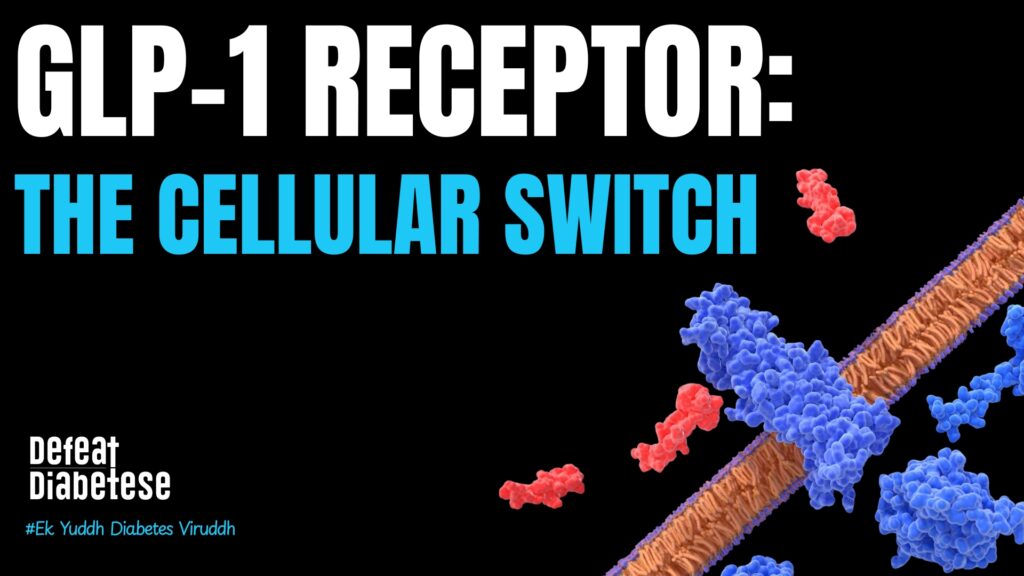
GLP-1 Receptor: The Cellular Switch
Understanding the biological role of the GLP-1 Receptor is the key to unlocking the modern science of diabetes remission and metabolic control. In my 30 years of clinical legacy in Ahmedabad, I have seen the treatment of Type 2 Diabetes evolve from simply dumping internal insulin to fixing cellular signaling pathways. At DEFEAT DIABETESE, we believe that when a patient understands the “Why” behind their biology, they win half the battle. To win this ek yuddh diabetese viruddh, we must explore how this microscopic cellular switch dictates your hunger, your pancreas, and your blood sugar, advancing our Vision 2040 mission of scientific health literacy.
1. What is the GLP-1 Receptor? The Metabolic Antenna
To simplify what the GLP-1 Receptor is, imagine it as a high-tech “Antenna” sitting on the surface of various cells in your body—specifically in your pancreas, stomach, and brain.
-
The Incretin Pathway: When you consume a meal, your L-cells in the intestine release Incretin Hormones and Diabetes modulators, primarily raw GLP-1 peptide.
-
The Lock and Key: This hormone travels through the bloodstream and binds perfectly to the GLP-1 receptor (the antenna). Once activated, this receptor sends a powerful signal inside the cell to completely alter how your body handles incoming energy.
2. The Pancreatic Impact: The Insulin Secretion Mechanism
The most critical function of the GLP-1 Receptor takes place directly inside the beta cells of your pancreas, driving a highly sophisticated Insulin Secretion Mechanism.
-
Glucose-Dependent Response: Unlike traditional diabetes medications that force the pancreas to pump insulin blindly (causing dangerous low blood sugar crashes), activating the GLP-1 receptor acts like a smart switch. It tells the pancreas: “Release insulin only if glucose is present in the blood.”
-
Glucagon Control: Simultaneously, it binds to alpha cells to shut down the secretion of glucagon. This stops the liver from dumping unnecessary stored sugar into the blood during fasting or stressful hours.
3. The Gut and Brain Connection: Switching Off “Food Noise”
The beauty of the GLP-1 Receptor is that it doesn’t just sit in the abdomen; it has a direct line of communication with the human central nervous system.
-
Gastric Slowdown: When the receptors in the gastrointestinal tract are activated, they slow down gastric emptying. Food stays in your stomach longer, leading to a steady, gradual absorption of nutrients that eliminates sharp post-meal sugar spikes.
-
Satiety Activation: In the brain (specifically the hypothalamus), activating these receptors turns off the constant neurological “food noise.” It signals absolute fullness, which naturally prevents overeating and directly drives therapeutic weight loss.
4. The Challenge: The 2-Minute Lifespan of Natural GLP-1
If this receptor is so powerful, why do diabetic patients still struggle? The answer lies in an enzyme called DPP-4.
-
The Destroyer: Your body’s natural GLP-1 hormone is incredibly short-lived. Within 2 minutes of being released, the DPP-4 enzyme breaks it down completely, rendering it useless.
-
The Modern Solution: This is where modern pharmaceutical advancements like GLP-1 Receptor Agonists come into play. These are synthetic twins designed to resist the DPP-4 enzyme, staying active in the body for days to keep the receptor continuously activated for cell repair.
5. 5 Clinical Rules to Maximize Your Receptor Health
While advanced medications target this pathway, you can optimize your natural GLP-1 Receptor response through strategic lifestyle protocols:
-
High-Fiber Pre-Loading: Eating soluble fiber (like chia seeds or green vegetables) 15 minutes before your main meal naturally stimulates your gut to release more native incretin hormones.
-
Protect Receptor Sensitivity: Chronic systemic inflammation from highly processed seed oils damages cellular membranes. Stick to clean, organic fats to keep your cellular “antennas” sharp.
-
Incorporate Quality Protein: Dietary protein is a potent trigger for natural GLP-1 release. Ensure every meal contains clean protein to maximize natural satiety signals.
-
Regular Diagnostic Benchmarks: Track your metabolic shifts via regular HbA1c and fasting insulin tests. We log these clinical parameters on the Unified Health Dashboard to trace the gradual restoration of your metabolic flexibility.
-
Clinical Supervision is Non-Negotiable: If you are prescribed synthetic versions to activate these receptors, it must be customized according to your unique pancreatic reserve, reviewed regularly at Shivam Hospital.
6. Frequently Asked Questions (FAQs)
Q1: Does activating the GLP-1 receptor exhaust the pancreas over time? No. Research shows that GLP-1 receptor signaling actually protects pancreatic beta-cells from oxidative stress and apoptosis (cell death), helping preserve long-term insulin-producing capability.
Q2: What is the difference between a DPP-4 Inhibitor and a GLP-1 Agonist? A DPP-4 inhibitor stops the destruction of your body’s own limited GLP-1, while a GLP-1 Agonist introduces a massive, long-acting synthetic supply to powerfully activate the receptors.
Q3: How does Dr. Prakash Kurmi’s legacy protocol approach this? With 30 years of medical wisdom, we view receptor health as the ultimate target. We don’t want you to rely on external chemicals forever; our goal is to fix your cellular ecosystem so your body’s natural incretin pathways take over permanently.
Conclusion: Reclaim Cellular Control
The discovery of the GLP-1 Receptor pathway proved that diabetes management is about cellular communication, not just carb restriction. By aligning your lifestyle with scientific data, you can unjam your metabolism and reclaim your health. Let us stand united in this ek yuddh diabetese viruddh to reach our Vision 2040 milestones.
ek yuddh diabetese viruddh. Visit us: www.defeatdiabetese.com