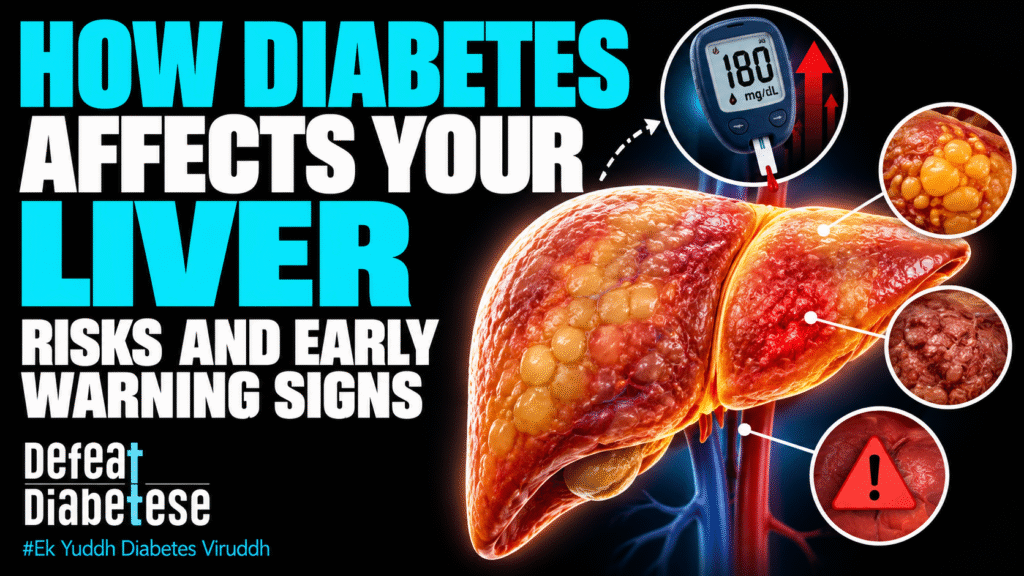
How Diabetes Affects Your Liver: 7 Serious Risks and Early Warning Signs
How diabetes affects your liver is an important health topic that deserves more attention. Most people associate diabetes with high blood sugar, kidney damage, heart disease, or vision problems. However, diabetes can also affect one of the body’s most important organs: the liver.
The liver performs hundreds of essential functions, including regulating blood glucose, processing nutrients, storing energy, and removing harmful substances from the body.
When insulin resistance, elevated blood glucose, and metabolic problems develop, the liver may begin accumulating excess fat. Over time, some people may experience liver inflammation, scarring, or more serious complications.
The connection between Type 2 diabetes and liver disease is particularly important because both conditions share several risk factors.
According to the Centers for Disease Control and Prevention (CDC), up to 70% of people with Type 2 diabetes may also have metabolic dysfunction-associated steatotic liver disease (MASLD).
Unfortunately, liver disease can progress without obvious early symptoms.
At Defeat Diabetese, we believe understanding these risks can help people recognize potential complications and seek appropriate medical care.
This article explains how diabetes affects liver health, seven important risks, early warning signs, diagnostic tests, and practical prevention strategies.
What Is the Connection Between Diabetes and Liver Health?
The liver plays a central role in maintaining normal blood glucose levels.
After eating, the liver helps store glucose in the form of glycogen. Between meals, it can release glucose into the bloodstream to support the body’s energy requirements.
Insulin helps regulate these processes.
However, when someone develops insulin resistance, the liver may continue producing glucose even when blood glucose levels are already elevated.
Insulin resistance is also associated with increased fat accumulation in the liver.
These metabolic changes can create a cycle in which diabetes and liver disease influence one another.
Fat accumulation in the liver can worsen insulin resistance, making blood glucose management more difficult.
For this reason, liver health should be considered an important part of comprehensive diabetes management.
What Is Fatty Liver Disease in Diabetes?
Fatty liver disease develops when excess fat accumulates inside liver cells.
The condition commonly associated with Type 2 diabetes is now called metabolic dysfunction-associated steatotic liver disease (MASLD).
MASLD was previously known as nonalcoholic fatty liver disease (NAFLD).
Some people with MASLD develop a more serious form called metabolic dysfunction-associated steatohepatitis (MASH), previously known as nonalcoholic steatohepatitis (NASH).
MASH involves liver fat accumulation along with inflammation and liver cell injury.
Over time, persistent inflammation may contribute to liver fibrosis, cirrhosis, or other serious complications.
However, not everyone with fatty liver develops advanced liver disease.
Early diagnosis, risk-factor management, and appropriate medical follow-up can help protect liver health.
How Diabetes Affects Your Liver: 7 Serious Health Risks
Understanding diabetes-related liver risks can encourage earlier screening and preventive healthcare.
1. Increased Risk of Fatty Liver Disease
One of the most important liver-related concerns in Type 2 diabetes is MASLD.
Insulin resistance can alter how the liver processes and stores fat.
When excess fat accumulates inside liver cells, the liver may become more vulnerable to metabolic injury.
People with Type 2 diabetes, obesity, high blood pressure, or abnormal cholesterol levels have an increased likelihood of MASLD.
However, fatty liver disease can also occur in individuals who are not overweight.
Most people with early MASLD have no noticeable symptoms.
Prevention Tip: Maintain appropriate blood glucose management, follow a balanced diet, remain physically active, and discuss liver health screening with your healthcare professional.
2. Liver Inflammation and MASH
Some people with fatty liver disease develop inflammation and liver cell injury.
This more serious condition is called MASH.
Inflammation may develop when metabolic dysfunction and fat accumulation contribute to cellular stress and liver injury.
MASH can gradually damage liver tissue and increase the risk of fibrosis.
Importantly, MASH may be present even when liver enzyme levels are not significantly elevated.
This is why assessment of liver fibrosis risk is important in people with Type 2 diabetes.
Prevention Tip: Attend regular diabetes reviews and follow medical recommendations for liver assessment, weight management, and treatment of associated metabolic conditions.
3. Liver Fibrosis
Liver fibrosis refers to the development of scar tissue in the liver.
When liver cells experience repeated injury, the healing process may produce excess scar tissue.
Over time, this can affect the liver’s structure and function.
Fibrosis often develops without clear symptoms.
People may feel healthy even when significant liver scarring is present.
Individuals with Type 2 diabetes and metabolic risk factors are particularly important candidates for fibrosis risk assessment.
Prevention Tip: Ask your healthcare provider whether tests such as FIB-4 or liver stiffness measurement are appropriate.
4. Cirrhosis and Advanced Liver Damage
Cirrhosis is an advanced stage of liver scarring.
Cirrhosis can also increase the risk of liver cancer.
5. Increased Risk of Liver Cancer
Certain advanced liver conditions, particularly cirrhosis, increase the risk of hepatocellular carcinoma, the most common primary liver cancer.
People with Type 2 diabetes and advanced fatty liver disease may face additional liver-related risks.
However, most people with diabetes will not develop liver cancer.
Regular monitoring is especially important for individuals diagnosed with cirrhosis.
Prevention Tip: People with advanced liver disease should follow a liver specialist’s recommendations for surveillance and further investigation.
6. Increased Insulin Resistance
The relationship between diabetes and liver disease works in both directions.
Insulin resistance can contribute to fat accumulation in the liver.
At the same time, fatty liver disease can worsen metabolic regulation, potentially increasing insulin resistance.
The liver may produce more glucose than the body requires, contributing to elevated fasting blood sugar.
This can make diabetes management more challenging.
Prevention Tip: Work with your healthcare team to manage glucose levels, physical activity, nutrition, body weight when appropriate, and other metabolic risk factors.
7. Increased Cardiovascular and Metabolic Risks
People with both Type 2 diabetes and MASLD often have additional cardiovascular risk factors.
These may include high blood pressure, abnormal cholesterol levels, obesity, and insulin resistance.
MASLD is associated with an increased risk of cardiovascular disease.
Therefore, managing liver health involves more than focusing on liver enzymes alone.
Heart health, kidney function, blood glucose, and cholesterol management are also essential.
Prevention Tip: Follow a comprehensive diabetes care plan that addresses blood pressure, cholesterol, glucose, physical activity, and smoking.
Early Warning Signs of Liver Problems in Diabetes
One of the biggest challenges with diabetes-related liver disease is that early stages often cause no symptoms.
A person may have substantial liver fat or even fibrosis without experiencing obvious discomfort.
When symptoms do occur, they may include:
Persistent Fatigue
Some individuals with liver disease experience unusual tiredness or weakness.
However, fatigue can also result from uncontrolled diabetes, poor sleep, anemia, or other health conditions.
Discomfort in the Upper Right Abdomen
The liver is located mainly in the upper-right portion of the abdomen.
Some people report a feeling of fullness or discomfort in this area.
Persistent abdominal discomfort should be medically evaluated rather than assumed to be caused by fatty liver.
Reduced Appetite
More advanced liver disease may contribute to decreased appetite or unintended weight loss.
These symptoms are not specific to liver disease and require medical assessment.
Yellowing of the Skin or Eyes
Yellowing of the skin or whites of the eyes is called jaundice.
It may indicate a significant liver or bile duct problem and requires prompt medical evaluation.
Swelling in the Abdomen or Legs
Advanced liver disease can cause fluid accumulation, including swelling in the abdomen.
Unexplained swelling should be assessed because heart, kidney, and other medical conditions can produce similar symptoms.
Confusion or Unusual Drowsiness
In advanced liver disease, impaired liver function may contribute to serious neurological symptoms.
New confusion, severe drowsiness, vomiting blood, or black stools require emergency medical attention.
Important: Do not wait for symptoms before discussing liver screening. Fatty liver and fibrosis can develop silently.
Who Is at Greater Risk of Diabetes-Related Liver Disease?
Certain factors increase the likelihood of MASLD and advanced liver complications.
These include:
- Type 2 diabetes
- Prediabetes with other metabolic risk factors
- Insulin resistance
- Excess abdominal fat
- High blood pressure
- Elevated triglycerides
- Low HDL cholesterol
- Physical inactivity
- Family history of liver disease
- Existing metabolic dysfunction
Not every person with these risk factors will develop liver disease.
Likewise, people without obesity can still develop MASLD.
Risk assessment should therefore be based on the individual’s overall medical condition.
How Is Liver Disease Diagnosed in People With Diabetes?
Healthcare professionals use a combination of medical history, laboratory tests, risk scores, and imaging.
Liver Blood Tests
Blood tests may measure enzymes such as ALT and AST.
Elevated results can indicate liver injury, but normal liver enzymes do not exclude significant fibrosis.
FIB-4 Risk Assessment
FIB-4 is a noninvasive score calculated using age, AST, ALT, and platelet count.
It helps identify adults who may need further investigation for liver fibrosis.
The interpretation depends on age and clinical circumstances.
FIB-4 is not a direct diagnosis of fatty liver disease.
Ultrasound Examination
An abdominal ultrasound may identify liver fat or other abnormalities.
However, ultrasound alone cannot reliably determine the severity of liver fibrosis.
Liver Stiffness Measurement
Transient elastography, sometimes performed using FibroScan, measures liver stiffness and can help assess fibrosis risk.
Your clinician may recommend this test when initial screening indicates increased risk.
Additional Testing
Some patients may require other blood tests, specialized imaging, or occasionally a liver biopsy.
Doctors may also investigate viral hepatitis, medication-related liver injury, alcohol-related liver disease, and other possible causes.
10 Practical Ways to Protect Your Liver With Diabetes
1. Manage Blood Glucose Consistently
Follow your prescribed treatment plan and discuss your individual HbA1c target with your healthcare provider.
Appropriate glucose management supports overall metabolic health.
2. Follow a Balanced Diet
Choose vegetables, whole grains, pulses, suitable protein foods, fruits in appropriate portions, and healthier fats.
Limit sugary beverages, heavily processed foods, and excessive refined carbohydrates.
3. Maintain a Healthy Weight
For people with overweight or obesity, sustained weight reduction may improve liver fat and metabolic health.
Weight goals should be individualized.
Avoid crash diets or rapid weight-loss programs without medical supervision.
4. Exercise Regularly
Many adults benefit from at least 150 minutes of moderate-intensity physical activity per week, adjusted for medical circumstances.
Walking, cycling, and swimming are useful options.
Physical activity can improve insulin sensitivity and reduce liver fat even when major weight loss does not occur.
5. Manage Cholesterol and Blood Pressure
Cardiovascular risk management is essential for people with diabetes and MASLD.
Attend recommended medical reviews and take prescribed medications consistently.
6. Avoid Harmful Alcohol Consumption
Alcohol can contribute to liver injury.
People with liver disease should discuss alcohol use with their healthcare professional, and those with advanced liver disease are generally advised to abstain.
7. Avoid Unproven Liver Detox Products
Herbal supplements and products marketed as liver cleansers do not reliably treat fatty liver disease.
Some may cause liver injury or interact with medications.
Never use supplements as a substitute for evidence-based medical care.
8. Review Medications With Your Doctor
Some diabetes medications may provide benefits for people with certain metabolic or liver conditions.
Treatment selection depends on individual diagnosis, kidney function, cardiovascular health, and other factors.
Do not start, stop, or change medication without medical guidance.
9. Discuss Appropriate Liver Screening
People with Type 2 diabetes should discuss their risk of liver fibrosis with their healthcare provider.
Screening may be appropriate even when liver enzyme results are normal.
10. Attend Regular Medical Follow-Ups
Long-term diabetes management should include assessment of blood glucose, blood pressure, cholesterol, kidney health, and liver-related risk factors.
Regular follow-up supports earlier detection and treatment of complications.
Best Indian Foods for Diabetes and Liver Health
A balanced Indian eating pattern can support metabolic health without requiring expensive or unusual foods.
Vegetables: Spinach, methi, bhindi, cauliflower, cabbage, and bottle gourd provide fiber and nutrients.
Pulses: Moong dal, masoor dal, chickpeas, and rajma provide plant-based protein and fiber.
Whole Grains: Whole-wheat roti, oats, and suitable portions of brown rice or millets can be included in balanced meals.
Protein Foods: Tofu, paneer, eggs, fish, chicken, and unsweetened curd can help meet protein needs.
Healthy Fats: Nuts, seeds, and moderate amounts of unsaturated oils can form part of a nutritious eating pattern.
Avoid assuming that jaggery, honey, fruit juices, or products labeled natural cannot affect blood glucose.
Meal portions should reflect the person’s nutritional requirements and prescribed diabetes treatment.
Can Diabetes-Related Fatty Liver Be Reversed?
Liver fat accumulation can often improve with sustainable lifestyle changes and appropriate treatment.
For some people, weight reduction and better metabolic management can also improve inflammation.
Certain forms of liver fibrosis may improve over time, depending on their severity and response to treatment.How Diabetes Affects Your Liver
However, advanced cirrhosis may not be fully reversible.How Diabetes Affects Your Liver
Early diagnosis is therefore particularly important.How Diabetes Affects Your Liver
Treatment should be tailored to the person’s diabetes status, liver disease severity, cardiovascular risk, and overall medical condition.How Diabetes Affects Your Liver
Frequently Asked Questions
1. Can diabetes damage your liver?
Yes. Type 2 diabetes is strongly associated with fatty liver disease and increases the risk of certain liver complications, particularly when metabolic risk factors are present.How Diabetes Affects Your Liver
2. What is fatty liver disease in diabetes?
MASLD occurs when excess fat accumulates in the liver in association with metabolic dysfunction.How Diabetes Affects Your Liver
3. Does fatty liver cause symptoms?
Often, no. Many people have fatty liver disease without noticeable early symptoms, which makes appropriate screening important.How Diabetes Affects Your Liver
4. Can high blood sugar affect liver function?
Persistently elevated glucose and insulin resistance can contribute to metabolic changes associated with liver fat accumulation and impaired glucose regulation.How Diabetes Affects Your Liver
5. Can fatty liver improve naturally?
Lifestyle measures such as regular physical activity, balanced nutrition, and sustainable weight management can help improve liver fat. Medical evaluation remains important.How Diabetes Affects Your Liver
6. Is fatty liver common in Type 2 diabetes?
Yes. Research indicates that fatty liver disease affects a substantial proportion of people with Type 2 diabetes.
7. Which test detects liver damage in diabetes?
Doctors may use liver enzyme tests, FIB-4, transient elastography, and other investigations depending on individual risk.How Diabetes Affects Your Liver
8. Can someone with normal liver enzymes have fatty liver disease?
Yes. Normal ALT and AST results do not rule out fatty liver disease or significant fibrosis.
9. Is fatty liver always caused by diabetes?
No. MASLD is associated with several metabolic risk factors, and other conditions can also cause liver fat accumulation or liver injury.
10. How can people with diabetes protect liver health?
Balanced nutrition, regular exercise, appropriate weight management, glucose monitoring, cardiovascular risk management, and recommended medical screening can help.
Conclusion
Understanding how diabetes affects your liver is an important part of comprehensive diabetes management.How Diabetes Affects Your Liver
Type 2 diabetes and metabolic dysfunction can contribute to fatty liver disease, inflammation, fibrosis, and, in some cases, serious liver complications.How Diabetes Affects Your Liver
One of the most important challenges is that early liver disease may develop without symptoms.How Diabetes Affects Your Liver
Regular medical evaluation, appropriate glucose management, balanced nutrition, physical activity, and timely risk assessment can help protect long-term health.How Diabetes Affects Your Liver
At Defeat Diabetese, we believe that diabetes awareness should extend beyond blood sugar monitoring to include the health of the liver, heart, kidneys, nerves, and other vital organs.How Diabetes Affects Your Liver
Protect your liver. Manage your blood sugar. Take informed steps towards better health.
Medical Disclaimer
This article is intended for educational and informational purposes only. It does not replace professional medical advice, diagnosis, or treatment. Liver disease has multiple causes, and screening or treatment should be determined by a qualified healthcare professional. Seek urgent care for jaundice with significant illness, new confusion, vomiting blood, or other serious symptoms.How Diabetes Affects Your Liver