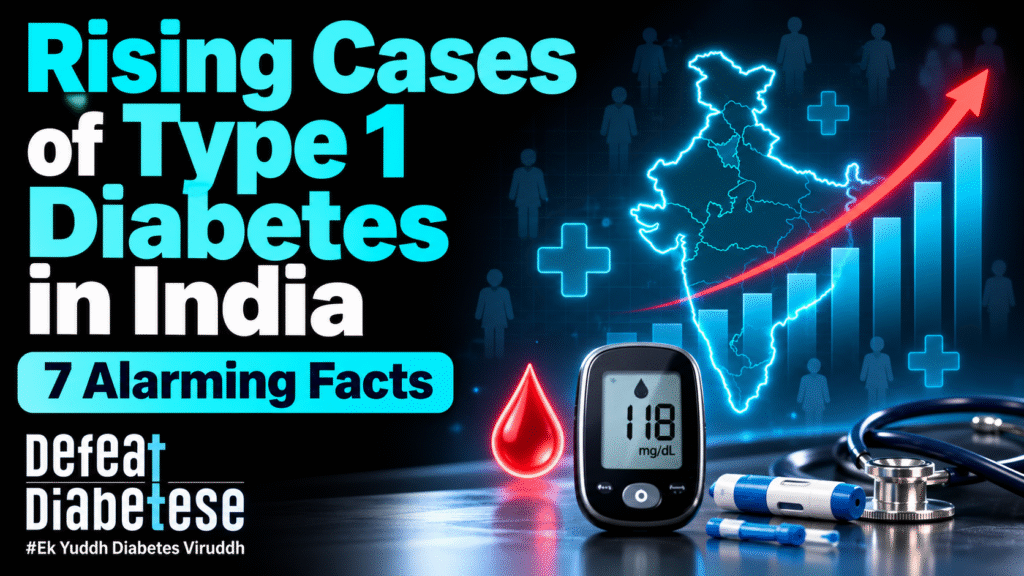
Rising Cases of Type 1 Diabetes in India: 7 Facts You Must Know
The rising cases of Type 1 diabetes in India have become an important public health concern, especially among children, teenagers, and young adults. Although diabetes is often associated with older adults and unhealthy lifestyle habits, Type 1 diabetes is a different condition that can develop unexpectedly, even in otherwise healthy individuals.
India carries a substantial burden of Type 1 diabetes. According to the International Diabetes Federation (IDF) Diabetes Atlas 2025, approximately 941,000 people of all ages were estimated to be living with Type 1 diabetes in India in 2024, including around 301,000 children and adolescents under 20.
These figures highlight the need for better awareness, earlier diagnosis, affordable insulin, and long-term medical support.
At Defeat Diabetese, we believe understanding Type 1 diabetes is essential for supporting affected individuals and their families.
This article explores seven important facts about Type 1 diabetes in India, its symptoms, treatment challenges, and the steps needed to improve diabetes care.
What Is Type 1 Diabetes?
Type 1 diabetes is a chronic autoimmune condition in which the immune system mistakenly attacks insulin-producing beta cells in the pancreas.
Insulin is an essential hormone that allows glucose from the bloodstream to enter body cells and provide energy.
When the pancreas produces little or no insulin, blood glucose rises, potentially leading to dangerous health complications.
Unlike Type 2 diabetes, Type 1 diabetes is not caused by excessive sugar consumption, obesity, or an unhealthy lifestyle.
The condition commonly develops during childhood or adolescence, although adults can also be diagnosed.
People with established Type 1 diabetes require insulin treatment to survive.
Type 1 Diabetes in India: Important Statistics
India has one of the world’s largest populations of people living with Type 1 diabetes.
The IDF Diabetes Atlas provides the following estimates:
| Category | Estimated Cases |
|---|---|
| People of all ages with Type 1 diabetes in India | 941,000 |
| Children and adolescents under 20 in India | 301,000 |
| Global population living with Type 1 diabetes | 9.15 million |
Source: International Diabetes Federation, Diabetes Atlas, 11th Edition, 2025. Estimates relate to 2024.
India also ranked first in estimated numbers of people under 20 living with Type 1 diabetes.
Earlier IDF estimates reported approximately 229,400 affected children and adolescents under 20 in India in 2021.
However, differences between successive estimates do not necessarily represent a direct increase in the annual rate of new cases. Population changes, survival, data availability, and estimation methods can influence reported numbers.
This distinction is important when discussing rising Type 1 diabetes cases in India.
7 Important Facts About Rising Cases of Type 1 Diabetes in India
1. India Has a Significant Type 1 Diabetes Burden
India’s large population means that even conditions less common than Type 2 diabetes can affect hundreds of thousands of people.
Type 1 diabetes creates lifelong treatment needs, including insulin, glucose monitoring, medical consultations, and emergency preparedness.
The high estimated number of affected children demonstrates why pediatric diabetes services deserve greater attention.
Improving early diagnosis and consistent access to care can help reduce avoidable complications.
2. Type 1 Diabetes Can Affect Children and Adults
Type 1 diabetes is often called juvenile diabetes because it frequently develops during childhood.
However, this name can be misleading.
The disease can appear at any age, including during adulthood.
Some adults are initially diagnosed with Type 2 diabetes before additional testing identifies an autoimmune form of diabetes.
Accurate diagnosis matters because Type 1 diabetes requires insulin treatment.
Doctors may use clinical history, blood glucose measurements, diabetes autoantibody tests, and C-peptide testing when necessary.
3. Early Symptoms Are Often Overlooked
One of the biggest concerns surrounding Type 1 diabetes is that symptoms may initially seem ordinary.
Children may drink more water, visit the toilet frequently, or appear unusually tired.
Parents may mistake these changes for hot weather, school-related stress, or minor illness.
Common warning signs include:
- Excessive thirst
- Frequent urination
- Sudden unexplained weight loss
- Extreme hunger
- Persistent fatigue
- Blurred vision
- Renewed bedwetting in children
Symptoms can develop rapidly over days or weeks.
Prompt medical testing is essential when these signs occur together.
4. Delayed Diagnosis Can Cause Diabetic Ketoacidosis
Diabetic ketoacidosis, or DKA, is a potentially life-threatening complication caused by severe insulin deficiency.
Without adequate insulin, the body breaks down fat for energy and produces ketones.
Excessive ketone accumulation can make the blood dangerously acidic.
Warning signs include vomiting, abdominal pain, deep or rapid breathing, fruity-smelling breath, severe dehydration, and confusion.
For some individuals, DKA is the first recognized sign of Type 1 diabetes.
Increasing public awareness and improving access to rapid blood glucose testing may help identify diabetes before an emergency develops.
Suspected DKA requires immediate emergency medical treatment.
5. Insulin Access Remains Essential
Insulin is not optional for people living with established Type 1 diabetes.
Daily treatment is necessary because the pancreas cannot produce sufficient insulin.
However, consistent diabetes management involves more than purchasing insulin.
Families may also need glucose testing supplies, appropriate insulin storage, regular consultations, education, and support during illness.
These requirements can create financial and logistical challenges, particularly for households facing limited healthcare access.
Improving access to affordable treatment and diabetes education is vital for long-term care.
6. Technology Can Improve Diabetes Management
Modern diabetes technology has introduced new ways to monitor glucose levels and administer insulin.
Continuous glucose monitoring systems can provide frequent glucose readings and help identify patterns.
Insulin pumps can deliver insulin throughout the day according to an individualized treatment plan.
Some systems combine glucose monitoring with automated insulin delivery features.
These technologies may improve glucose management and reduce treatment burden for suitable patients.
However, cost, availability, training, and follow-up support can limit access.
Traditional insulin injections and glucose meters remain effective options when used with appropriate medical guidance.
7. Awareness and Early Detection Can Save Lives
Improving Type 1 diabetes awareness is one of the most important priorities for families, schools, and healthcare providers.
Teachers should recognize symptoms of high and low blood sugar.
Parents should understand when a child needs medical testing.
Healthcare professionals should consider Type 1 diabetes when patients present with typical symptoms, regardless of body weight or age.
Greater public awareness can support earlier diagnosis, timely insulin treatment, and improved long-term outcomes.
Why Are Type 1 Diabetes Cases Increasing in India?
The reasons behind changes in Type 1 diabetes numbers are complex.
International research has identified increases in Type 1 diabetes incidence in many populations, but India-specific trends require careful interpretation.
Several factors may influence the number of people reported to be living with Type 1 diabetes.
Improved Diagnosis and Awareness
Greater awareness and access to diagnostic testing may result in more previously unrecognized cases being identified.
Better Survival and Medical Care
When people receive timely insulin and appropriate treatment, they can live longer, increasing the number of individuals living with the condition.
Genetic and Environmental Factors
Type 1 diabetes develops through an autoimmune process involving genetic susceptibility and potentially environmental triggers.
Researchers continue investigating the roles of viral infections and other exposures.
However, no single environmental factor adequately explains Type 1 diabetes development.
Better Data Collection
Changes in disease registries, research coverage, and estimation methods can influence reported case numbers.
Therefore, increases in estimated prevalence should not automatically be interpreted as equally large increases in new diagnoses.
Major Challenges of Type 1 Diabetes Management in India
Managing Type 1 diabetes can be demanding for patients and families.
Financial Challenges
Insulin, glucose monitoring equipment, and regular medical appointments may create recurring expenses.
Financial support and affordable healthcare services can reduce treatment interruptions.
Limited Awareness
Some individuals remain unfamiliar with the symptoms of Type 1 diabetes.
Misunderstanding the condition may lead to delayed diagnosis or inappropriate treatment.
Rural Healthcare Access
People living far from specialist services may experience difficulties accessing pediatric endocrinologists, diabetes educators, or advanced monitoring technology.
Emotional and Social Challenges
Children and adolescents may experience anxiety about injections, glucose monitoring, school activities, or managing their condition around friends.
Family education, counseling, and supportive school environments can help address these challenges.
How Is Type 1 Diabetes Diagnosed?
Doctors use blood tests to diagnose diabetes and additional clinical information to identify its type.
Common tests include:
Random Blood Glucose Test: Helps detect high blood sugar, particularly in someone experiencing classic diabetes symptoms.
Fasting Plasma Glucose Test: Measures blood glucose after an overnight fast.
HbA1c Test: Estimates average blood glucose over approximately two to three months.
Diabetes Autoantibody Testing: Helps identify the autoimmune process associated with Type 1 diabetes.
C-Peptide Test: May help assess how much insulin the body produces.
Ketone testing may also be necessary when DKA is suspected.
Diagnosis and treatment decisions should be made by qualified healthcare professionals.
How Can People With Type 1 Diabetes Live Healthier Lives?
With appropriate treatment, people living with Type 1 diabetes can participate in education, employment, exercise, and everyday activities.
Important management strategies include:
Follow Prescribed Insulin Therapy
Take insulin according to the treatment plan provided by your healthcare team.
Never intentionally discontinue insulin.
Monitor Blood Glucose
Use a blood glucose meter or continuous glucose monitoring system when recommended.
Learn to recognize and respond to both high and low blood sugar.Rising Cases of Type 1 Diabetes in India
Follow Balanced Nutrition
A nutritious eating pattern supports overall health.
Carbohydrate counting may help match mealtime insulin with food intake.Rising Cases of Type 1 Diabetes in India
Stay Physically Active
Regular activity supports cardiovascular health and well-being.Rising Cases of Type 1 Diabetes in India
Exercise plans should account for glucose monitoring, insulin use, and hypoglycemia prevention.Rising Cases of Type 1 Diabetes in India
Attend Regular Checkups
Routine medical reviews help assess glucose management, growth and development in children, and potential complications.
Patients and caregivers should also receive guidance on sick-day management and ketone testing.Rising Cases of Type 1 Diabetes in India
Frequently Asked Questions
1. Are Type 1 diabetes cases rising in India?
India has a large and increasingly recognized Type 1 diabetes burden. Available estimates indicate substantial numbers of people living with the condition, although determining annual incidence trends requires consistent long-term data.Rising Cases of Type 1 Diabetes in India
2. How many people have Type 1 diabetes in India?
The IDF Diabetes Atlas 2025 estimated approximately 941,000 people of all ages living with Type 1 diabetes in India in 2024.Rising Cases of Type 1 Diabetes in India
3. Can Type 1 diabetes be prevented?
There is currently no broadly applicable, proven lifestyle method to prevent Type 1 diabetes. Specialist screening and selected treatments may delay progression in some high-risk individuals.Rising Cases of Type 1 Diabetes in India
4. Is Type 1 diabetes caused by eating too much sugar?
No. Type 1 diabetes is an autoimmune condition involving destruction of insulin-producing cells.Rising Cases of Type 1 Diabetes in India
5. Can children with Type 1 diabetes live normal lives?
Yes. With insulin treatment, glucose monitoring, diabetes education, and family support, many children with Type 1 diabetes lead active, fulfilling lives.Rising Cases of Type 1 Diabetes in India
Conclusion
The rising cases of Type 1 diabetes in India highlight the urgent importance of improved awareness, timely diagnosis, and accessible healthcare.
India’s significant Type 1 diabetes burden affects children, adolescents, adults, and families across the country.Rising Cases of Type 1 Diabetes in India
Recognizing symptoms early, improving insulin access, strengthening healthcare education, and supporting people living with diabetes can contribute to better outcomes.Rising Cases of Type 1 Diabetes in India
At Defeat Diabetese, we believe that informed communities and timely medical guidance are essential to creating a healthier future.Rising Cases of Type 1 Diabetes in India
Early awareness can prevent emergencies. Better diabetes education can help improve lives. Together, we can build a stronger future for diabetes care in India.Rising Cases of Type 1 Diabetes in India
Medical Disclaimer: This article is intended for educational purposes only and does not replace professional medical advice, diagnosis, or treatment. Consult a qualified healthcare professional for personalized diabetes management. Symptoms suggesting diabetic ketoacidosis require immediate emergency care.Rising Cases of Type 1 Diabetes in India