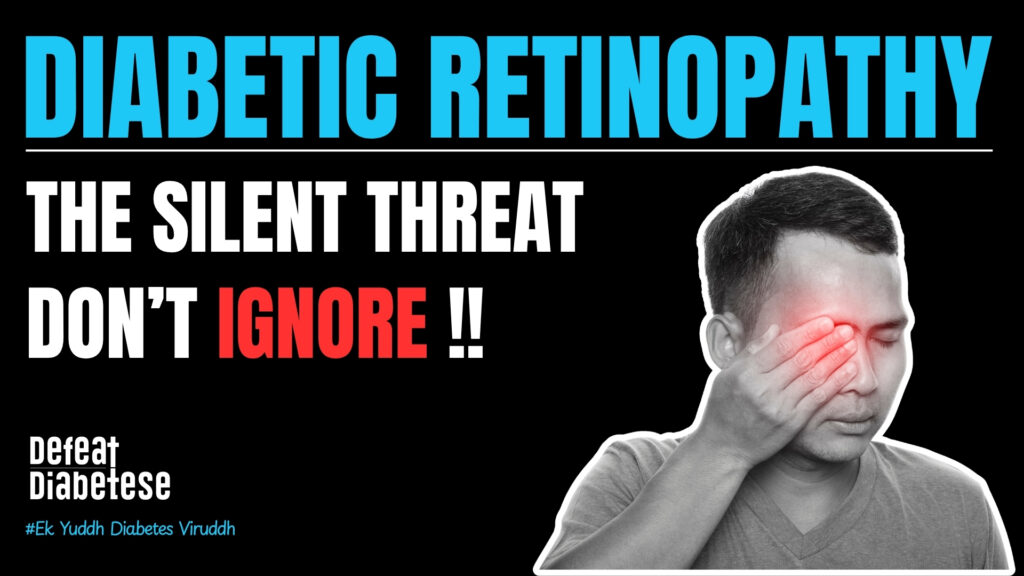
Diabetic Retinopathy: The Silent Threat
Understanding exactly what diabetic retinopathy is and how it develops is a non-negotiable step for anyone living with chronic high blood sugar. In my 30 years of clinical legacy in Ahmedabad, I have seen patients diligently manage their diet only after noticing structural changes in their vision. The terrifying reality of this condition is its silent nature—it damages your eyes internally for years without causing a single drop of physical pain or immediate blurriness.
At DEFEAT DIABETESE, our core focus centers heavily on multi-organ preservation. To win this ek yuddh diabetese viruddh, we must explore the biological mechanics of how high glucose levels corrode the delicate vascular networks of your eyes, ensuring you stay protected as we march toward our Vision 2040 milestones.
1. The Biological Definition: What is Diabetic Retinopathy?
To break it down scientifically, diabetic retinopathy is a highly specific microvascular complication of diabetes that directly affects the retina—the light-sensitive layer of tissue located at the very back of the eye.
-
The Camera Analogy: Think of your eye as a high-end digital camera. The lens at the front focuses light, but it is the retina at the back that acts as the digital sensor or film. The retina captures images and sends them to your brain via the optic nerve.
-
The High-Sugar Corrosion: When your blood flows through the body with a chronically high concentration of glucose, it acts like sandpaper against the walls of your tiniest blood vessels.
-
The Blind Spot: Because the blood vessels supplying the retina are incredibly small and delicate, they are the very first to break down under long-term metabolic stress, leading to structural Diabetic Eye Disease.
2. The Stages of Damage: From Leaking to Overgrowth
Clinical medicine divides the progression of this disease into two main distinct phases, tracking the severity of Retina Blood Vessel Damage.
Stage 1: Non-Proliferative Diabetic Retinopathy (NPDR)
This is the early, silent stage that thousands of diabetics live with without realizing it.
-
Microaneurysms: The tiny blood vessels in the retina develop microscopic, balloon-like bulges.
-
Vascular Leakage: As the vessel walls weaken further, they begin to leak blood, fluid, and fatty deposits into the retinal tissue.
-
Macular Edema: If this fluid leaks near the macula (the central part of the retina responsible for sharp, straight-ahead vision), it swells up, causing objects to appear distorted or blurry.
Stage 2: Proliferative Diabetic Retinopathy (PDR)
This is the advanced, severe stage where the eye enters an emergency survival mode.
-
Neovascularization: The original blood vessels become so blocked and damaged that parts of the retina are completely starved of oxygen and nutrients. In a desperate panic, the retina sends signals to grow new blood vessels.
-
Fragile Overgrowth: These new blood vessels are abnormal, extremely fragile, and poorly constructed. They tear open easily, leaking massive amounts of blood directly into the center of the eye (vitreous humor), blocking out light completely and threatening sudden blindness.
3. The Vicious Cycle: High Blood Pressure and Glucose Toxicity
You cannot isolate the eyes from the rest of your vascular health. Diabetic eye complications are accelerated by a secondary silent factor: hypertension.
-
The Double Pressure: When high blood sugar damages the flexibility of your arteries, it naturally drives up systemic blood pressure.
-
The Rapid Rupture: High blood pressure forces blood through already weakened, leaking retinal vessels at a dangerous velocity. This combination accelerates the transition from early-stage leakage to advanced bleeding, making strict control of both metrics mandatory.
4. Tracking Microvascular Health via Clinical Data
At Defeat Diabetese, we completely eliminate guesswork by relying on structured diagnostic mapping.
-
Beyond Glucose Checks: While maintaining a stable, low-glycemic trajectory is vital, tracking microvascular safety requires specialized evaluations. We emphasize regular annual fundus examinations or digital retinal photography.
-
The Dashboard Integration: By logging your historical HbA1c trajectory, lipid profiles, and blood pressure markers on our Unified Health Dashboard, our medical team tracks your full metabolic stability profile. This ensures your Type 2 Diabetes Reversal Diet is working to lower vascular inflammation under Dr. Prakash Kurmi’s expert legacy.
5. 5 Golden Rules for Preventing Diabetic Blindness
To ensure your vision remains crystal clear and completely protected throughout your reversal journey, implement this protocol strictly:
-
Mandatory Annual Eye Screenings: Visit an ophthalmologist for a dilated eye exam at least once every 12 months. Early stages of retinopathy can only be detected by looking directly at the back of the eye, long before your vision changes.
-
Maintain Glycemic Stability: Avoid aggressive, rollercoaster spikes in your blood sugar. Gradual, steady reduction of glucose levels protects fragile retinal vessels from sudden osmotic pressure changes.
-
Strict Blood Pressure Management: Keep your blood pressure readings firmly under $130/80\text{ mmHg}$. Lowering vascular pressure prevents weak retinal micro-vessels from rupturing.
-
Optimize Vascular Antioxidants: Enrich your nutrition with lutein, zeaxanthin, and omega-3 fatty acids found in clean sources like walnuts, seeds, and leafy greens (thoroughly cooked during monsoon) to strengthen vascular tissue.
-
Build a Legacy Guided Roadmap: Never attempt sudden lifestyle or medication changes blindly. A structured reversal protocol under expert medical supervision ensures your metabolism recovers safely without causing vascular shocks to your eyes.
6. Frequently Asked Questions (FAQs)
Q1: Can the vision loss from diabetic retinopathy be reversed?
Damage caused in the early stages (NPDR) can often be stabilized, and further progression can be halted completely by achieving metabolic remission. However, severe structural scarring or detachment in advanced stages (PDR) may require laser therapy or surgery to preserve remaining sight.
Q2: I can see perfectly fine. Does that mean my eyes are safe?
No. Retinopathy does not cause symptoms until it hits advanced stages or affects the center of your vision (macula). Waiting for vision changes to occur before getting tested is a dangerous clinical mistake.
Q3: How does the Defeat Diabetese framework handle eye protection?
Backed by 30 years of medical wisdom, we prioritize comprehensive organ defense. We combine advanced metabolic lifestyle optimization with automated diagnostic tracking, ensuring your journey toward health protects your vision from the very start.
Conclusion: Protect Your Window to the World
Understanding diabetic retinopathy highlights why true healthcare must look at the whole body, not just a single number. By choosing scientific data over assumptions and securing your vascular health early, you can protect your eyes for a lifetime. Let us stand vigilant in this ek yuddh diabetese viruddh to achieve our landmark Vision 2040 targets.
Visit us: www.defeatdiabetese.com