Blog

telemedicine for diabetes in india

Telemedicine for Diabetes India: 7 Revolutionary Changes

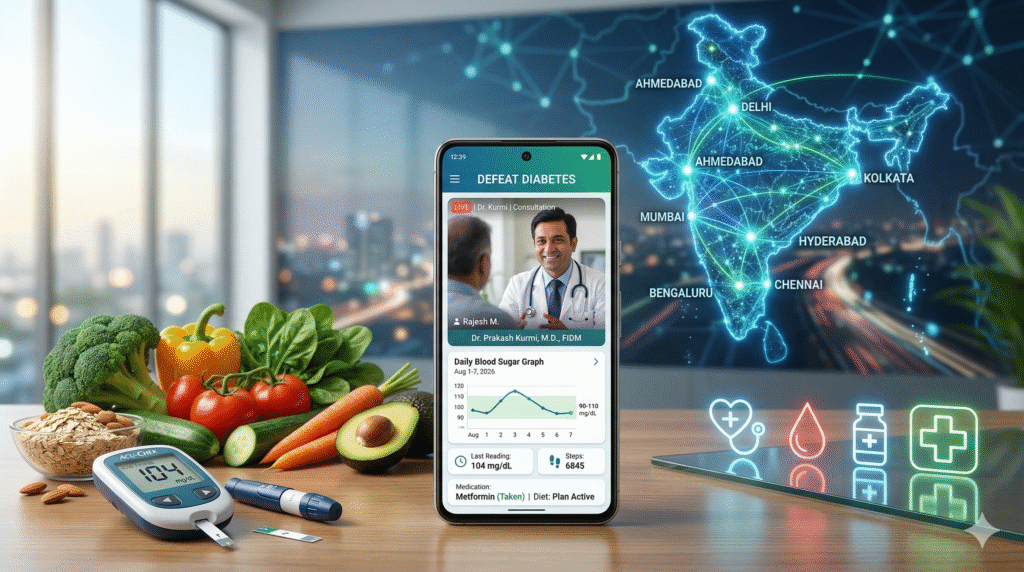
Home › Blogs › Telemedicine for Diabetes in India 🔥 TRENDING: How Digital Healthcare is Revolutionizing Diabetes Management in India | Last Updated: March 10, 2026 Telemedicine for Diabetes in India: How Defeat Diabetese is Leading the Digital Health Revolution Telemedicine for diabetes in India has emerged as a game-changing solution to the nation’s healthcare challenges, and Defeat Diabetese stands at the forefront of this transformation. With over 101 million Indians living with diabetes and traditional healthcare infrastructure struggling to meet demand, telemedicine for diabetes in India offers unprecedented access to expert care. This comprehensive analysis explores how digital healthcare is revolutionizing diabetes management, why Defeat Diabetese represents the future of metabolic health in India, and the massive opportunity this presents for patients, doctors, and healthcare innovation. From AI-powered glucose tracking to remote consultations with leading diabetologists, discover how telemedicine for diabetes in India is saving lives and transforming outcomes. 📊 The Diabetes Crisis in India (2026) 101M+ Indians with Diabetes 136M+ Pre-Diabetics 75% Skip Follow-ups 1:100K Doctor-Patient Ratio Table of Contents The Rise of Telemedicine for Diabetes in India India’s Diabetes Epidemic: The Numbers Behind the Crisis Why Traditional Diabetes Care is Failing How Telemedicine Solves Core Healthcare Problems Defeat Diabetese: The Startup Revolutionizing Diabetes Care DefeatDM App: Technology Powering Transformation Real Patient Outcomes: Data from 100,000+ Cases Sustainable Business Model: Making Healthcare Affordable The $10 Billion Opportunity in Diabetes Telemedicine Government Initiatives Supporting Digital Health Vision 2030: Transforming 10 Million Lives How Patients Access Defeat Diabetese Telemedicine Building India’s Largest Diabetes Doctor Network Frequently Asked Questions The Explosive Rise of Telemedicine for Diabetes in India Telemedicine for diabetes in India isn’t just a trend—it’s a fundamental transformation of healthcare delivery driven by necessity, technology, and changing patient expectations. The COVID-19 pandemic accelerated adoption by nearly 5 years, proving that remote healthcare could deliver outcomes equal to or better than traditional care. Market Growth & Adoption Statistics 📈 India’s Telemedicine Market Trajectory 2020: $830 million market size (pre-pandemic baseline) 2023: $5.4 billion (550% growth post-COVID) 2026 (Current): $11.2 billion estimated 2030 (Projected): $30+ billion at 28% CAGR Diabetes segment: Represents 23% of total telemedicine consultations What makes telemedicine for diabetes in India particularly compelling is its alignment with the chronic nature of the disease. Unlike acute conditions requiring emergency intervention, diabetes demands continuous monitoring, frequent medication adjustments, lifestyle counseling, and long-term relationship with healthcare providers—all perfectly suited to digital delivery. Key Drivers of Telemedicine Adoption Driver Impact on Diabetes Care Smartphone Penetration 750M+ smartphone users; 4G/5G connectivity in Tier 2/3 cities enables video consultations Digital Literacy UPI adoption proved Indians embrace digital services; healthcare naturally follows Specialist Shortage Only ~25,000 endocrinologists for 101M diabetics; telemedicine bridges gap Urban Migration Families separated geographically; telemedicine enables care for aging parents Cost Pressure 60% medical expenses out-of-pocket; telemedicine reduces travel, time, total costs India’s Diabetes Epidemic: Understanding the Scale of the Crisis Before exploring how telemedicine for diabetes in India provides solutions, we must understand the magnitude of the problem. India has earned the unfortunate title of “Diabetes Capital of the World”—and the numbers paint a sobering picture. The Diabetes Burden in Numbers ⚠️ Critical Statistics (2026 Data) 101.2 million adults living with diabetes (ages 20-79) 136 million people with pre-diabetes (impaired glucose tolerance) 1 in 3 adults has either diabetes or pre-diabetes 57% undiagnosed: Over 57 million Indians have diabetes but don’t know it Economic burden: ₹97,000 crores annually in direct medical costs Productivity loss: ₹1.2 lakh crores due to diabetes-related absenteeism and disability Life expectancy impact: Diabetes reduces lifespan by 8-10 years if poorly controlled Why India? Understanding the Risk Factors Indians develop diabetes at younger ages (onset 10-15 years earlier than Europeans) and at lower BMI levels. This “Asian Indian Phenotype” combines genetic predisposition with rapid lifestyle changes: Genetic susceptibility: Indians have higher visceral fat accumulation even at normal weight Rapid urbanization: Shift from agricultural to sedentary work (70% urban population by 2030) Dietary transition: Traditional balanced diets replaced by processed foods, refined carbs Economic growth paradox: Rising incomes enable calorie-dense diets without corresponding health awareness Stress epidemic: Competitive work culture, nuclear families, financial pressures Poor healthcare infrastructure: Inadequate prevention programs, late diagnosis Why Traditional Diabetes Care is Failing Millions of Indians Despite growing awareness, conventional healthcare delivery models struggle to meet the diabetes challenge. Understanding these failures reveals why telemedicine for diabetes in India isn’t optional—it’s essential. The 7 Critical Failures of Traditional Diabetes Care ❌ Problem 1: Specialist Shortage The Gap: Only ~25,000 endocrinologists and diabetologists for 101 million patients (1:4,000 ratio). Recommended ratio: 1:500. Most specialists concentrated in metros, leaving Tier 2/3 cities underserved. ❌ Problem 2: Follow-up Failure The Reality: 75% of patients skip recommended follow-ups due to distance, time constraints, work schedules, or transportation costs. Diabetes requires quarterly monitoring minimum—most patients see doctors only when crises occur. ❌ Problem 3: Medication Non-Adherence The Numbers: Only 43% of diagnosed diabetics take medications regularly. Reasons include cost (30% medication budget), complex regimens, side effects, and lack of continuous guidance on adjustments. ❌ Problem 4: Fragmented Care The Problem: Patients see multiple providers (GP, endocrinologist, ophthalmologist, nephrologist, cardiologist) with no coordination. Medical records scattered across clinics. No single provider owns the complete care journey. ❌ Problem 5: Inadequate Lifestyle Support The Gap: Doctors spend 80% of 15-minute consultations on medication, leaving minimal time for critical lifestyle counseling. Patients receive generic diet sheets instead of personalized, culturally adapted plans. ❌ Problem 6: High Out-of-Pocket Costs The Burden: Average annual diabetes cost: ₹38,000-₹1,20,000 (consultations + medications + tests + complications). With 60% healthcare spending out-of-pocket, families make impossible choices between treatment and other needs. ❌ Problem 7: Late Diagnosis The Crisis: 57% discover diabetes only when complications appear (vision problems, kidney disease, neuropathy). By then, reversing damage becomes difficult. Lack of routine screening in primary care means missed opportunities for early intervention. How Telemedicine for Diabetes in India Solves Core Healthcare Problems Telemedicine for diabetes in India doesn’t just digitize existing care—it fundamentally redesigns the patient experience to

Telemedicine for Diabetes India: 7 Revolutionary Changes Read More »
What is Type 2 Diabetes Reversal? Understanding Remission

What is Type 2 Diabetes Reversal? Understanding Remission

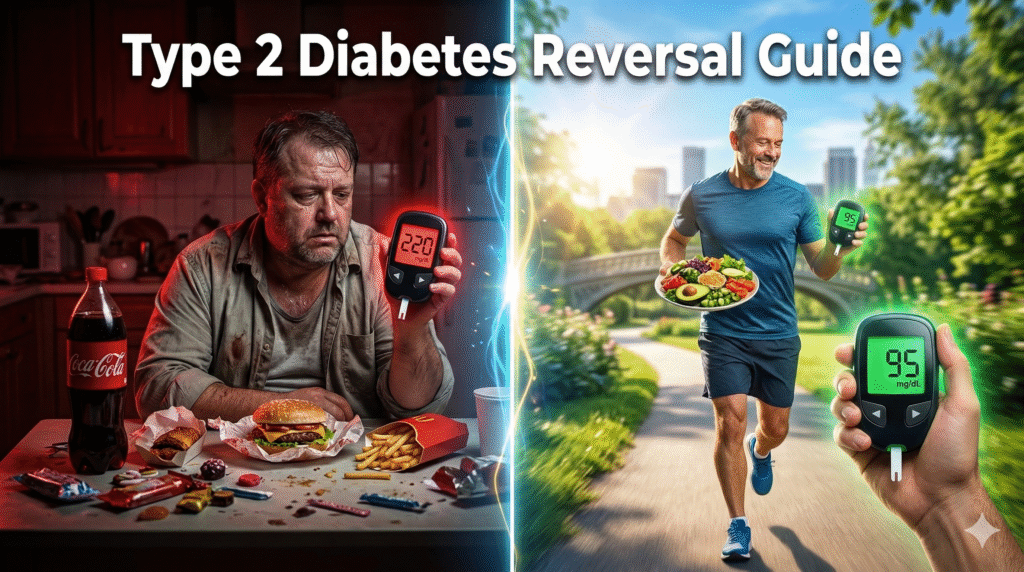
✓ Medically Reviewed by Dr. Prakash Kurmi, MD (Medicine), FIDM (Diabetologist) | 28+ Years Clinical Experience | 100,000+ Patients Treated | Last Updated: March 7, 2026 Type 2 diabetes reversal is not just possible—it’s proven. Over 101 million Indians live with diabetes, yet emerging research shows that Type 2 diabetes reversal through structured lifestyle interventions can help 46-86% of patients achieve remission. This comprehensive guide examines evidence-based methods for Type 2 diabetes reversal, backed by clinical trials and real outcomes from 100,000+ patients treated by Dr. Prakash Kurmi. Key Takeaway on Type 2 Diabetes Reversal The DiRECT trial demonstrated that 46% of participants achieved Type 2 diabetes reversal at 12 months through weight loss interventions. Those losing 15kg or more showed an 86% diabetes reversal success rate. This proves Type 2 diabetes reversal is achievable for many patients. What is Type 2 Diabetes Reversal? Understanding Remission When discussing Type 2 diabetes reversal, medical professionals now prefer the term “remission” over “cure.” Type 2 diabetes reversal means achieving HbA1c levels below 6.5% (or fasting glucose below 126 mg/dL) for at least three months without glucose-lowering medications. Unlike Type 1 diabetes, which involves autoimmune destruction of beta cells, Type 2 diabetes reversal is possible because it’s primarily a metabolic disorder. The condition develops when the body becomes resistant to insulin or when the pancreas cannot produce sufficient insulin. Through targeted interventions, Type 2 diabetes reversal addresses these root causes. Why “Reversal” Rather Than “Cure”? The term Type 2 diabetes reversal accurately reflects that while blood sugar normalizes, the underlying genetic predisposition remains. Patients who discontinue lifestyle interventions typically see diabetes return. Therefore, successful Type 2 diabetes reversal requires sustained behavioral changes rather than representing a permanent cure. The Science Behind Type 2 Diabetes Reversal: Twin Cycle Hypothesis Understanding how Type 2 diabetes reversal works requires examining the Twin Cycle Hypothesis developed by Professor Roy Taylor. This groundbreaking research explains both how diabetes develops and how Type 2 diabetes reversal becomes possible. Cycle 1: Liver Fat and Type 2 Diabetes Reversal Excess caloric intake leads to fat accumulation in the liver (hepatic steatosis) Fat-infiltrated liver becomes insulin resistant Liver produces excessive glucose even when not needed Type 2 diabetes reversal begins when caloric restriction mobilizes this liver fat Within 7-10 days of intervention, measurable liver fat reduction occurs Cycle 2: Pancreatic Recovery in Type 2 Diabetes Reversal Chronically elevated insulin demand stresses pancreatic beta cells Fat accumulates within pancreas, impairing function Type 2 diabetes reversal protocols remove this pancreatic fat Beta cell function can improve 40-100% within 8 weeks Restored beta cells enable natural insulin production Critical Insight for Type 2 Diabetes Reversal: Research demonstrates that Type 2 diabetes is fundamentally excess fat in the liver and pancreas. Type 2 diabetes reversal through caloric restriction removes this ectopic fat, restoring normal metabolic function. 7 Proven Methods for Type 2 Diabetes Reversal Based on clinical trials and our experience with 100,000+ patients, these seven methods form the foundation of successful Type 2 diabetes reversal programs. 1. Strategic Weight Loss for Type 2 Diabetes Reversal Weight reduction is the most powerful tool for Type 2 diabetes reversal. The relationship between weight loss and Type 2 diabetes reversal success is dose-dependent: Weight Loss Achieved Type 2 Diabetes Reversal Rate Average HbA1c Reduction 0-5 kg 7% 0.2-0.4% 5-10 kg 34% 0.5-0.9% 10-15 kg 57% 1.0-1.5% ≥15 kg 86% 1.5-2.5% Source: DiRECT Trial demonstrating Type 2 diabetes reversal outcomes, The Lancet 2017 For optimal Type 2 diabetes reversal results, aim for 10-15% total body weight reduction. This can be achieved through: Very Low-Calorie Diets (VLCD): 800-1,000 calories daily for rapid Type 2 diabetes reversal (medical supervision required) Moderate Caloric Restriction: 500-750 calorie daily deficit for sustainable Type 2 diabetes reversal Portion Control: Reducing serving sizes while maintaining nutritional quality 2. Low Glycemic Index Diet for Type 2 Diabetes Reversal Glycemic index (GI) measures how quickly foods raise blood sugar. Low-GI diets support Type 2 diabetes reversal by: Reducing post-meal glucose spikes Decreasing insulin demand on pancreas Improving insulin sensitivity Supporting sustainable Type 2 diabetes reversal Low-GI foods for Type 2 diabetes reversal include: Whole grains: Brown rice, quinoa, oats (GI 55-60) Legumes: Lentils, chickpeas, kidney beans (GI 30-40) Most vegetables: Especially leafy greens, broccoli, cauliflower Certain fruits: Berries, apples, pears, oranges (GI 30-50) Nuts and seeds: Almonds, walnuts, chia seeds 3. Indian Diet Adaptation for Type 2 Diabetes Reversal Type 2 diabetes reversal programs must align with cultural eating patterns for long-term success. For Indian patients, Type 2 diabetes reversal-friendly meal patterns include: Breakfast Options Supporting Type 2 Diabetes Reversal: Vegetable oats upma with groundnuts + buttermilk Moong dal cheela (2 pieces) with mint chutney Ragi porridge with nuts and flaxseeds Oats idli with sambar (low-oil preparation) Lunch/Dinner for Type 2 Diabetes Reversal: Brown rice (3/4 cup) + mixed dal (1 cup) + seasonal vegetables (1.5 cups) Bajra/jowar roti (2) + vegetable curry + cucumber raita Quinoa pulao + palak dal + salad Type 2 Diabetes Reversal Plate Method (Indian Context) 1/2 Plate: Vegetables (sabzi, salad, raita) 1/4 Plate: Whole grains (brown rice, millets, whole wheat roti) 1/4 Plate: Protein (dal, paneer, chicken, fish, tofu) 1-2 tsp: Healthy fats (mustard oil, olive oil, ghee) 4. Regular Physical Activity for Type 2 Diabetes Reversal Exercise accelerates Type 2 diabetes reversal through multiple mechanisms: Improves insulin sensitivity for 24-72 hours post-exercise Helps achieve the weight loss needed for Type 2 diabetes reversal Preserves muscle mass during caloric restriction Reduces cardiovascular risk factors Enhances glucose uptake by muscles Type 2 Diabetes Reversal Exercise Protocol: Aerobic Activity: 150+ minutes weekly (brisk walking, cycling, swimming) Resistance Training: 2-3 sessions weekly (bodyweight exercises, weights) Daily Movement: 7,000-10,000 steps daily Post-Meal Walks: 15-20 minutes after meals to reduce glucose spikes 5. Intermittent Fasting and Type 2 Diabetes Reversal Intermittent fasting (IF) can support Type 2 diabetes reversal by: Creating caloric deficit for weight loss Improving insulin sensitivity during fasting periods Reducing overall insulin demand Supporting Type 2 diabetes reversal metabolic improvements Common IF protocols

What is Type 2 Diabetes Reversal? Understanding Remission Read More »

Women and Diabetes guide

Women and Diabetes: 7 Crucial Facts About Hormones, PCOS & Menopause

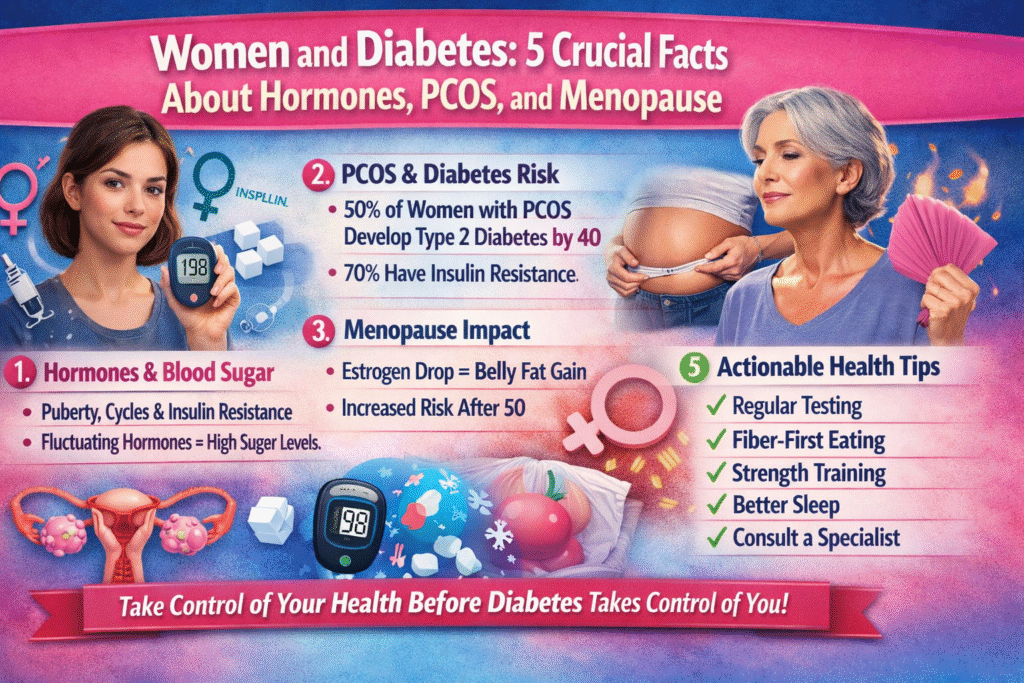
Women and Diabetes: 5 Crucial Facts About Hormones, PCOS, and Menopause Women and Diabetes ka gehra rishta hormones se hota hai…     Table of Contents Introduction: Why Women and Diabetes are Linked How Hormones Impact Blood Sugar PCOS: The Silent Warning Sign Menopause and Diabetes Risk Actionable Steps for Better Health Conclusion 1. Introduction: Why Women and Diabetes are Linked Women and diabetes have a relationship that is far more complex than most people realize. Did you know that a woman’s hormones can actually change how her body handles sugar? While diet and lifestyle are critical, biological shifts unique to women—like puberty, pregnancy, and menopause—play a massive role in metabolic health. Understanding the link between women and diabetes is the first step toward prevention. In this comprehensive guide, we will explore how hormonal fluctuations, Polycystic Ovary Syndrome (PCOS), and menopause create a unique set of challenges for blood sugar management. 2. The Role of Hormones in Blood Sugar Inside the female body, hormones act like a silent director. Estrogen and progesterone don’t just regulate the reproductive system; they directly affect how sensitive your cells are to insulin. Puberty and Cycles: During different phases of the menstrual cycle, progesterone levels rise, which can lead to temporary insulin resistance. The Insulin Connection: When hormones fluctuate wildly, the body may struggle to use insulin effectively, leading to higher-than-normal blood sugar levels. For any woman managing her health, recognizing that “high sugar days” might coincide with hormonal shifts can reduce stress and improve management. 3. PCOS: The Silent Warning Sign Polycystic Ovary Syndrome (PCOS) is one of the strongest indicators of future diabetes risk. Women and diabetes researchers have found a staggering connection here. The 50% Statistic: Approximately 50% of women with PCOS will develop Type 2 Diabetes by the age of 40. Insulin Resistance: About 70% of women with PCOS suffer from insulin resistance. This means the body produces insulin, but the organs “ignore” its orders. The Result: Because the cells don’t ACT on insulin, sugar stays in the blood. This not only causes weight gain and acne but eventually leads to a diabetes diagnosis. If you have PCOS, you aren’t just managing irregular periods—yours is a metabolic battle that requires constant blood sugar monitoring. 4. Menopause and Diabetes Risk As women reach menopause, estrogen levels drop significantly. This hormonal “cliff” leads to several metabolic changes that increase the risk of Type 2 Diabetes. Shift in Fat Distribution: Lower estrogen often leads to increased “belly fat,” which is more dangerous for insulin resistance than fat stored elsewhere. Reduced Sensitivity: With less estrogen, the body’s natural ability to process glucose declines. This is why many women find that their blood sugar levels become much harder to manage after the age of 50, even if their diet hasn’t changed. 5. Actionable Steps for Better Health The connection between women and diabetes may seem daunting, but it is manageable. Here are five proven strategies: Regular Testing: If you have PCOS or are entering menopause, don’t just test your sugar; test your fasting insulin levels. Fiber-First Eating: Always eat your vegetables (fiber) before your carbohydrates to flatten the glucose spike. Strength Training: Muscles are the primary “sponges” for blood sugar. More muscle mass means better insulin sensitivity. Sleep Hygiene: Lack of sleep increases cortisol, which directly raises blood sugar. Consult a Specialist: Work with an endocrinologist who understands the intersection of reproductive hormones and metabolism. 5. Actionable Steps for Better Health The connection between women and diabetes may seem daunting, but it is manageable. Here are five proven strategies: Regular Testing: If you have PCOS or are entering menopause, don’t just test your sugar; test your fasting insulin levels. Fiber-First Eating: Always eat your vegetables (fiber) before your carbohydrates to flatten the glucose spike. Strength Training: Muscles are the primary “sponges” for blood sugar. More muscle mass means better insulin sensitivity. Sleep Hygiene: Lack of sleep increases cortisol, which directly raises blood sugar. Consult a Specialist: Work with an endocrinologist who understands the intersection of reproductive hormones and metabolism. Polycystic Ovary Syndrome (PCOS) is one of the most common hormonal conditions increasing the risk of women and diabetes. The 50% Risk: Research suggests that about 50% of women with PCOS may develop type 2 diabetes later in life. Insulin Resistance: Roughly 70% of women with PCOS have insulin resistance. The Mechanism: This means the body doesn’t use insulin properly, which significantly increases the risk of developing type 2 diabetes. Common Symptoms: Look for irregular periods, weight gain, acne, and difficulty getting pregnant. Conclusion Women and diabetes is a topic that deserves more attention in the healthcare space. Your hormones are not just about fertility; they are the engines of your metabolism. By understanding the roles of PCOS and menopause, you can take control of your health before a diagnosis occurs. Understanding your hormones is the ultimate power word in your health journey. Monitor your sugar, stay active, and listen to your body.

Women and Diabetes: 7 Crucial Facts About Hormones, PCOS & Menopause Read More »

obesity and diabetes risk.

Obesity and Diabetes Risk: 7 Powerful Secrets to Reaching Remission

India is currently facing a double-edged sword: a massive rise in both weight gain and high blood sugar levels.   This phenomenon, often called “Diabesity,” highlights the undeniable link between obesity and diabetes risk. At DEFEAT DIABETESE, led by the visionary clinical expertise of Dr. Prakash Kurmi, we believe that understanding this connection is the first step toward true health. Dr. Kurmi, an M.D. in Medicine with over 27 years of experience, has seen firsthand how managing weight can be the most potent medicine for metabolic health. ____________________________________________________________________________________________________________________________________ 1. The Biological Link: How Obesity Drives Diabetes Risk To solve a problem, you must understand its source. The primary reason behind the increased obesity and diabetes risk is insulin resistance. When the body carries excess fat, particularly around the abdomen, it releases inflammatory chemicals that block insulin from doing its job. As these fat cells expand, they demand more insulin, eventually exhausting the pancreas. This cycle is the foundation of obesity and diabetes risk. By addressing weight through our specialized protocols, we aim to break this cycle and restore the body’s natural metabolic balance. 2. The 5-10% Rule: Small Changes, Massive Results Many patients feel overwhelmed by the thought of losing 20 or 30 kilograms. However, reducing obesity and diabetes risk doesn’t require an overnight transformation. Clinical data and Dr. Prakash Kurmi’s 36-year legacy at Shivam Multi-Speciality Hospital prove that losing just 5% to 10% of your total body weight can significantly improve your blood sugar levels. This modest reduction in weight is often enough to put Type 2 diabetes into remission, proving that proactive management is the best defense against obesity and diabetes risk. 3. The Role of the DefeatDM App in Real-Time Management In 2026, healthcare must be as mobile as the patient. Traditional clinics often fail because they don’t monitor the patient’s daily lifestyle. DEFEAT DIABETESE bridges this gap with the DefeatDM App. Continuous Monitoring: The app tracks your meals and physical activity, providing a data-driven look at your obesity and diabetes risk. Expert Observation: Our dedicated team, including specialists like Dr. Jay and Soniya Khanna, monitors this data to provide real-time adjustments to your plan. Digital Accountability: By seeing the direct impact of your diet on your sugar levels, you become an active participant in reducing your obesity and diabetes risk. 4. Personalized Weight Management for the Indian Lifestyle A major reason why generic weight loss plans fail in India is that they don’t account for our local food culture. At DEFEAT DIABETESE, we specialize in a diet plan for weight loss in Ahmedabad that respects your traditions. Smart Swaps: We teach you how to enjoy local flavors while reducing the glycemic load that contributes to obesity and diabetes risk. Sustainable Habits: Instead of restrictive “crash diets,” we focus on long-term nutritional education. Metabolic Efficiency: By tailoring nutrition to your specific metabolic rate, we ensure that weight loss is consistent and healthy. 5. Scaling Hope: Our 2030 Vision for 10 Million Lives Inspired by the scalability principles of HMS Consultants, DEFEAT DIABETESE is building India’s largest tech-first care network. The 10 Million Goal: Our roadmap for 2030 is to assist 1 crore Indians in reducing their obesity and diabetes risk through digital innovation. Affordability: We are leveraging technology to reduce the total cost of expert care by 40%, making world-class weight management accessible to everyone. National Infrastructure: With plans for 100 tech-first hospitals and 10,000 trained partners, we are taking the fight against obesity and diabetes risk to every corner of India. 6. Ethical Care and the Zero-Commission Model Trust is the most important component of healthcare. Many patients are wary of “weight loss clinics” that focus on selling supplements. DEFEAT DIABETESE operates on a zero-commission, fixed-salary model for our doctors. Result-Oriented: Our only metric for success is the reduction of your obesity and diabetes risk and the achievement of remission. Transparency: From your digital medical records to our treatment protocols, everything is transparently handled through our telemedicine platform. Integrity: With Dr. Prakash Kurmi’s 27+ years of ethical clinical practice, patients know they are receiving honest, evidence-based advice. 7. Telemedicine: Breaking the Barriers to Expert Care Distance and time should never be an obstacle to health. Whether you are a busy professional or living in a rural area, your obesity and diabetes risk can be managed effectively from home. Zero-Wait Time: Our online consultations ensure that you speak with Dr. Prakash Kurmi or his expert panel without the frustration of hospital queues. Home Comfort: Managing your weight requires a supportive environment. Our virtual platform brings expert coaching into the comfort of your home. Confidentiality: Discuss sensitive metabolic issues in a secure, private virtual space, ensuring that your journey to reducing obesity and diabetes risk is respected. Frequently Asked Questions (FAQs) Q1: Is every person with obesity at risk for diabetes? While not everyone will develop the condition, the correlation is extremely high. Managing obesity and diabetes risk is a preventive measure everyone should take. Q2: Can I reduce my obesity and diabetes risk without medication? In many cases of Type 2 diabetes, significant weight loss and dietary changes can lead to remission, reducing or eliminating the need for medication. Q3: How does the DefeatDM app help with weight? The app provides the data Dr. Prakash Kurmi needs to customize your plan, ensuring your weight loss specifically targets the factors driving your obesity and diabetes risk. Q4: Is the plan available outside of Ahmedabad? Yes! As a telemedicine startup, DEFEAT DIABETESE provides consultations across India to help millions manage their obesity and diabetes risk. Conclusion: A Healthier Future Starts with a Single Step The link between obesity and diabetes risk is clear, but it is not a life sentence. By combining the 27-year medical legacy of Dr. Prakash Kurmi with the visionary tech-first approach of DEFEAT DIABETESE, you can reclaim your health. It is time to lose the weight, defeat the sugar, and build a healthier India!

Obesity and Diabetes Risk: 7 Powerful Secrets to Reaching Remission Read More »

Holi Diabetes Management

7 Powerful Tips for Holi Diabetes Management You Need to Know

7 Powerful Tips for Holi Diabetes Management You Need to Know This Holi, while the streets are covered in Gulal, let’s make sure your plate is just as vibrant! Traditionally, festivals often mean a heavy dose of sweets and fried snacks, but you can celebrate the “Festival of Colors” without the blood sugar roller coaster. Holi Diabetes Management starts with the realization that your festive plate can be just as colorful as the clouds of Gulal in the air. Traditionally, festivals are synonymous with high-sugar treats that can wreak havoc on your health. However, you can celebrate a vibrant Holi without compromising your blood sugar goals by focusing on nature’s own palette. 1. Why Colorful Foods are Vital for Holi Diabetes Management When we talk about Holi Diabetes Management, we are really talking about “eating the rainbow.” Brightly colored whole foods naturally reduce blood sugar spikes because they are packed with specific phytonutrients that support metabolic health. 2. Red Foods: Keeping Your Sugar in Control Red vegetables and fruits, such as tomatoes and watermelon, are essential for your festive diet. Tomatoes have a low glycemic index and contain lycopene, which supports heart health—a crucial factor in long-term Holi Diabetes Management. 3. Green Foods: The Power of Fiber for Stable Sugars Fiber is the ultimate secret weapon for Holi Diabetes Management. Leafy greens like spinach, broccoli, and cucumber are loaded with fiber. Fiber slows down sugar absorption, ensuring that your energy levels remain stable throughout the day’s celebrations. 4. Purple Foods: Antioxidant-Rich Superstars Don’t overlook the purples! Blueberries and eggplants are rich in antioxidants called anthocyanins. These compounds help improve insulin sensitivity, making them a delicious part of your Holi Diabetes Management strategy. 5. Use a “Salad First” Strategy Before reaching for the Gujiya, fill half your plate with a vibrant salad. This ensures you get your fiber and nutrients first, naturally reducing your appetite for sugary snacks. This simple habit is a cornerstone of effective Holi Diabetes Management. 6. Stay Hydrated with Natural Flavors Swap out sugary sodas for water infused with lemon, mint, or a pinch of turmeric. Staying hydrated is often overlooked in Holi Diabetes Management, but it is vital for helping your kidneys flush out excess glucose. Monitor and Celebrate As shown in the reference image, keeping your blood sugar around 98 mg/dL is the goal. Use your glucometer regularly during the festival. Knowledge is power, and consistent monitoring is the final piece of the Holi Diabetes Management puzzle. Paint Your Plate: A Diabetic-Friendly Holi Celebration Holi is a symphony of colors, laughter, and—all too often—sugar crashes. While we love our Gujiayas and Thandai, these festive treats can be tricky for those managing their blood sugar. But who says a healthy plate has to be boring? This year, we’re swapping synthetic dyes for nature’s palette. By incorporating bright, whole foods into your Holi feast, you aren’t just celebrating tradition; you’re fueling your body with antioxidants and fiber. Why “Eating the Rainbow” Works The vibrant pigments that give fruits and vegetables their color are actually powerful phytonutrients. As seen in our Holi-inspired guide, different colors offer unique benefits for glucose management: 🔴 The Power of Red: Tomato & Watermelon Red foods like tomatoes are packed with lycopene. For diabetics, tomatoes are a superstar because they have a very low glycemic index (GI), helping to keep your sugar in check while you enjoy the festivities. 🟢 The Strength of Green: Spinach & Broccoli Green is the color of stability. Leafy greens like spinach are high in fiber, which slows down the absorption of sugar into your bloodstream. If you’re planning a heavy meal, start with a big green salad to create a “fiber buffer.” 🟣 The Magic of Purple: Blueberries & Eggplant Purple foods are rich in anthocyanins. These antioxidants are known to improve insulin sensitivity. Adding a handful of berries to your breakfast or grilled eggplant to your lunch can help combat oxidative stress. 3 Tips for a Balanced Holi Hydrate with “Natural” Thandai: Skip the sugar-laden syrups. Make a refreshing drink using unsweetened almond milk, crushed cardamom, saffron, and a touch of stevia or monk fruit. The Salad First Rule: Before reaching for the snacks, fill half your plate with a colorful salad (think carrots, cucumbers, and bell peppers). The fiber will keep you full and prevent overindulgence. Monitor Your Levels: With all the excitement and different foods, don’t forget to check your levels. A quick glance at your glucometer (aiming for that steady 98 mg/dL vibe!) ensures you stay safe while having fun. Tip: Use real turmeric and beetroot juice for your DIY organic colors this year. They are better for your skin and even better for your soul!

7 Powerful Tips for Holi Diabetes Management You Need to Know Read More »

Fruits for Diabetes

Fruits for Diabetes: 7 Amazing Picks for Ultimate Blood Sugar Control

Fruits for Diabetes: 7 Amazing Picks for Ultimate Blood Sugar Control Many people mistakenly believe that having diabetes means cutting out fruit entirely. However, choosing the right fruits for diabetes is actually a powerful way to manage your health. Fruits are packed with fiber, vitamins, and antioxidants that help stabilize glucose levels rather than spiking them. In this ultimate guide, we will explore the best fruits for diabetes and how they can fit into your daily blood sugar control plan. Table of Contents The Science: Glycemic Index and Diabetes Fruit 1: Berries – The Antioxidant Powerhouse Fruit 2: Cherries – Fighting Inflammation Fruit 3: Pears – High Fiber for Stability Fruit 4: Apples – Pectin and Heart Health Fruit 5: Citrus Fruits – Vitamin C Boost Fruit 6: Avocado – The Healthy Fat Exception Fruit 7: Peaches – Metabolism Support How to Eat Fruit Safely with Diabetes Conclusion The Science: Glycemic Index and Diabetes  To understand which fruits for diabetes are safe, you must look at the Glycemic Index (GI). The GI ranks food based on how quickly they raise blood sugar. Low GI fruits (55 or less) are digested slowly, causing a lower and slower rise in blood sugar levels. Most fruits in this list fall into the low GI category, making them ideal for consistent energy. 1. Berries – The Antioxidant Powerhouse  Whether it’s blueberries, strawberries, or raspberries, berries are arguably the best fruits for diabetes. They are loaded with fiber and have a very low sugar content compared to other fruits. Berries contain anthocyanins, which have been shown to improve insulin sensitivity and glucose clearance from the blood. 2. Cherries – Fighting Inflammation Tart cherries are excellent for blood sugar management. They contain compounds called anthocyanins that help boost insulin production. Research suggests that consuming cherries regularly can help reduce fasting blood sugar levels, making them a top choice for long-term control. 3. Pears – High Fiber for Stability Pears are incredibly high in fiber, especially if you eat them with the skin on. Fiber is crucial because it slows down the absorption of sugar into the bloodstream. One medium pear can provide nearly 25% of your daily fiber requirement, helping you feel full and satisfied without a sugar crash. 4. Apples – Pectin and Heart Health The old saying “an apple a day” holds true for diabetics. Apples are rich in soluble fiber called pectin, which helps lower cholesterol and regulate blood sugar. When searching for the best fruits for diabetes, apples are a convenient, portable, and highly effective option. 5. Citrus Fruits – Vitamin C Boost Oranges and grapefruits are “diabetes superfoods.” They provide a massive dose of Vitamin C and folate. While fruit juice should be avoided, eating the whole fruit provides the fiber (pulp) necessary to prevent a blood sugar spike. 6. Avocado – The Healthy Fat Exception While technically a fruit, avocados are unique because they are low in sugar and high in healthy monounsaturated fats. These fats help improve insulin sensitivity. Adding avocado to a meal can actually lower the glycemic response of the entire meal. 7. Peaches – Metabolism Support Peaches are delicious and packed with vitamins A and C. They are also rich in potassium, which is vital for heart health—a major concern for diabetes patients. Their low-calorie count and high water content make them a perfect snack. How to Eat Fruit Safely with Diabetes Even with the best fruits for diabetes, portion control is key. Here are three tips for ultimate success: Eat the Skin: Most of the fiber is in the peel. Pair with Protein: Eat fruit with a handful of nuts or Greek yogurt to further slow sugar absorption. Avoid Canned Fruits: These are often stored in heavy syrup which is pure sugar. Conclusion  Choosing the right fruits for diabetes doesn’t have to be a guessing game. By focusing on low GI options like berries, apples, and citrus, you can enjoy natural sweetness while maintaining perfect blood sugar control. Start incorporating these 7 amazing fruits into your diet today and feel the difference in your energy and stability.

Fruits for Diabetes: 7 Amazing Picks for Ultimate Blood Sugar Control Read More »

Insulin Resistance

Insulin Resistance: 7 Powerful Ways to Reverse It Naturally

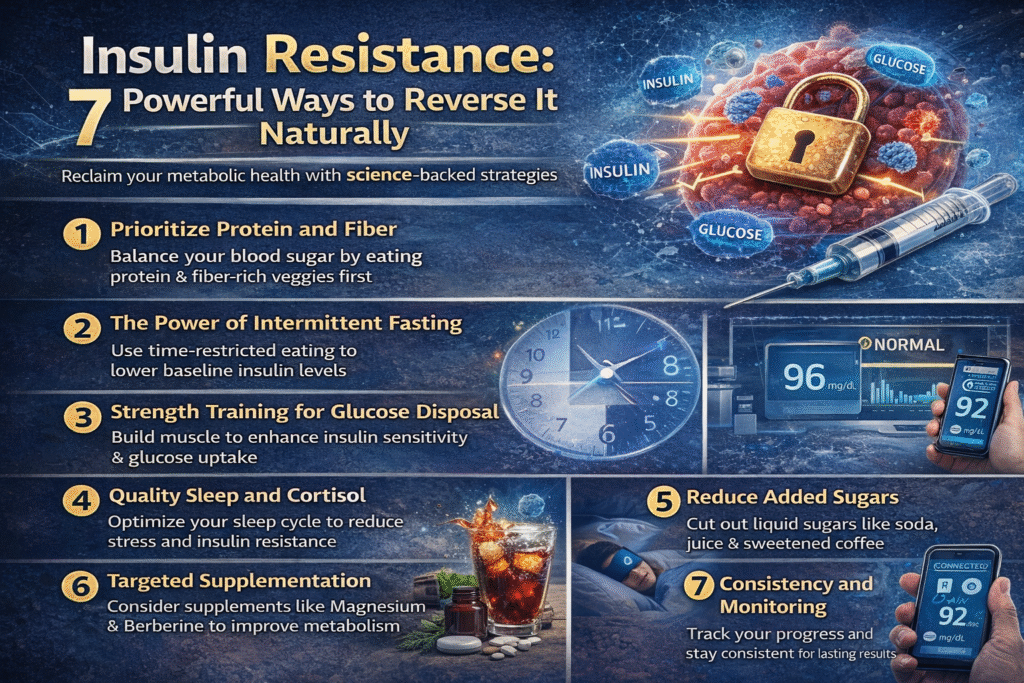
Insulin Resistance: 7 Powerful Ways to Reverse It Naturally Insulin resistance is a silent metabolic condition that acts as a major roadblock to weight loss and long-term health. When you suffer from insulin resistance, your body’s cells stop responding effectively to the hormone insulin. This forces your pancreas to pump out excessive amounts of the hormone just to keep your blood sugar levels stable. Over time, this chronic state of high insulin leads to inflammation, fatigue, and is a direct precursor to Type 2 diabetes. However, the most important thing to know is that insulin resistance is not a life sentence. With strategic lifestyle interventions, you can restore your metabolic sensitivity and reclaim your energy. Table of Contents What is Insulin Resistance? Reason 1: Prioritize Protein and Fiber Reason 2: The Power of Intermittent Fasting Reason 3: Strength Training for Glucose Disposal Reason 4: Quality Sleep and Cortisol Reason 5: Reduce Added Sugars Reason 6: Targeted Supplementation Reason 7: Consistency and Monitoring What is Insulin Resistance? In a healthy body, the hormone insulin acts as a “key” that opens your cells to let glucose (blood sugar) in for energy. When you have insulin resistance, your cells stop responding to the key. As a result, your pancreas pumps out even more insulin to force the cells to listen, leading to high insulin levels and fat storage. 1. Prioritize Protein and Fiber  To fix insulin resistance, you must stop the massive blood sugar spikes. Protein and fiber slow down the absorption of glucose. When you eat fiber-rich vegetables before your carbohydrates, you significantly reduce the insulin response of that meal. 2. The Power of Intermittent Fasting  Giving your body a break from eating is one of the most effective ways to lower baseline insulin. Intermittent fasting (like the 16:8 method) allows your insulin levels to drop low enough for your body to start burning stored fat instead of just glucose. 3. Strength Training for Glucose Disposal  Your muscles are the primary “sink” for glucose. By building more muscle through strength training, you create more sites for glucose to go. This makes your body naturally more sensitive to insulin because the muscles are “hungry” for that energy. 4. Quality Sleep and Cortisol  Just one night of poor sleep can temporarily increase insulin resistance. This happens because sleep deprivation spikes cortisol, the stress hormone, which tells your liver to dump more sugar into your bloodstream. 5. Reduce Added Sugars Liquid sugars, like soda and fruit juices, are the fastest way to break your metabolism. Removing these simple sugars helps reset your liver’s sensitivity and reduces the burden on your pancreas. 6. Targeted Supplementation Certain supplements, such as Magnesium and Berberine, have been shown in studies to improve how your body processes sugar. Always consult with a healthcare professional, but these can be powerful allies in your journey. 7. Consistency and Monitoring Reversing a metabolic condition takes time. Using tools like a Continuous Glucose Monitor (CGM) can help you see in real-time how your body reacts to different foods. Over time, these small changes result in a massive improvement in your metabolic health. Manage Stress for Better Sensitivity Chronic stress keeps your body in “fight or flight” mode, which keeps blood sugar high. High blood sugar necessitates high insulin, eventually leading to insulin resistance. Incorporating meditation or daily walks can break this cycle. Reduce Hidden Liquid Sugars Soda, fruit juices, and sweetened coffees are the fastest way to trigger insulin resistance. These liquids hit your bloodstream instantly, forcing your pancreas to overreact. Switching to water or herbal tea can make a massive difference. Optimize Your Sleep Cycle Poor sleep is a direct contributor to insulin resistance. Even one night of restricted sleep can significantly decrease your insulin sensitivity the following day by spiking cortisol levels. Conclusion: Take Control of Your Health In conclusion, reversing insulin resistance is not just about losing weight; it is about reclaiming your metabolic freedom. By following these 7 powerful ways—from prioritizing fiber and protein to mastering your sleep and stress—you are giving your body the tools it needs to heal itself. While the journey to metabolic health takes time and consistency, the results are life-changing. Start today by making one small change, like swapping a sugary drink for water or going for a 10-minute walk after dinner. Your future self will thank you for the energy, clarity, and health you are building right now.

Insulin Resistance: 7 Powerful Ways to Reverse It Naturally Read More »

Smart Insulin

Smart Insulin: 7 Amazing Reasons This is the Ultimate Cure

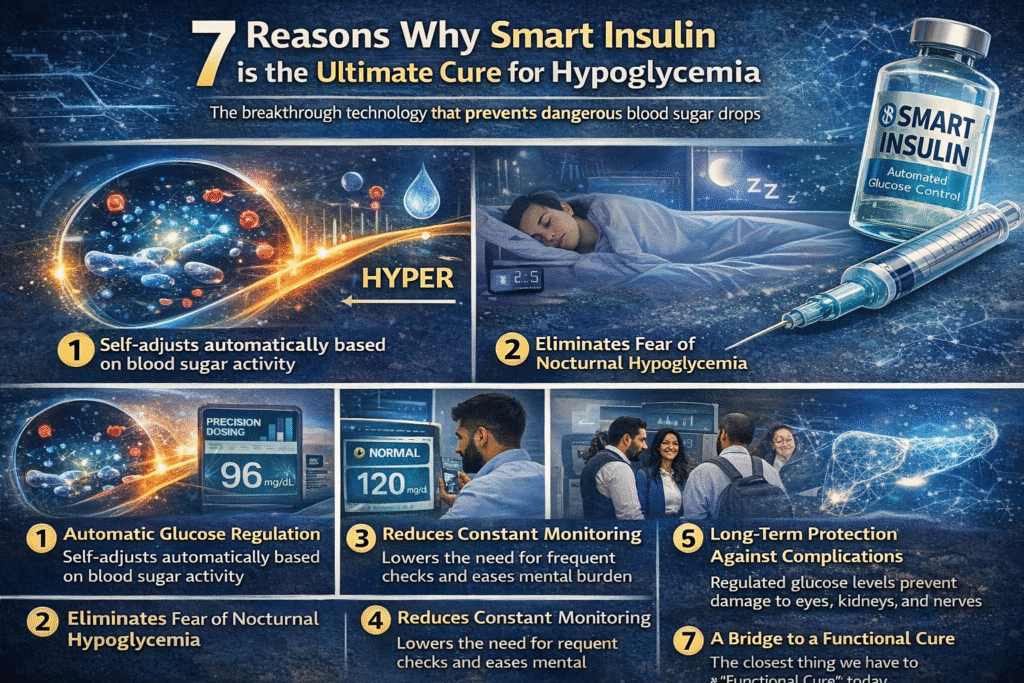
7 Reasons Why Smart Insulin is the Ultimate Cure for Hypoglycemia ‘Smart Insulin’ Managing diabetes is a 24/7 job that requires constant vigilance, but Smart Insulin is poised to change that reality forever. For decades, the biggest threat to a diabetic patient hasn’t just been high blood sugar, but the terrifying “lows.” Hypoglycemia can lead to dizziness, confusion, and in extreme cases, loss of consciousness. However, the emergence of Smart Insulin offers a revolutionary way to automate safety and restore peace of mind. In this comprehensive guide, we will explore 7 powerful reasons why Smart Insulin is considered the ultimate cure for the dangers of hypoglycemia. Table of Contents What Exactly is Smart Insulin? Reason 1: Automatic Glucose Regulation Reason 2: Eliminating the Fear of Nocturnal Hypoglycemia Reason 3: Mathematical Precision in Dosing Reason 4: Reducing the Burden of Constant Monitoring Reason 5: Significant Reduction in “Hypo-Anxiety” Reason 6: Long-term Protection Against Complications Reason 7: A Bridge to a Functional Cure Conclusion: The Future of Diabetes Management What Exactly is Smart Insulin? Before diving into the benefits, it is important to understand the technology. Unlike traditional rapid-acting or long-acting versions, Smart Insulin (technically known as Glucose-Responsive Insulin or GRI) is chemically engineered to “sense” the amount of sugar in your bloodstream. It circulates in the body in an inactive state and only activates when it detects high glucose levels. Once the blood sugar returns to a safe range, the Smart Insulin becomes dormant again. This “on-off” switch is the secret to preventing the over-correction that leads to hypoglycemia. 1. Automatic Glucose Regulation  The primary reason Smart Insulin is a game-changer is its ability to self-regulate. In a healthy person, the pancreas releases exactly the right amount of insulin. In a diabetic person, we have to guess that amount. Because Smart Insulin responds to real-time biological cues, it prevents the “rollercoaster effect.” You no longer have to worry about an unexpected walk or a missed snack causing your levels to crash, because the insulin simply won’t activate if your sugar is already low. 2. Eliminating the Fear of Nocturnal Hypoglycemia  For many parents of children with Type 1 diabetes, the night is a time of high stress. Nocturnal hypoglycemia is a silent threat that can happen while a patient is asleep. By using Smart Insulin, the body has a built-in safety net. If blood sugar drops during the night, the insulin remains inactive. This breakthrough ensures that patients can sleep soundly without the constant fear of a life-threatening “low” occurring in their sleep. 3. Mathematical Precision in Dosing Traditional insulin dosing is often a “best guess” based on carbohydrate counting and insulin-to-carb ratios. However, many factors—like stress, heat, or hormones—can change how your body reacts. Smart Insulin removes the human error from the equation. It acts with a level of precision that even the most advanced insulin pumps struggle to match. By reacting to the blood’s chemistry rather than a programmed setting, it provides a much more natural metabolic response. Expert Insight: Leading researchers at the Juvenile Diabetes Research Foundation (JDRF) have identified glucose-responsive technology as a top priority for improving patient safety. 4. Reducing the Burden of Constant Monitoring  Current diabetes management requires checking blood sugar 8 to 12 times a day, even with a Continuous Glucose Monitor (CGM). The mental fatigue of constantly staring at numbers is exhausting. While Smart Insulin doesn’t mean you should stop seeing your doctor, it significantly widens the “safety margin.” When your medication is smart enough to stop working when you don’t need it, the urgency of every single finger prick decreases, allowing for a more flexible lifestyle. 5. Significant Reduction in “Hypo-Anxiety” The psychological impact of hypoglycemia is profound. Many patients keep their blood sugar intentionally high (hyperglycemia) just to avoid the risk of a crash. This is known as “hypo-anxiety.” When a patient switches to a Smart Insulin protocol, that fear is mitigated. Knowing that your medication won’t “attack” your blood sugar when it’s already low allows patients to aim for tighter, healthier glucose targets without the paralyzing fear of a sudden drop. 6. Long-term Protection Against Complications  Consistent glucose levels are the key to avoiding long-term damage to the eyes, kidneys, and nerves. By preventing the frequent “lows” and subsequent “rebound highs,” Smart Insulin helps maintain a flat, stable glucose curve. Maintaining a stable Time-in-Range (TIR) is much easier when the insulin itself is helping you stay within those boundaries. You can read more about stabilizing your levels in our Diabetes Wellness Hub. 7. A Bridge to a Functional Cure We are all waiting for a biological cure, but Smart Insulin is the closest thing we have to a “functional cure” in the meantime. It mimics the natural feedback loop of a healthy body more closely than any other treatment in history. It essentially automates the most dangerous part of the disease, making the condition manageable rather than life-dominating. Conclusion: The Future of Diabetes Management The journey toward the ultimate cure is ongoing, but the development of Smart Insulin represents a massive leap forward. By providing automatic regulation, precision dosing, and emotional relief, it addresses the most terrifying aspect of living with diabetes: hypoglycemia. As clinical trials continue to advance, the dream of a “set it and forget it” insulin is becoming a reality.

Smart Insulin: 7 Amazing Reasons This is the Ultimate Cure Read More »

HOSPEX 2026

7 Amazing Highlights from HOSPEX 2026: Revolutionizing Diabetes Care with AI

HOSPEX 2026 Recap: How AI is Powering the Defeat Diabetes Platform The energy at Vigyan Bhawan, Science City in Ahmedabad was electric. For three days at HOSPEX 2026, our team at Defeat Diabetes had the incredible opportunity to stand at the intersection of technology and human health. We didn’t just place a stall; we built a bridge between complex medical data and the everyday lives of people fighting insulin resistance. If you missed us, here is a recap of our 3-day journey and how our AI-driven platform is changing the game. 1. Day 1: The Grand Opening at Science City The first day of HOSPEX 2026 kicked off with an incredible energy. We met with hospital leaders who are eager to integrate AI into their patient care workflows. Our stall became a hub for discussing how digital platforms can bridge the gap between hospital visits. 2. Day 2: The AI Masterclass & Startup Conclave Saturday was the highlight for our tech team. During the HOSPEX 2026 Startup Conclave, we demonstrated the “Defeat Diabetes” AI engine. Visitors were amazed at how our platform uses machine learning to analyze glucose trends and predict spikes before they happen. 3. Day 3: Real Connections and Real Results The final day of HOSPEX 2026 was all about the people. We spoke with hundreds of individuals who are ready to move beyond basic tracking. They want an AI partner that understands their unique metabolism, and that is exactly what our platform provides. 4. Why AI is the Heart of “Defeat Diabetes” At HOSPEX 2026, we showed that AI isn’t just a buzzword. It’s a tool that can save lives by identifying early-warning signs like elevated GGT levels (which you can read about in our GGT Test guide). 5. The “Ahmedabad Impact” Hosting the expo at Vigyan Bhawan brought together a unique blend of traditional medical wisdom and next-gen technology. Being part of this 3-day event allowed us to tailor our AI models to the specific needs of the local community. 6. Networking for a Healthier India We established partnerships with leading diagnostic labs during HOSPEX 2026. These collaborations will make it easier for our users to sync their lab results directly into the Defeat Diabetes platform. 7. Our Vision After HOSPEX 2026 We left the expo with a clear mission: to make “Defeat Diabetes” the most trusted AI health platform in the country. The feedback from HOSPEX 2026 is already being used to upgrade our features for an even better user experience. 3 Days of Innovation: Our HOSPEX Experience Being on the ground for all three days allowed us to see the full spectrum of the healthcare ecosystem. Day 1: The Visionaries. We met with hospital directors and policymakers who are looking for scalable ways to manage the growing diabetes epidemic in India. Day 2: The Startups & Tech. This was the “AI Conclave” day. We showcased how Defeat Diabetes uses machine learning to predict glucose spikes before they happen. Day 3: The People. The most rewarding day. We spoke with hundreds of visitors—doctors, patients, and caregivers—who tried our platform live and saw how AI can simplify their daily health decisions. Defeat Diabetes: More Than Just an App, It’s an AI Ecosystem At HOSPEX, we showed that Defeat Diabetes is the “Gold Standard” for digital metabolic care. Our platform isn’t a passive tracker; it is an active AI assistant. 1. AI-Powered Predictive Analytics The most popular feature at our stall was our Predictive Glucose Modeling. By integrating with CGMs and wearable tech, our AI learns your body’s specific rhythm. It doesn’t just tell you that your sugar is high; it tells you why—and how to prevent the next spike. 2. The GGT Connection We spent a lot of time educating visitors on the GGT test (which we’ve blogged about recently!). Our platform is one of the few that correlates liver enzyme data with daily glucose logs, giving users a 360-degree view of their liver health and insulin sensitivity. Why “Defeat Diabetes” Was a HOSPEX Favorite Visitors kept coming back to our stall for one reason: Simplicity. In a world of complex medical machines, our platform brings power to the patient’s pocket. “I’ve seen many apps, but the way Defeat Diabetes uses AI to make sense of my lab reports is a lifesaver.” — A visiting physician from Ahmedabad.

7 Amazing Highlights from HOSPEX 2026: Revolutionizing Diabetes Care with AI Read More »

GGT Test

7 Reasons the GGT Test is the Ultimate Secret to Metabolic Health

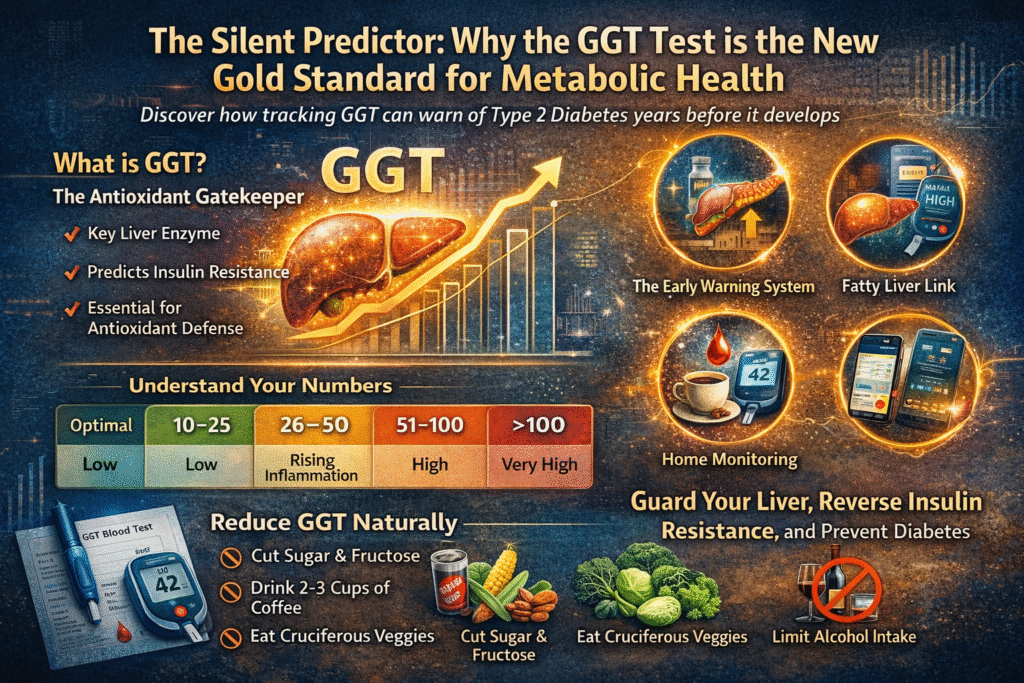
The Silent Predictor: Why the GGT Test is the New Gold Standard for Metabolic Health For decades, the conversation around diabetes has been dominated by two numbers: Glucose and A1c. We’ve been taught that if these two are under control, we’re winning the battle. But what if I told you there is a “whispering” enzyme in your liver that can predict Type 2 Diabetes years before your blood sugar even budges? Enter the GGT (Gamma-Glutamyl Transferase) test. In 2026, this isn’t just a “liver test” for heavy drinkers anymore. It has become a crucial metabolic dashboard for anyone looking to optimize their health, reverse insulin resistance, and stay ahead of chronic disease. What is GGT? (The Antioxidant Gatekeeper) Gamma-Glutamyl Transferase (GGT) is an enzyme found primarily in your liver, but also in your kidneys and pancreas. Its primary biological job is to help transport molecules across cell membranes and, most importantly, to maintain the body’s levels of Glutathione. Glutathione is your “Master Antioxidant.” Think of it as the cellular cleanup crew that mops up oxidative stress and inflammation. The Leakage Theory: When your liver is healthy and unstressed, very little GGT escapes into your bloodstream. However, when your liver cells are under siege—from excess sugar, processed fats, or environmental toxins—they begin to “leak” GGT. In 2026, we now recognize that a rising GGT score is actually an SOS signal from your metabolism. The 2026 Connection: GGT and Diabetes Why should a person concerned about diabetes care about a liver enzyme? Because the liver is the “engine room” of your metabolism. 1. The Early Warning System Recent longitudinal studies in 2025 and 2024 have confirmed that GGT levels in the “high-normal” range are a stronger predictor of future Type 2 Diabetes than fasting glucose itself. If your GGT is creeping up, it means your body is burning through its antioxidant stores to fight off rising inflammation. This is the “Pre-Prediabetes” stage. 2. Fatty Liver and Insulin Resistance There is a massive overlap between MAFLD (Metabolic Associated Fatty Liver Disease) and Type 2 Diabetes. When the liver becomes “fatty,” it becomes deaf to the signals of insulin. This causes the liver to dump sugar into the blood even when you haven’t eaten. High GGT is often the first clinical sign that your liver is accumulating fat, even if your weight hasn’t changed. 3. The Pancreas Connection Recent research suggests that GGT isn’t just a bystander; it may actually interfere with how the beta cells in your pancreas release insulin. High levels of circulating GGT create an environment of oxidative stress that makes it harder for your body to process carbohydrates efficiently. Understanding Your Numbers: The “Optimal” vs. “Normal” Gap This is where most people (and some doctors) miss the mark. Standard laboratory “normal” ranges are often based on the average of the population—and the average person in 2026 is metabolically unwell. To achieve 100/100 health, you need to look at Optimal Ranges: Risk Level GGT Range (U/L) Metabolic Status Optimal 10 – 25 Low oxidative stress; High insulin sensitivity. Caution 26 – 50 Rising inflammation; Possible early fatty liver. High Risk 51 – 100 High risk for Metabolic Syndrome and T2D. Clinical >100 Active liver damage or bile duct obstruction. Note: Always consult with a healthcare professional to interpret your specific lab results in the context of your full medical history. 2026 Tech: Monitoring GGT at Home The biggest change in diabetes care this year is the democratization of data. You no longer have to wait for an annual physical to check your GGT. Metabolic Health Subscriptions: Wearable tech companies now offer quarterly “at-home” blood panels. You can prick your finger, mail a card, and see your GGT levels alongside your CGM (Continuous Glucose Monitor) data on your smartphone. AI Correlations: Apps like NutriSense and Levels now use AI to correlate your glucose spikes with your GGT trends. For example, if your GGT is high, the AI might explain why your morning “Dawn Phenomenon” (high morning blood sugar) is getting worse. How to Lower Your GGT Naturally The good news? GGT is highly “plastic”—it responds quickly to lifestyle changes. Cut the Fructose: Unlike glucose, fructose is processed almost entirely in the liver. High-fructose corn syrup is the fastest way to spike GGT. The Coffee Paradox: Modern meta-analyses show that 2–3 cups of black coffee daily is one of the most effective ways to lower GGT and protect the liver. Magnesium & Sulfur: Eat more cruciferous vegetables (broccoli, kale, Brussels sprouts). These provide the sulfur needed to produce Glutathione, which naturally brings GGT levels down. Watch the “Hidden” Alcohol: Even moderate “social” drinking can keep GGT elevated, masking your true metabolic progress. Try a “Liver Reset” for 30 days to see your true baseline. GGT Test: The Silent Predictor of Metabolic Health Many people focused on diabetes management look solely at A1c, but the GGT test is actually one of the most powerful early-warning tools available in 2026. If you want to understand your true risk of insulin resistance, you need to look at what your liver is telling you. The GGT test (Gamma-Glutamyl Transferase) measures a specific liver enzyme that leaks into your blood when your metabolism is under stress. Why the GGT Test is Critical for Diabetes Prevention The reason the GGT test is gaining so much traction in modern diabetes care is its ability to predict Type 2 Diabetes years before blood sugar rises. While a standard metabolic panel might include this enzyme, many patients don’t realize that a “high-normal” GGT test result is often the first sign of a fatty liver. When you monitor your health, using a GGT test alongside your CGM data allows for a 360-degree view of your metabolic engine. By keeping your GGT test levels in the optimal range (10-25 U/L), you are effectively protecting your pancreas from oxidative stress. Conclusion: The Big Picture In the era of precision medicine, we can no longer afford to look at organs in isolation. Your liver and

7 Reasons the GGT Test is the Ultimate Secret to Metabolic Health Read More »

Doctor Partnership

Reach us

1
Scan the code