
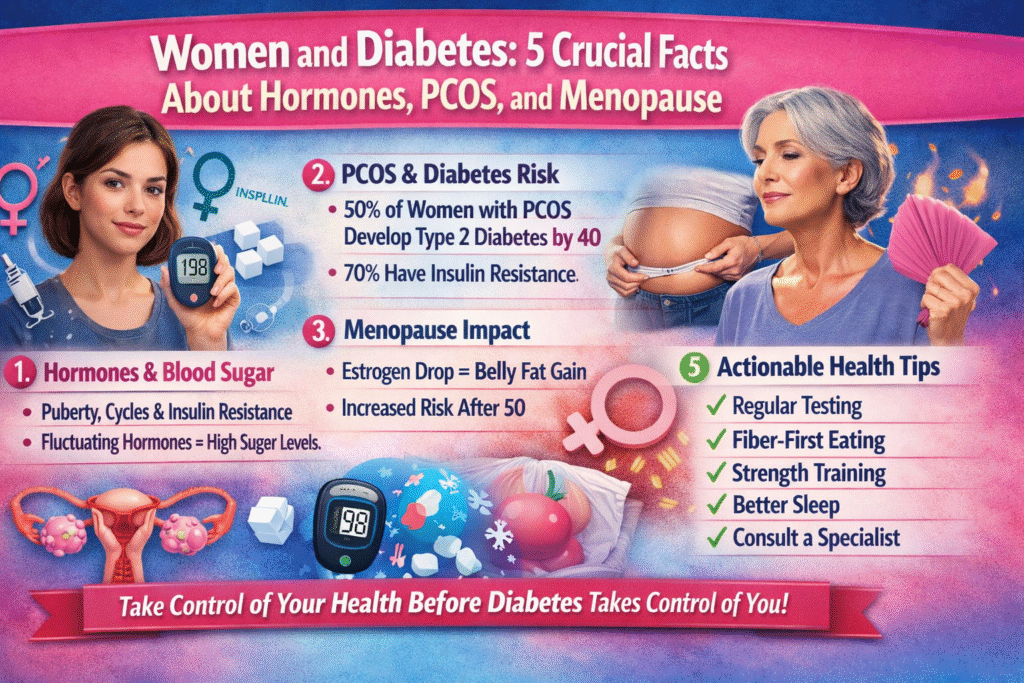
Women and Diabetes: 5 Crucial Facts About Hormones, PCOS, and Menopause
Women and Diabetes ka gehra rishta hormones se hota hai…
Table of Contents
1. Introduction: Why Women and Diabetes are Linked
Women and diabetes have a relationship that is far more complex than most people realize. Did you know that a woman’s hormones can actually change how her body handles sugar? While diet and lifestyle are critical, biological shifts unique to women—like puberty, pregnancy, and menopause—play a massive role in metabolic health.
Understanding the link between women and diabetes is the first step toward prevention. In this comprehensive guide, we will explore how hormonal fluctuations, Polycystic Ovary Syndrome (PCOS), and menopause create a unique set of challenges for blood sugar management.
2. The Role of Hormones in Blood Sugar
Inside the female body, hormones act like a silent director. Estrogen and progesterone don’t just regulate the reproductive system; they directly affect how sensitive your cells are to insulin.
-
Puberty and Cycles: During different phases of the menstrual cycle, progesterone levels rise, which can lead to temporary insulin resistance.
-
The Insulin Connection: When hormones fluctuate wildly, the body may struggle to use insulin effectively, leading to higher-than-normal blood sugar levels.
For any woman managing her health, recognizing that “high sugar days” might coincide with hormonal shifts can reduce stress and improve management.
3. PCOS: The Silent Warning Sign
Polycystic Ovary Syndrome (PCOS) is one of the strongest indicators of future diabetes risk. Women and diabetes researchers have found a staggering connection here.
-
The 50% Statistic: Approximately 50% of women with PCOS will develop Type 2 Diabetes by the age of 40.
-
Insulin Resistance: About 70% of women with PCOS suffer from insulin resistance. This means the body produces insulin, but the organs “ignore” its orders.
-
The Result: Because the cells don’t ACT on insulin, sugar stays in the blood. This not only causes weight gain and acne but eventually leads to a diabetes diagnosis.
If you have PCOS, you aren’t just managing irregular periods—yours is a metabolic battle that requires constant blood sugar monitoring.
4. Menopause and Diabetes Risk
As women reach menopause, estrogen levels drop significantly. This hormonal “cliff” leads to several metabolic changes that increase the risk of Type 2 Diabetes.
-
Shift in Fat Distribution: Lower estrogen often leads to increased “belly fat,” which is more dangerous for insulin resistance than fat stored elsewhere.
-
Reduced Sensitivity: With less estrogen, the body’s natural ability to process glucose declines.
This is why many women find that their blood sugar levels become much harder to manage after the age of 50, even if their diet hasn’t changed.
5. Actionable Steps for Better Health
The connection between women and diabetes may seem daunting, but it is manageable. Here are five proven strategies:
-
Regular Testing: If you have PCOS or are entering menopause, don’t just test your sugar; test your fasting insulin levels.
-
Fiber-First Eating: Always eat your vegetables (fiber) before your carbohydrates to flatten the glucose spike.
-
Strength Training: Muscles are the primary “sponges” for blood sugar. More muscle mass means better insulin sensitivity.
-
Sleep Hygiene: Lack of sleep increases cortisol, which directly raises blood sugar.
-
Consult a Specialist: Work with an endocrinologist who understands the intersection of reproductive hormones and metabolism.
5. Actionable Steps for Better Health
The connection between women and diabetes may seem daunting, but it is manageable. Here are five proven strategies:
-
Regular Testing: If you have PCOS or are entering menopause, don’t just test your sugar; test your fasting insulin levels.
-
Fiber-First Eating: Always eat your vegetables (fiber) before your carbohydrates to flatten the glucose spike.
-
Strength Training: Muscles are the primary “sponges” for blood sugar. More muscle mass means better insulin sensitivity.
-
Sleep Hygiene: Lack of sleep increases cortisol, which directly raises blood sugar.
-
Consult a Specialist: Work with an endocrinologist who understands the intersection of reproductive hormones and metabolism.
Polycystic Ovary Syndrome (PCOS) is one of the most common hormonal conditions increasing the risk of women and diabetes.
-
The 50% Risk: Research suggests that about 50% of women with PCOS may develop type 2 diabetes later in life.
-
Insulin Resistance: Roughly 70% of women with PCOS have insulin resistance.
-
The Mechanism: This means the body doesn’t use insulin properly, which significantly increases the risk of developing type 2 diabetes.
-
Common Symptoms: Look for irregular periods, weight gain, acne, and difficulty getting pregnant.
Conclusion
Women and diabetes is a topic that deserves more attention in the healthcare space. Your hormones are not just about fertility; they are the engines of your metabolism. By understanding the roles of PCOS and menopause, you can take control of your health before a diagnosis occurs.
Understanding your hormones is the ultimate power word in your health journey. Monitor your sugar, stay active, and listen to your body.