Stress and Diabetes: The Deadly Link
Understanding the direct biological connection between stress and diabetes is the missing puzzle piece for thousands of professionals struggling with erratic blood glucose levels. In my 30 years of clinical legacy in Ahmedabad, I have met countless corporate executives who follow a strict low-carb diet, yet their fasting sugar remains stubbornly high. The culprit isn’t their kitchen; it is their mind.
At DEFEAT DIABETESE, we analyze metabolic disorders through a complete physiological lens. To win this ek yuddh diabetese viruddh, we must expose how chronic anxiety and deadlines trigger hormonal chaos that directly jams your cellular insulin receptors. Our Vision 2040 mission is to empower you with the scientific knowledge required to reverse this damage naturally.
1. The Biology of Cortisol and Blood Sugar
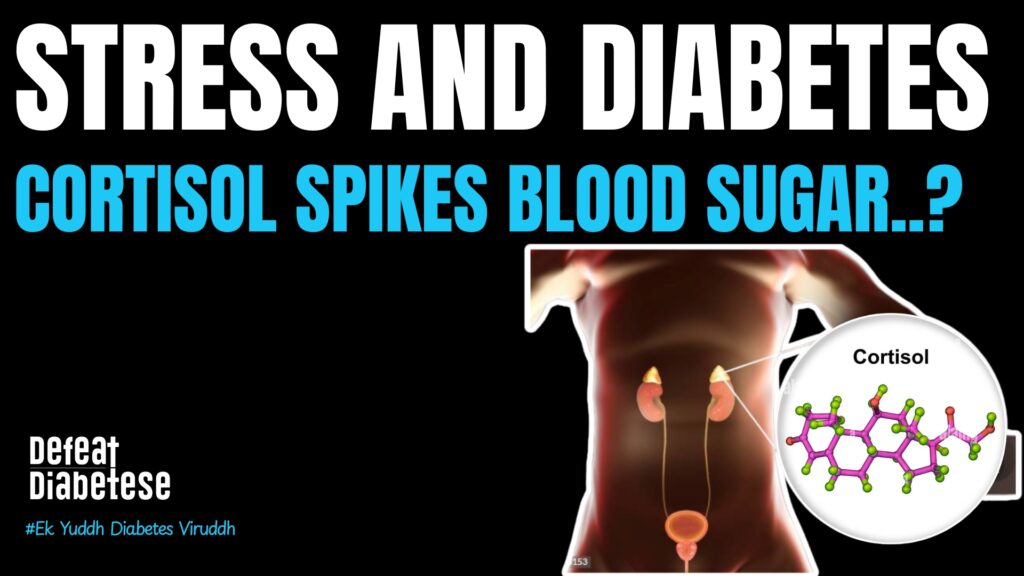
To understand why stress and diabetes are so tightly linked, we have to look at the human survival mechanism. When your brain perceives a threat—whether it’s a physical predator or a toxic workplace deadline—it signals the adrenal glands to flood the body with Cortisol and Blood Sugar regulating hormones.
-
The Fight-or-Flight Response: Cortisol is an evolutionary survival hormone designed to give your muscles instant energy to run or fight.
-
The Liver Dump: To provide this instant energy, cortisol immediately signals the liver to convert its stored glycogen into glucose and dump it rapidly into the bloodstream.
-
The Muscle Blockade: Simultaneously, cortisol temporarily shuts down insulin receptors on your muscles. Why? Because the body wants that glucose to stay in the blood for immediate emergency use, rather than being stored away.
In a prehistoric environment, you would burn off this sugar by running. But in a corporate chair, that extra glucose just floats in your blood, creating massive toxicity.
2. The Dawn Phenomenon: Why Fasting Sugar Spikes
A major frustration for professionals focusing on Metabolic Health in Professionals is high morning readings, even after a zero-carb dinner. This is heavily driven by chronic stress disrupting your sleep architecture.
-
The Midnight Cortisol Spike: When you undergo chronic work stress, your body fails to enter deep REM sleep. Around 3:00 AM to 4:00 AM, a stressed body releases an abnormally high surge of cortisol.
-
The Morning Shock: By the time you wake up at 7:00 AM, your liver has been dumping glucose into your system for hours. This hormonal mismatch is why daytime stress directly translates into elevated fasting blood sugar the next morning.
3. The Vicious Cycle of Stress Eating and Belly Fat
Chronic stress doesn’t just alter internal chemistry; it completely hijacks your behavioral patterns, turning stress and diabetes into a self-fulfilling trap.
-
The Reward Center Trigger: High cortisol levels cross into the brain and actively suppress your satiety hormones while elevating ghrelin (the hunger hormone). It forces intense cravings for fast-acting, high-calorie carbohydrates—commonly known as “comfort food.”
-
Visceral Fat Accumulation: Cortisol combined with high insulin tells the body to store fat primarily in the deep abdominal cavity (visceral fat). As we know, visceral fat acts like an active inflammation factory, further worsening cellular insulin resistance.
4. Tracking the Stress Shift with Clinical Benchmarks
At Defeat Diabetese, we remove old-school guesswork by relying heavily on precise diagnostic timelines and systemic data tracking.
-
Beyond Glucose Testing: When evaluating patients jaded by unexplained spikes, we don’t just test blood sugar. We track laboratory metrics like Fasting Insulin, High-Sensitivity C-Reactive Protein (hs-CRP) for inflammation, and Serum Cortisol levels.
-
The Dashboard Mapping: By plotting these hormonal indicators on our Unified Health Dashboard, we can accurately distinguish between a dietary spike and a stress-induced spike. This allows us to customize your Type 2 Diabetes Reversal Diet dynamically based on your physical state.
5. 5 Rules for Work Stress Management and Reversal
Achieving true metabolic remission requires protecting your nervous system. Implement this clinical stress-defense protocol strictly:
-
The 4-7-8 Breathing Reset: Before every major meal, practice the 4-7-8 deep breathing technique for 2 minutes. This activates the vagus nerve, switching your body from sympathetic (stress) to parasympathetic (rest and digest) mode, significantly lowering post-meal cortisol spikes.
-
Strategic Circadian Walking: Never sit continuously for hours at your office desk. A brief 10-minute stroll after lunch clears circulating glucose out of the bloodstream without requiring high insulin output.
-
Strict Digital Sundown: Turn off all work emails, laptops, and blue-light screens by 9:00 PM. High blue-light exposure at night suppresses melatonin and triggers an unnatural spike in nocturnal cortisol.
-
Adaptogenic Micronutrients: Under clinical guidance, optimize minerals like Magnesium Glycinate and Ashwagandha extract. These compounds safely soothe the adrenal system and improve sleep depth.
-
Clinical Mind-Body Sync: Follow a structured guidance pathway under Dr. Prakash Kurmi’s legacy. Reversal isn’t just about changing what is on your plate; it is about managing the external stressors that disrupt your biological baseline.
6. Frequently Asked Questions (FAQs)
Q1: Can stress alone cause a non-diabetic person to become diabetic?
Yes. Prolonged, chronic emotional or physical stress keeps cortisol levels chronically elevated. Over months and years, this continuous baseline insulin resistance can exhaust the pancreas and lead to Type 2 Diabetes.
Q2: Will meditation instantly drop my blood sugar numbers?
While it won’t replace structural lifestyle changes overnight, acute relaxation techniques have been clinically proven to drop acute, stress-induced glucose spikes within 30 to 45 minutes by calming adrenaline output.
Q3: How does the Defeat Diabetese ecosystem handle stress factors?
Backed by 30 years of medical wisdom, we recognize that lifestyle medicine must address the mind. Our digital tracking maps your lifestyle habits against your clinical labs, helping you manage mental stress as a core medical metric.
Conclusion: Reclaim Your Hormonal Balance
The link between stress and diabetes proves that your body acts as a single, interconnected ecosystem. You cannot heal the metabolism while leaving the nervous system under constant attack. By embracing data-driven Work Stress Management and structured science, you can unlock your cells and secure long-term health. Let us march forward in this ek yuddh diabetese viruddh to achieve our landmark Vision 2040 victory.
ek yuddh diabetese viruddh. Visit us: www.defeatdiabetese.com