
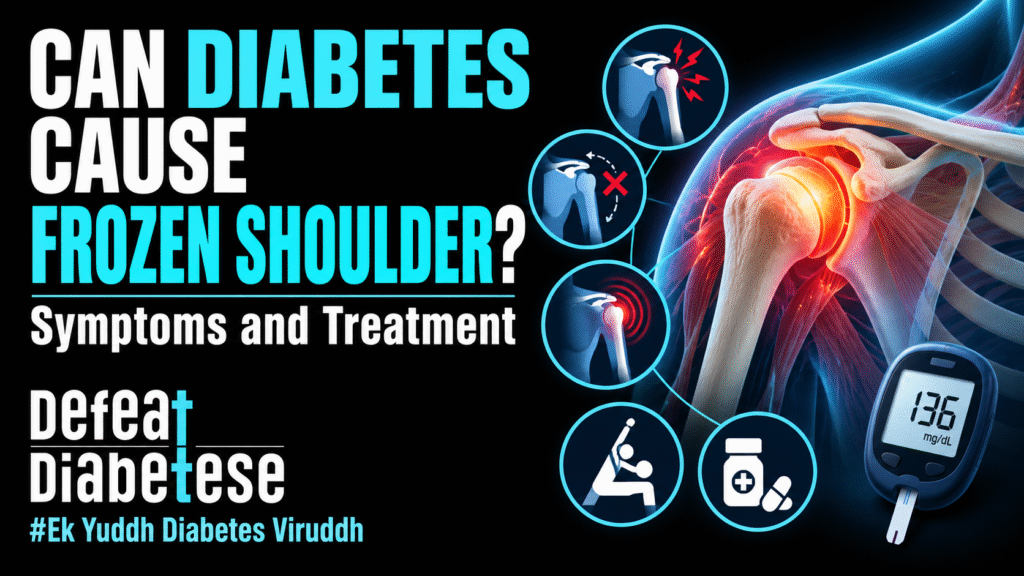
Can Diabetes Cause Frozen Shoulder? 7 Warning Signs and Treatment Tips
Diabetes frozen shoulder is a painful condition that can significantly affect shoulder movement and everyday activities. Many people living with diabetes are familiar with complications involving the heart, kidneys, eyes, and nerves. However, diabetes can also affect muscles, joints, and connective tissues.
One important condition associated with diabetes is frozen shoulder, medically known as adhesive capsulitis.
Frozen shoulder develops when the capsule surrounding the shoulder joint becomes inflamed, thickened, and stiff. This causes pain, restricted movement, and difficulty performing simple activities such as dressing, combing hair, or reaching overhead.
Research shows that people with diabetes have a higher likelihood of developing frozen shoulder than people without diabetes.
However, shoulder pain does not always mean frozen shoulder, and having diabetes does not guarantee that the condition will develop.
At Defeat Diabetese, we believe understanding lesser-known diabetes complications can encourage early diagnosis and appropriate treatment.
In this guide, we explain how diabetes is associated with frozen shoulder, seven warning signs, available treatment options, recovery stages, and practical tips for maintaining shoulder health.
What Is Frozen Shoulder?
Frozen shoulder, also called adhesive capsulitis, is a condition characterized by shoulder pain, stiffness, and reduced range of motion.
The shoulder is a ball-and-socket joint surrounded by connective tissue known as the joint capsule.
Normally, this capsule allows the shoulder to move freely in different directions.
When frozen shoulder develops, the capsule becomes inflamed and thickened. Tightening of the tissue limits normal movement.
As the condition progresses, even simple movements can become uncomfortable or difficult.
Frozen shoulder often develops gradually and may last for months or sometimes years.
It is commonly seen in adults between the ages of 40 and 60, although it can occur outside this age group.
People with diabetes and thyroid disorders have an increased risk of developing this condition.
Can Diabetes Cause Frozen Shoulder?
Yes, diabetes is strongly associated with an increased risk of frozen shoulder.
A systematic review and meta-analysis published in 2026 reported approximately 3.69 times higher odds of adhesive capsulitis among people with diabetes compared with those without diabetes.
However, this statistical association does not establish that diabetes directly causes every case of frozen shoulder.
The exact biological mechanisms are not completely understood.
Researchers believe that long-term metabolic changes, connective tissue alterations, and inflammation may contribute to shoulder stiffness.
People with diabetes may also experience more persistent stiffness and longer recovery periods.
Both Type 1 and Type 2 diabetes can be associated with frozen shoulder.
Understanding this relationship is important because early assessment and suitable treatment may help reduce pain and improve daily functioning.
Why Is Frozen Shoulder More Common in People With Diabetes?
Several factors may contribute to the increased risk of frozen shoulder among individuals with diabetes.
Long-Term High Blood Sugar
Persistently elevated blood glucose can contribute to changes in proteins and connective tissues.
One proposed mechanism involves advanced glycation end products, which can affect collagen structure and flexibility.
These changes may contribute to stiffness, although they do not fully explain every case of frozen shoulder.
Changes in Connective Tissue
Collagen provides strength and support to the body’s tissues.
Changes in collagen structure and tissue remodeling may reduce the flexibility of the shoulder capsule.
As the capsule tightens, normal shoulder movement becomes more difficult.
Inflammation
Inflammation plays an important role in the development of adhesive capsulitis.
Inflamed shoulder tissues may gradually thicken and contract, contributing to pain and restricted movement.
Prolonged Shoulder Immobilization
Keeping the shoulder still for extended periods after an injury or surgery can increase frozen shoulder risk.
People with diabetes who require prolonged immobilization may need individualized rehabilitation guidance.
Associated Medical Conditions
Thyroid disorders, cardiovascular conditions, and other metabolic risk factors may also be associated with frozen shoulder.
This is why a complete medical assessment is important when shoulder stiffness develops.
7 Warning Signs of Diabetes Frozen Shoulder
Recognizing the early symptoms of frozen shoulder can help individuals seek timely treatment.
1. Persistent Shoulder Pain
One of the earliest signs of frozen shoulder is persistent discomfort in the shoulder.
Pain may develop gradually without an obvious injury.
It can affect the outer shoulder or upper arm and may worsen with particular movements.
During the early stage, pain may occur even when the shoulder is resting.
Persistent shoulder pain should be evaluated because several other conditions can produce similar symptoms.
2. Increasing Shoulder Stiffness
Shoulder stiffness is a defining feature of adhesive capsulitis.
A person may notice that their shoulder does not move as freely as before.
Initially, stiffness may be mild.
Over time, it can become more noticeable and interfere with daily activities.
Both active movement and movement performed by an examiner may become restricted.
This helps distinguish frozen shoulder from certain other shoulder problems.
3. Difficulty Raising Your Arm
People with frozen shoulder may struggle to lift their arm overhead.
Activities such as reaching for objects on a high shelf can become difficult.
Shoulder rotation may also be restricted.
Some individuals experience more difficulty with outward rotation than with other movements.
If arm movement becomes progressively limited, a medical examination is recommended.
4. Shoulder Pain at Night
Nighttime pain is a common complaint among people with frozen shoulder.
Lying on the affected shoulder may increase discomfort.
Some individuals find it difficult to sleep comfortably or wake frequently because of pain.
Poor sleep can contribute to daytime tiredness and reduced quality of life.
Appropriate positioning and medical pain management may help improve comfort.
5. Difficulty Performing Daily Activities
Frozen shoulder can interfere with ordinary movements that require shoulder flexibility.
Common examples include:
- Combing or washing hair
- Putting on a shirt
- Reaching behind the back
- Fastening clothing
- Reaching overhead
- Carrying out household activities
These limitations may develop gradually.
Early rehabilitation guidance can help patients maintain safe movement.
6. Reduced Shoulder Rotation
Shoulder rotation is often significantly restricted in adhesive capsulitis.
People may struggle to rotate the arm outward or reach behind their back.
An examination may reveal limited passive as well as active range of motion.
This is an important clinical feature that helps doctors identify frozen shoulder.
However, the diagnosis must be distinguished from arthritis, rotator cuff conditions, and other shoulder disorders.
7. Pain Followed by Persistent Stiffness
Frozen shoulder often changes over time.
During the early stage, pain may be the most prominent symptom.
Later, discomfort may decrease while stiffness remains significant.
Eventually, movement may begin to improve gradually.
This pattern is characteristic of the condition, although the timing differs between individuals.
People with diabetes may experience a prolonged course and should discuss persistent limitations with their healthcare provider.
The 3 Stages of Frozen Shoulder
Frozen shoulder typically progresses through three overlapping stages.
Stage 1: Freezing Stage
During the freezing stage, shoulder pain gradually increases, and movement becomes more restricted.
Pain may be particularly troublesome at night.
This stage can last several weeks to months.
Early assessment and appropriate pain management are important.
Stage 2: Frozen Stage
During the frozen stage, shoulder pain may become less intense, but stiffness remains prominent.
Reaching overhead, dressing, and other activities may become difficult.
The goal of treatment is to maintain comfort and gradually improve functional movement.
Stage 3: Thawing Stage
During the thawing stage, shoulder mobility slowly improves.
Pain generally decreases, and everyday activities may become easier.
Recovery can take many months, and some people experience lingering stiffness.
The overall condition may last one to three years in some individuals.
How Is Frozen Shoulder Diagnosed?
A healthcare professional usually begins with a physical examination and review of symptoms.
The clinician may ask about diabetes history, previous injuries, surgery, pain duration, and daily limitations.
During examination, the doctor evaluates both active and passive shoulder movement.
In frozen shoulder, both are typically restricted.
Imaging is not always necessary for diagnosis.
However, an X-ray may be recommended to rule out arthritis or other structural problems.
Ultrasound or MRI may be used when symptoms suggest another shoulder disorder.
There is no single blood test that confirms frozen shoulder.
People with diabetes may also require a review of glucose management and associated medical conditions.
Treatment Options for Diabetes Frozen Shoulder
Treatment depends on symptom severity, disease stage, other medical conditions, and individual recovery goals.
1. Physiotherapy
Physiotherapy is an important part of frozen shoulder management.
A physiotherapist can recommend gentle exercises designed to maintain or improve shoulder movement.
Treatment may involve stretching, range-of-motion exercises, and gradual strengthening.
Exercises should be adapted to the stage of the condition.
Aggressive stretching during periods of severe pain may worsen discomfort.
2. Pain Management
Pain relief may help patients sleep more comfortably and participate in rehabilitation.
A doctor may recommend suitable pain-relieving medication based on medical history.
Some medications, including nonsteroidal anti-inflammatory drugs, may not be appropriate for people with kidney disease, stomach ulcers, cardiovascular problems, or other conditions.
Always seek appropriate medical advice before using pain medication regularly.
3. Corticosteroid Injections
A corticosteroid injection into the shoulder joint may help reduce pain and inflammation, particularly during painful earlier stages.
This may make movement and physiotherapy easier.
However, steroid injections can temporarily increase blood glucose.
People with diabetes should discuss this effect with their treating clinician and follow recommended glucose monitoring instructions.
4. Home Exercise Programs
A medically approved home exercise program may support gradual recovery.
Consistency is generally more important than forceful movement.
Patients should avoid exercises that create severe or worsening pain.
5. Hydrodilatation
Hydrodilatation involves injecting fluid into the shoulder joint capsule to help stretch it.
It may be considered for certain patients whose symptoms persist.
The procedure is not appropriate for everyone, and benefits vary.
6. Surgical Treatment
Surgery is usually reserved for selected cases when appropriate non-surgical treatments have not provided sufficient improvement.
Procedures may include arthroscopic capsular release.
Manipulation under anesthesia is another option in selected circumstances.
These interventions carry risks and require careful discussion with an orthopedic specialist.
Safe Shoulder Exercises for Frozen Shoulder
Gentle movement can help maintain mobility, but exercises should be selected according to individual symptoms.
Pendulum Exercise
Lean forward slightly while supporting yourself with the unaffected arm.
Allow the affected arm to hang comfortably.
Make small, gentle movements without forcing the shoulder.
Assisted Forward Elevation
Use the unaffected arm to help raise the affected arm gradually within a comfortable range.
Avoid sudden or forceful movement.
Gentle External Rotation
A physiotherapist may teach an assisted external rotation exercise using a suitable support.
The movement should be controlled and stopped if significant pain develops.
Shoulder Blade Movement
Gentle shoulder blade movements may help maintain posture and comfort.
These exercises do not replace a personalized rehabilitation plan.
Important: Begin shoulder exercises only after an appropriate assessment, especially if pain follows an injury or the diagnosis is uncertain.
How Long Does Frozen Shoulder Take to Heal?
Frozen shoulder often improves gradually, but recovery can be slow.
Some people experience meaningful improvement within several months.
Others may continue to have symptoms for one to three years.
Recovery depends on disease severity, medical history, treatment response, and other individual factors.
People with diabetes may experience more persistent stiffness.
Even after improvement, some individuals may not regain their previous range of movement completely.
Early medical guidance and suitable rehabilitation can support functional recovery.
Can Better Blood Sugar Management Help Frozen Shoulder?
Appropriate blood glucose management is important for overall health and diabetes-related complication prevention.
Long-term metabolic health may influence connective tissue function, inflammation, and healing.
However, lowering blood glucose does not automatically reverse an established frozen shoulder.
Treatment usually requires a combination of appropriate diabetes care, pain management, and rehabilitation.Diabetes Frozen ShoulderDiabetes Frozen ShoulderDiabetes Frozen ShoulderDiabetes Frozen Shoulder
People should continue prescribed diabetes medications and consult their healthcare professionals before making treatment changes.Diabetes Frozen ShoulderDiabetes Frozen ShoulderDiabetes Frozen Shoulder
Practical Tips to Manage Frozen Shoulder With Diabetes
People with diabetes can take several steps to support shoulder health.
Maintain appropriate glucose management: Follow your individualized diabetes treatment plan.Diabetes Frozen ShoulderDiabetes Frozen ShoulderDiabetes Frozen Shoulder
Stay gently active: Avoid unnecessarily keeping the shoulder completely still.Diabetes Frozen ShoulderDiabetes Frozen Shoulder
Follow physiotherapy advice: Perform recommended exercises consistently without forcing movement.Diabetes Frozen Shoulder
Use comfortable sleeping positions: Supporting the affected arm with a pillow may help reduce nighttime discomfort.Diabetes Frozen Shoulder
Avoid heavy or painful exercises: Sudden forceful stretching may increase pain.Diabetes Frozen Shoulder
Manage related health conditions: Discuss thyroid problems and other relevant conditions with your doctor.Diabetes Frozen Shoulder
Attend follow-up appointments: Persistent pain and stiffness may require treatment adjustments.Diabetes Frozen Shoulder
These measures support recovery but do not guarantee a particular healing timeline.Diabetes Frozen Shoulder
Can Frozen Shoulder Be Prevented in People With Diabetes?
There is no proven method that prevents every case of frozen shoulder.Diabetes Frozen Shoulder
However, appropriate diabetes management and maintaining safe shoulder mobility may support general musculoskeletal health.Diabetes Frozen Shoulder
After shoulder injury or surgery, follow rehabilitation instructions to avoid unnecessary prolonged immobilization.Diabetes Frozen Shoulder
Do not ignore persistent shoulder stiffness or pain.Diabetes Frozen Shoulder
Earlier evaluation can help identify frozen shoulder and distinguish it from conditions that require different treatment.Diabetes Frozen Shoulder
When Should You See a Doctor?
Arrange a medical appointment if shoulder pain or stiffness persists, worsens, or interferes with sleep and everyday activities.Diabetes Frozen Shoulder
People with diabetes should be especially attentive to gradually increasing restriction of shoulder movement.Diabetes Frozen Shoulder
Seek urgent assessment for severe pain after injury, fever with a red or swollen joint, sudden significant weakness, or inability to move the arm following trauma.Diabetes Frozen Shoulder
If shoulder discomfort occurs with chest pressure, sweating, or shortness of breath, seek emergency care because these symptoms can indicate a heart-related condition.Diabetes Frozen Shoulder
Frequently Asked Questions
1. Can diabetes cause frozen shoulder?
Diabetes is strongly associated with an increased risk of frozen shoulder, although the exact mechanisms are not fully understood.Diabetes Frozen Shoulder
2. What are the early signs of diabetic frozen shoulder?
Common early signs include persistent shoulder pain, nighttime discomfort, increasing stiffness, and difficulty raising or rotating the arm.Diabetes Frozen Shoulder
3. Is frozen shoulder more common in Type 2 diabetes?
Frozen shoulder can occur in both Type 1 and Type 2 diabetes. Research has identified an increased risk among people with diabetes overall.Diabetes Frozen Shoulder
4. Can frozen shoulder heal without surgery?
Yes. Many people improve with time, pain management, physiotherapy, and other non-surgical treatments.Diabetes Frozen Shoulder
5. How long does diabetic frozen shoulder last?
Symptoms may persist for months or sometimes years. Recovery varies, and some people with diabetes experience prolonged stiffness.Diabetes Frozen Shoulder
6. Can physiotherapy help frozen shoulder?
Yes. Appropriate physiotherapy may help improve shoulder mobility and daily functioning, although the best approach depends on the stage and severity of the condition.Diabetes Frozen Shoulder
7. Do steroid injections increase blood sugar?
Corticosteroid injections can temporarily raise blood glucose. People with diabetes should discuss monitoring and precautions with their clinician.Diabetes Frozen Shoulder
8. Can frozen shoulder affect both shoulders?
Yes. Frozen shoulder may affect either shoulder and sometimes both, although symptoms may develop at different times.Diabetes Frozen Shoulder
9. Is every shoulder pain related to diabetes?
No. Shoulder pain can result from arthritis, rotator cuff problems, injuries, inflammation, or other medical conditions.Diabetes Frozen Shoulder
10. When should someone seek treatment?
Persistent shoulder pain, worsening stiffness, nighttime discomfort, or difficulty with daily activities should prompt medical evaluation.Diabetes Frozen Shoulder
Conclusion
Diabetes frozen shoulder is an important musculoskeletal condition that can cause persistent pain, stiffness, and difficulty performing everyday activities.Diabetes Frozen Shoulder
Although diabetes increases the likelihood of developing adhesive capsulitis, not every person with diabetes will experience this complication.Diabetes Frozen Shoulder
Recognizing early warning signs, obtaining an accurate diagnosis, and following an appropriate treatment plan can help improve shoulder movement and quality of life.Diabetes Frozen Shoulder
Physiotherapy, suitable pain management, medical follow-up, and consistent diabetes care all play important roles.Diabetes Frozen Shoulder
At Defeat Diabetese, we believe that diabetes awareness should extend beyond blood glucose monitoring to include joint health, physical mobility, and overall well-being.Diabetes Frozen Shoulder
Protect your mobility. Manage diabetes responsibly. Take informed steps towards healthier living.
Medical Disclaimer
This article is intended for educational and informational purposes only. It does not replace professional medical advice, diagnosis, or treatment. Shoulder pain and stiffness can have several causes. Consult a qualified healthcare professional for an accurate diagnosis and personalized treatment plan. Do not begin strenuous shoulder exercises or change prescribed diabetes medication without medical guidance.Diabetes Frozen Shoulder