
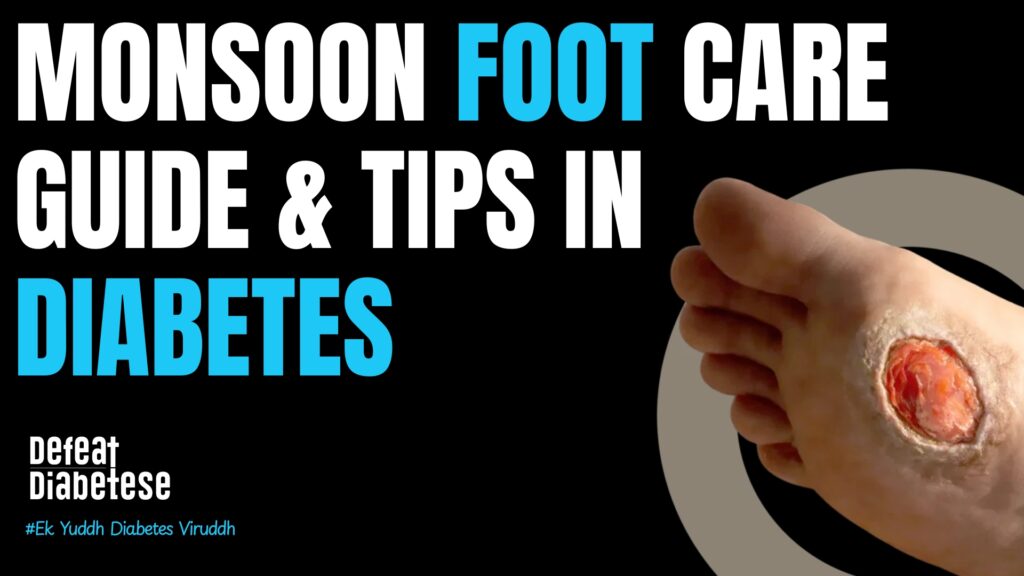
Diabetes in Monsoon: The Shield
Mastering diabetes in monsoon is a matter of extreme medical urgency for millions of individuals across India. In my 30 years of clinical legacy at Shivam Hospital in Ahmedabad, I have seen severe foot infection cases peak significantly between July and September. The romantic rain brings with it a massive spike in humidity, dampness, and waterborne pathogens that view a diabetic body as an easy target.
At DEFEAT DIABETESE, we believe that preventive education is our strongest weapon in this ek yuddh diabetese viruddh. This seasonal guide outlines the exact physiological dangers of rainwater exposure and provides actionable strategies to protect your health, keeping you firmly on the path toward our shared Vision 2040 milestones.
1. The Rainwater Hazard: How It Triggers Diabetic Foot
The most critical concern during diabetes in monsoon is the high risk of Preventing Diabetic Foot Infection. Walking through stagnant rainwater or mud is not just unhygienic—it is a direct medical emergency for a diabetic patient.
-
The Neuropathy Blocker: Chronic high blood sugar damages the micro-blood vessels and nerves in your feet (peripheral neuropathy). This means you might step on a sharp stone, a piece of glass, or a thorn in murky rainwater and never even feel it.
-
The Pathogen Breeding Ground: Monsoon water is heavily contaminated with bacteria and fungi. When this toxic water seeps into your skin through small cracks, cuts, or waterlogged toes, it bypasses your immune defense system immediately.
-
The Healing Failure: Because high sugar impairs blood circulation, your body cannot deliver infection-fighting white blood cells to your extremities. A minor scratch from walking in rainwater can rapidly escalate into a deep, non-healing ulcer, leading down the dangerous path of a diabetic foot emergency.
2. The Hidden Surge: Monsoon Infections and Blood Sugar
Monsoon comes with a wave of seasonal illnesses like dengue, malaria, typhoid, and gastroenteritis. For a diabetic individual, any infection acts as a direct metabolic trigger.
-
The Hormonal Overdrive: When your body fights a monsoon virus or bacteria, your immune system releases stress hormones like cortisol and adrenaline.
-
The Liver Spike: Cortisol blocks insulin receptors and forces the liver to dump stored glucose into your blood. Even if you are eating perfectly clean food, a simple monsoon fever will cause your blood sugar numbers to skyrocket.
3. The Fungal Trap: Humidity and Your Skin
High humidity levels during the rainy season create the absolute perfect environment for dermatological and fungal infections, particularly Tinea (ringworm) and Candida (yeast infections).
-
Interdigital Micro-Cracks: Sweat and moisture get trapped between the toes. This constant dampness softens the skin, causing it to peel and crack open naturally.
-
The Entry Point: These tiny skin breaks act as open doorways for deep-seated bacterial infections that can spread up the leg, a clinical condition known as cellulitis.
4. Tracking Seasonal Shifts with Clinical Data
At Defeat Diabetese, we replace old-school guesswork with continuous diagnostic tracking.
-
The Laboratory Defense: During seasonal transitions, we closely monitor our patients’ baseline markers. Tracking blood parameters like Fasting Insulin, HbA1c trajectory, and inflammatory markers tells us exactly how your immune system is holding up against the monsoon stress.
-
The Dashboard Mapping: By looking at your health history logged on the Unified Health Dashboard, our medical team can customize your nutrition and recovery window dynamically, ensuring your metabolic health remains stable despite the physical stress of the season.
5. 5 Golden Rules for Diabetic Foot Care Tips in Monsoon
To protect your body from severe seasonal complications and maintain your path toward true remission, implement this protocol strictly:
-
Zero Tolerance for Barefoot Walking: Never walk barefoot indoors or outdoors, especially in wet areas. Invest in specialized, breathable waterproof diabetic footwear that protects your soles completely from sharp objects.
-
The Wash and Dry Protocol: If your feet get wet in rainwater, wash them immediately with a mild antiseptic soap and clean tap water. Use a soft, dry towel to wipe them down, paying extreme attention to the spaces between your toes. Keep those gaps 100% dry.
-
The Mirror Test: Inspect the bottom of your feet every single night under a bright light. Since neuropathy dulls pain perception, use a mirror or ask a family member to check for early signs of redness, blisters, peeling skin, or tiny cuts.
-
Moisturize Safely: Apply a thin layer of moisturizing cream or pure coconut oil on your feet to prevent dry cracks. However, never apply cream between your toes, as trapped moisture will breed fungal infections instantly.
-
Immune-Boosting Nutrition: Your Type 2 Diabetes Reversal Diet during monsoon should feature antioxidant-rich foods like turmeric, garlic, ginger, and green leafy vegetables. Avoid raw salads or street food during rains to eliminate the risk of waterborne stomach infections.
6. Frequently Asked Questions (FAQs)
Q1: What should I do if I notice a small cut on my foot after walking in rain?
Clean it immediately with an antiseptic solution, apply a sterile dressing, and do not self-treat or wait for it to heal naturally. Visit your clinical team at Shivam Hospital within 24 hours to prevent it from turning into an ulcer.
Q2: Why are my blood sugar levels higher when it rains continuously?
Lack of outdoor movement and physical inactivity combined with high atmospheric humidity can elevate baseline stress levels, leading to higher glucose readings. Shift to indoor resistance training to maintain your routine.
Q3: How does Dr. Prakash Kurmi’s protocol assist during monsoon?
Backed by 30 years of medical wisdom, we provide specialized clinical guidance that pairs advanced wound-prevention protocols with digital habit tracking, ensuring you manage seasonal risks with absolute data-driven precision.
Conclusion: Shield Your Metabolism
Managing diabetes in monsoon requires a balance of absolute caution and scientific discipline. By honoring proper Diabetic Foot Care Tips and tracking your body’s signs logically, you can enjoy the season without compromising your health. Let us stay deeply committed to our Vision 2040 milestones and comfortably win this ek yuddh diabetese viruddh.
ek yuddh diabetese viruddh. Visit us: www.defeatdiabetese.com