
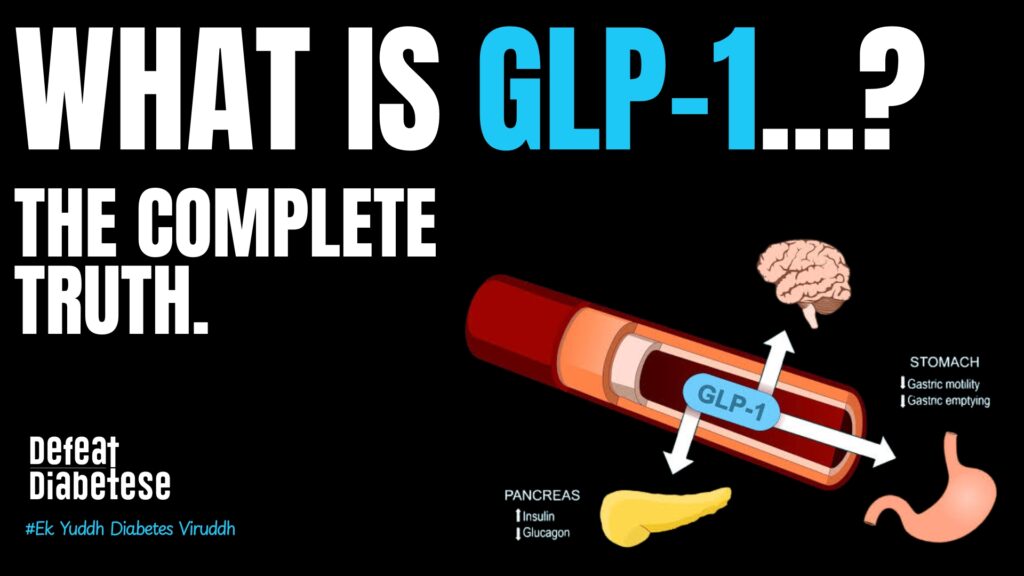
What is GLP-1: The Complete Truth
If you have scrolled through social media or read a health journal recently, you have likely asked yourself: What is GLP-1 and why has it become the biggest obsession in modern medicine? In my 30 years of clinical legacy in Ahmedabad, I have seen many medical trends come and go, but the explosion of interest around this specific pathway is unprecedented. However, while the media portrays it as a recent lab-made miracle, the truth is that GLP-1 has been working inside your gut since the day you were born.
At DEFEAT DIABETESE, our goal is to cut through the global hype with logic and data. To win this ek yuddh diabetese viruddh, you must understand how this natural biological messenger controls your blood sugar and appetite, advancing closer to our Vision 2040 mission of empowering millions with scientific health literacy.
1. The Biological Definition: Your Natural Gut Messenger
To answer the core question—what is GLP-1—we must look at your digestive system. GLP-1 stands for Glucagon-Like Peptide-1. It is not a drug; it is a hormone.
-
The Incretin Family: GLP-1 belongs to a group of metabolic gut signaling molecules called Incretin Hormones and Diabetes regulators.
-
The Trigger: The moment you eat food—especially when healthy fats, proteins, and fibers reach your lower intestine—specialized cells called L-cells immediately secrete native GLP-1 directly into your bloodstream.
-
The Mission: It acts as a primary dispatch rider, rushing to your pancreas, stomach, and brain to prepare your entire metabolism for the incoming nutrients.
2. The Pancreas Connection: The Smart Insulin Release
The primary medical reason behind the global focus on GLP-1 is its highly sophisticated method of managing blood glucose levels.
-
No Blind Shifting: Traditional diabetes medications often force your pancreas to pump out insulin continuously, which can lead to sudden, dangerous low blood sugar crashes (hypoglycemia).
-
Glucose-Dependent Mechanism: Native GLP-1 is much smarter. It binds to the pancreas and instructs it to release insulin only if it detects active glucose floating in the bloodstream. If your sugar isn’t high, it doesn’t force insulin production.
-
Shutting Down the Liver: Simultaneously, it stops the alpha cells in your pancreas from secreting glucagon, which effectively prevents your liver from dumping unnecessary, extra sugar into your blood.
3. The Brain Connection: The GLP-1 Weight Loss Secret
Why is the fashion and corporate world in Ahmedabad talking about it? Because of the revolutionary GLP-1 Weight Loss Secret hidden inside your nervous system.
-
Slowing Down the Stomach: GLP-1 acts as a brake pad for your stomach. It delays gastric emptying, meaning the food you eat stays in your stomach for a significantly longer duration. This ensures a slow, steady release of energy and completely wipes out sharp post-meal sugar spikes.
-
Muting the “Food Noise”: More importantly, GLP-1 crosses directly into the brain’s hypothalamus—the command center for hunger. It turns off constant cravings, late-night snacking urges, and what neuroscientists call “food noise.” You feel completely full and satisfied with much smaller portions.
4. The Catch: The 120-Second Lifespan
If our body already makes this miracle hormone, why do people need expensive weekly injections like Semaglutide?
-
The Destroyer Enzyme: Your natural GLP-1 has a major design flaw—it is incredibly short-lived. An enzyme in your blood called DPP-4 hunts down and destroys natural GLP-1 within 2 minutes of its release.
-
The Hype Explained: The famous weight-loss injections everyone is talking about are simply synthetic versions engineered to block the DPP-4 enzyme, allowing the hormone to stay active in your body for days instead of minutes.
5. 5 Rules to Boost Your Natural GLP-1 Release
At Defeat Diabetese, we believe you don’t always need an external chemical crutch. You can optimize your Natural GLP-1 Release organically through data-backed lifestyle protocols:
-
The Fiber-First Strategy: Soluble fiber (like chia seeds, flaxseeds, and green leafy vegetables) is the most potent natural trigger for gut L-cells. Eat your fiber 15 minutes before your main meal to activate your natural GLP-1 early.
-
Incorporate Fermented Foods: Traditional Indian fermented items like fresh curd or home-made pickles support the gut microbiome, which directly increases the density of your GLP-1 producing cells.
-
Prioritize Clean Protein: Amino acids from sources like paneer, sprouts, or lean protein strongly stimulate your gut receptors to release native incretin hormones.
-
Avoid Ultra-Processed Sugars: Highly refined carbs and seed oils bypass the lower gut too quickly and fail to trigger the L-cells, leaving you constantly hungry and insulin-resistant.
-
Track Your Laboratory Progress: Monitor your dynamic health transformation. By checking metabolic markers like HbA1c and fasting insulin, logged seamlessly on your Unified Health Dashboard, we can track the recovery of your natural metabolic signaling pathways under Dr. Prakash Kurmi’s legacy.
6. Frequently Asked Questions (FAQs)
Q1: Is GLP-1 safe for everyone?
Your body’s natural GLP-1 is perfectly safe and essential. However, if you are looking at synthetic versions (medications), they require strict medical evaluation at Shivam Hospital, as they are contraindicated for individuals with certain clinical histories, such as specific thyroid conditions.
Q2: Can I permanently fix my GLP-1 levels without medicine?
Yes. For early-stage Type 2 Diabetes and weight management, permanent structural changes to your nutrition and gut health can optimize your native hormone production, paving the way for sustainable reversal.
Q3: How does the Defeat Diabetese legacy protocol apply this?
With 30 years of medical wisdom, we use advanced therapeutics only as a temporary accelerator. Our core focus is to fix your dietary baseline so your body’s natural gut-brain communication takes over permanently.