
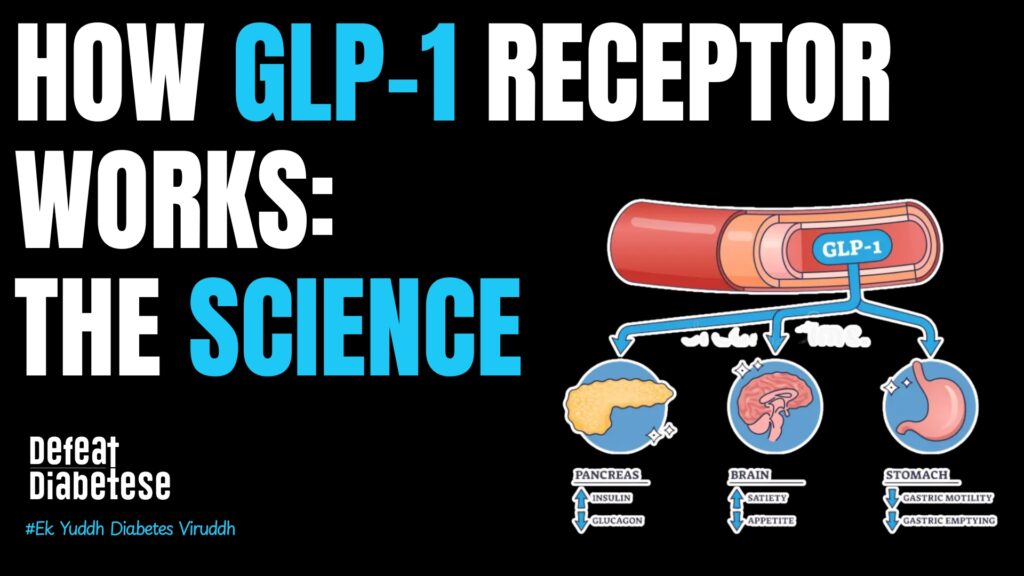
How GLP-1 Receptor Works: The Science
To truly master Type 2 Diabetes reversal, one must move past basic carbohydrate counting and look closely at cellular communication. Understanding how GLP-1 receptor works is like getting the structural blueprint of your body’s natural blood sugar control room. In my 30 years of clinical legacy in Ahmedabad, I have watched diabetes care transform from a blunt tool approach into a era of high-precision molecular medicine.
At DEFEAT DIABETESE, we believe that when a patient understands the deep scientific logic of their body, they transition from passive drug users to active leaders of their health. To win this ek yuddh diabetese viruddh, we must dissect the precise cellular steps of GLP-1 Receptor Activation, advancing our shared Vision 2040 mission of absolute health literacy.
1. The Lock and Key Mechanism: Cellular Activation
At its core, understanding how GLP-1 receptor works is a classic biological story of a ligand binding to its target—essentially, a key finding its matching lock.
-
The Receptor Structure: The GLP-1 receptor is a class B G-protein-coupled receptor (GPCR) that sits like a microscopic antenna protruding through the lipid membrane of your cells. These receptors are densely packed on pancreatic beta cells, inside the gastrointestinal tract, and within the hypothalamus of the brain.
-
The Binding Event: The moment you ingest macronutrients, your lower intestinal L-cells secrete native GLP-1 peptides into the bloodstream.
-
The Activation Cascade: When the GLP-1 molecule binds perfectly to its receptor, it forces a structural shift in the receptor’s shape. This shift triggers an internal enzyme called adenylate cyclase, which rapidly boosts the production of cyclic adenosine monophosphate ($cAMP$) inside the cell. Think of $cAMP$ as the ultimate secondary chemical messenger that turns on the cell’s main power grid.
2. The Pancreatic Protocol: Beta Cell Glucose Signaling
The absolute magic of how this receptor operates takes place inside the pancreas, specifically governing the Beta Cell Glucose Signaling pathways.
-
The High-Insulin Myth: Many older traditional diabetes treatments forcefully squeeze the pancreas to pump out insulin continuously, regardless of how much sugar is in your blood. This can lead to dangerous low blood sugar crashes (hypoglycemia).
-
The Glucose-Dependent Trigger: When GLP-1 Receptor Activation elevates internal $cAMP$ levels, it alters the cell’s electrical potential. However, it strategically leaves the insulin gates closed until extracellular glucose levels cross a specific threshold (above 90 mg/dL).
-
The Incretin Effect on Pancreas: Once glucose is actively detected, the receptor signals the immediate opening of calcium channels. Calcium floods into the cell, forcing the clean release of high-quality stored insulin. If there is no glucose in your blood, the receptor stays completely quiet, keeping you safe from sudden energy crashes.
3. Restoring the Liver’s Shut-Off Valve
Beyond insulin production, the active signaling of this pathway solves one of the biggest issues in diabetic patients: an overactive liver.
-
The Glucagon Problem: In Type 2 Diabetes, alpha cells in the pancreas constantly misfire, pumping out glucagon—a hormone that orders the liver to continuously make and dump new glucose into your blood, causing high fasting readings.
-
The Immediate Block: When the GLP-1 receptor is successfully activated, it sends a powerful cross-signal to shut down alpha cell overactivity. By suppressing glucagon secretion, it effectively turns off the liver’s broken valve, stabilizing your morning sugar baselines.
4. Neurological Satiety and Gastric Slowdown
The signaling mechanism doesn’t stop at the pancreas; it acts as a central communication line between your gut and your central nervous system.
-
Delaying Gastric Transit: In the gut, receptor activation relaxes the muscles of the stomach lining. This slows down gastric emptying, ensuring that the food you digest enters the small intestine at a slow, manageable pace. This gradual absorption completely eliminates sharp post-meal blood sugar surges.
-
Muting Brain Cravings: In the brain’s hypothalamus, receptor activation triggers specific neurons that signal absolute fullness. It switches off the constant, exhausting neurological “food noise” and compulsive carbohydrate cravings, allowing for effortless, therapeutic weight loss.
5. 5 Scientific Steps to Optimize Your Receptor Pathway
While modern advanced pharmaceuticals copy this pathway, you can enhance your natural receptor efficiency through targeted lifestyle protocols:
-
Protect Cellular Membranes: Receptors are built into your cell walls. Eliminate highly processed seed oils and trans fats from your diet, as they alter cell fluidity, literally blinding your receptors to your body’s natural hormones.
-
Fiber-Driven Pre-Loading: Consuming 10-15 grams of soluble fiber (like psyllium husk or green vegetables) 15 minutes before your main meal naturally triggers your lower gut to secrete native incretins early, priming your receptors before carbs hit the bloodstream.
-
Optimize Pancreatic Rest: Constantly grazing on food throughout the day keeps your cellular pathways continuously exhausted. Adopting a structured eating window allows your receptors to clean and recalibrate their sensitivity.
-
Track Your Bio-Markers: Never guess your health progress. By monitoring regular diagnostic indicators like fasting insulin and HbA1c trajectory, logged systematically on your Unified Health Dashboard, our medical team can track the return of your metabolic flexibility.
-
Seek Expert Legacy Guidance: Advanced metabolic mapping at Shivam Hospital ensures that any clinical protocols targeting these cellular pathways are perfectly tailored to your unique pancreatic reserve and genetic baseline.
6. Frequently Asked Questions (FAQs)
Q1: Can someone have damaged or unresponsive GLP-1 receptors?
Yes. Chronic, low-grade systemic inflammation and high visceral fat accumulation can cause receptor desensitization, where your body produces natural GLP-1, but the cellular antennas fail to pick up the signal.
Q2: What is the main difference between natural GLP-1 action and drug action?
Your body’s natural GLP-1 is destroyed by an enzyme called DPP-4 within 2 minutes. Synthetic drugs are structurally altered twins that resist this enzyme, keeping the receptor continuously activated for days to accelerate cellular recovery.
Q3: How does the Defeat Diabetese protocol approach this science?
Backed by 30 years of clinical wisdom, we treat receptor health as the holy grail of lifestyle medicine. Our goal is to fix your cellular environment through precise data and nutrition, so your body’s native communication channels eventually take back permanent control.
Conclusion: Rebuild Your Communication Lines
Learning how GLP-1 receptor works proves that reversing Type 2 Diabetes is a game of fixing cellular communication, not just punishing yourself with starvation. By choosing logic over trends and aligning your habits with precise molecular science, you can unlock your cells and reclaim your vitality. Let us march forward together in this ek yuddh diabetese viruddh to secure our ultimate Vision 2040 milestone.
ek yuddh diabetese viruddh.
Visit us: www.defeatdiabetese.com