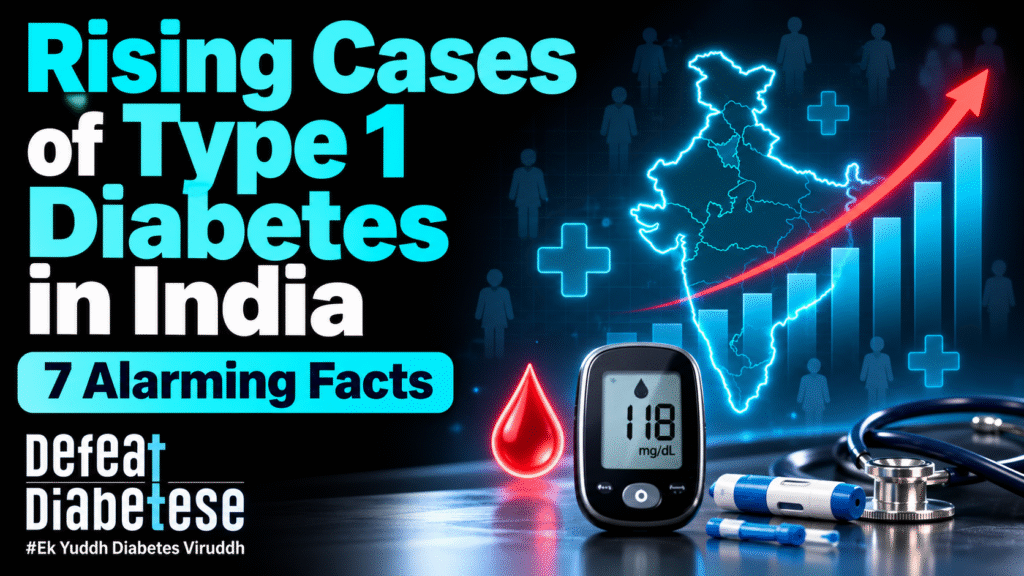
Rising Cases of Type 1 Diabetes in India: 7 Alarming Facts
Rising Cases of Type 1 Diabetes in India: 7 Facts You Must Know The rising cases of Type 1 diabetes in India have become an important public health concern, especially among children, teenagers, and young adults. Although diabetes is often associated with older adults and unhealthy lifestyle habits, Type 1 diabetes is a different condition that can develop unexpectedly, even in otherwise healthy individuals. India carries a substantial burden of Type 1 diabetes. According to the International Diabetes Federation (IDF) Diabetes Atlas 2025, approximately 941,000 people of all ages were estimated to be living with Type 1 diabetes in India in 2024, including around 301,000 children and adolescents under 20. These figures highlight the need for better awareness, earlier diagnosis, affordable insulin, and long-term medical support. At Defeat Diabetese, we believe understanding Type 1 diabetes is essential for supporting affected individuals and their families. This article explores seven important facts about Type 1 diabetes in India, its symptoms, treatment challenges, and the steps needed to improve diabetes care. What Is Type 1 Diabetes? Type 1 diabetes is a chronic autoimmune condition in which the immune system mistakenly attacks insulin-producing beta cells in the pancreas. Insulin is an essential hormone that allows glucose from the bloodstream to enter body cells and provide energy. When the pancreas produces little or no insulin, blood glucose rises, potentially leading to dangerous health complications. Unlike Type 2 diabetes, Type 1 diabetes is not caused by excessive sugar consumption, obesity, or an unhealthy lifestyle. The condition commonly develops during childhood or adolescence, although adults can also be diagnosed. People with established Type 1 diabetes require insulin treatment to survive. Type 1 Diabetes in India: Important Statistics India has one of the world’s largest populations of people living with Type 1 diabetes. The IDF Diabetes Atlas provides the following estimates: Category Estimated Cases People of all ages with Type 1 diabetes in India 941,000 Children and adolescents under 20 in India 301,000 Global population living with Type 1 diabetes 9.15 million Source: International Diabetes Federation, Diabetes Atlas, 11th Edition, 2025. Estimates relate to 2024. India also ranked first in estimated numbers of people under 20 living with Type 1 diabetes. Earlier IDF estimates reported approximately 229,400 affected children and adolescents under 20 in India in 2021. However, differences between successive estimates do not necessarily represent a direct increase in the annual rate of new cases. Population changes, survival, data availability, and estimation methods can influence reported numbers. This distinction is important when discussing rising Type 1 diabetes cases in India. 7 Important Facts About Rising Cases of Type 1 Diabetes in India 1. India Has a Significant Type 1 Diabetes Burden India’s large population means that even conditions less common than Type 2 diabetes can affect hundreds of thousands of people. Type 1 diabetes creates lifelong treatment needs, including insulin, glucose monitoring, medical consultations, and emergency preparedness. The high estimated number of affected children demonstrates why pediatric diabetes services deserve greater attention. Improving early diagnosis and consistent access to care can help reduce avoidable complications. 2. Type 1 Diabetes Can Affect Children and Adults Type 1 diabetes is often called juvenile diabetes because it frequently develops during childhood. However, this name can be misleading. The disease can appear at any age, including during adulthood. Some adults are initially diagnosed with Type 2 diabetes before additional testing identifies an autoimmune form of diabetes. Accurate diagnosis matters because Type 1 diabetes requires insulin treatment. Doctors may use clinical history, blood glucose measurements, diabetes autoantibody tests, and C-peptide testing when necessary. 3. Early Symptoms Are Often Overlooked One of the biggest concerns surrounding Type 1 diabetes is that symptoms may initially seem ordinary. Children may drink more water, visit the toilet frequently, or appear unusually tired. Parents may mistake these changes for hot weather, school-related stress, or minor illness. Common warning signs include: Excessive thirst Frequent urination Sudden unexplained weight loss Extreme hunger Persistent fatigue Blurred vision Renewed bedwetting in children Symptoms can develop rapidly over days or weeks. Prompt medical testing is essential when these signs occur together. 4. Delayed Diagnosis Can Cause Diabetic Ketoacidosis Diabetic ketoacidosis, or DKA, is a potentially life-threatening complication caused by severe insulin deficiency. Without adequate insulin, the body breaks down fat for energy and produces ketones. Excessive ketone accumulation can make the blood dangerously acidic. Warning signs include vomiting, abdominal pain, deep or rapid breathing, fruity-smelling breath, severe dehydration, and confusion. For some individuals, DKA is the first recognized sign of Type 1 diabetes. Increasing public awareness and improving access to rapid blood glucose testing may help identify diabetes before an emergency develops. Suspected DKA requires immediate emergency medical treatment. 5. Insulin Access Remains Essential Insulin is not optional for people living with established Type 1 diabetes. Daily treatment is necessary because the pancreas cannot produce sufficient insulin. However, consistent diabetes management involves more than purchasing insulin. Families may also need glucose testing supplies, appropriate insulin storage, regular consultations, education, and support during illness. These requirements can create financial and logistical challenges, particularly for households facing limited healthcare access. Improving access to affordable treatment and diabetes education is vital for long-term care. 6. Technology Can Improve Diabetes Management Modern diabetes technology has introduced new ways to monitor glucose levels and administer insulin. Continuous glucose monitoring systems can provide frequent glucose readings and help identify patterns. Insulin pumps can deliver insulin throughout the day according to an individualized treatment plan. Some systems combine glucose monitoring with automated insulin delivery features. These technologies may improve glucose management and reduce treatment burden for suitable patients. However, cost, availability, training, and follow-up support can limit access. Traditional insulin injections and glucose meters remain effective options when used with appropriate medical guidance. 7. Awareness and Early Detection Can Save Lives Improving Type 1 diabetes awareness is one of the most important priorities for families, schools, and healthcare providers. Teachers should recognize symptoms of high and low blood sugar. Parents should understand when a child needs medical testing.
Rising Cases of Type 1 Diabetes in India: 7 Alarming Facts Read More »