
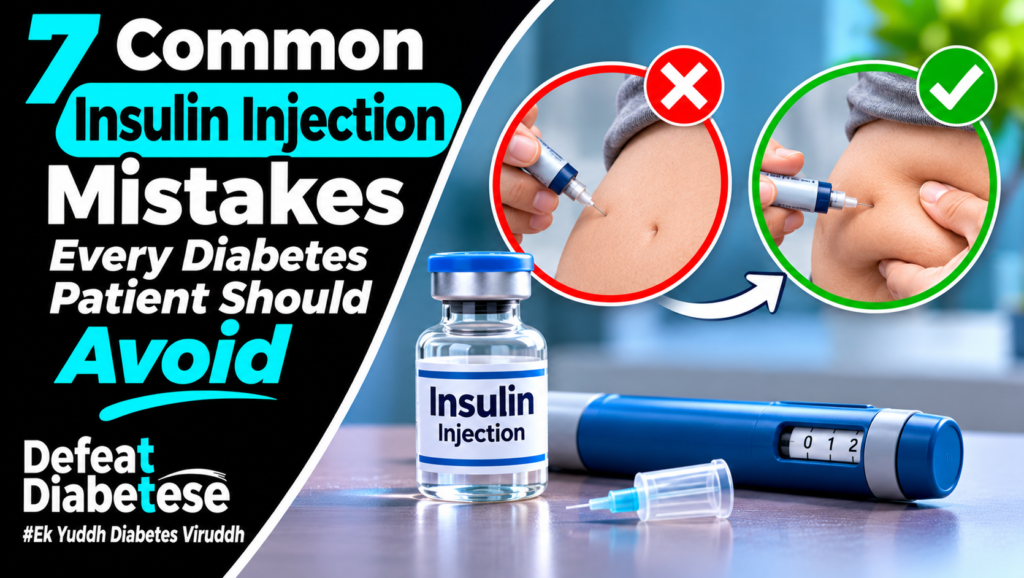
7 Common Insulin Injection Mistakes Every Diabetes Patient Should Avoid
Introduction
Insulin injection mistakes can affect blood sugar management, insulin absorption, and the overall effectiveness of diabetes treatment. Although insulin is an essential part of diabetes care for millions of people, using it correctly is just as important as taking the prescribed dose.
Many people with diabetes regularly inject insulin but may unknowingly make mistakes that interfere with their treatment. Injecting repeatedly into the same location, reusing needles, storing insulin incorrectly, or taking insulin at the wrong time can contribute to unpredictable blood glucose levels.
Some individuals may experience unexplained high blood sugar despite following their prescribed insulin routine. Others may experience sudden episodes of low blood sugar because of inconsistent insulin absorption or administration errors.
Understanding the correct injection technique can help reduce these risks and improve confidence in daily diabetes management.
Whether you have recently started insulin therapy or have been using insulin for several years, reviewing your injection habits is an important part of maintaining your health.
In this article, we explore seven common insulin injection mistakes, their potential consequences, and practical strategies to support safer and more effective insulin therapy.
Why Is Correct Insulin Injection Technique Important?
Insulin is a hormone that helps regulate blood glucose levels. People with type 1 diabetes require insulin treatment, while some individuals with type 2 diabetes may also need insulin to achieve their glucose management goals.
Most insulin injections are administered into the subcutaneous tissue, which is the layer of fatty tissue beneath the skin.
When insulin is administered correctly, it can be absorbed into the bloodstream according to its expected action profile. However, incorrect injection techniques may affect the speed and consistency of absorption.
Poor injection practices may contribute to:
- Unpredictable blood glucose fluctuations.
- Frequent episodes of high blood sugar.
- Increased risk of hypoglycaemia.
- Pain, bruising, or irritation at injection sites.
- Development of fatty lumps beneath the skin.
- Inconsistent insulin absorption.
- Difficulty achieving individual HbA1c targets.
Correct insulin administration involves more than selecting the prescribed dose. Injection location, needle selection, timing, storage, and regular monitoring are equally important.
7 Common Insulin Injection Mistakes and How to Avoid Them
1. Injecting Insulin Into the Same Spot Repeatedly
One of the most common insulin injection mistakes is repeatedly injecting insulin into the same small area of the body.
Although using a familiar injection location may feel convenient, repeated injections into the same spot can cause changes in the underlying fatty tissue.
A common complication is lipohypertrophy, which refers to thickened or enlarged fatty tissue beneath the skin.
These areas may feel firm, rubbery, or lumpy. Some people continue injecting into them because injections may feel less painful there.
However, insulin absorption from affected tissue can become unpredictable.
Possible consequences include:
- Unexpected blood sugar fluctuations.
- Delayed or inconsistent insulin absorption.
- Increased insulin requirements in some individuals.
- Development of visible or palpable lumps.
- Unexpected hypoglycaemia when switching injection locations.
Rotate injection points systematically within the recommended injection region. Keep successive injections approximately one centimetre apart.
Regularly inspect and gently feel injection areas for lumps, swelling, or changes in skin texture.
Avoid injecting into areas of lipohypertrophy, bruising, inflammation, or damaged skin.
If you have been injecting into fatty lumps, consult your diabetes care team before switching to healthy tissue. Insulin may be absorbed more efficiently from unaffected areas, potentially requiring a supervised dose adjustment to prevent hypoglycaemia.
2. Reusing Insulin Needles
Some people reuse insulin pen needles or syringes to reduce costs or avoid carrying additional supplies.
However, insulin needles are generally designed for single use.
After an injection, a needle may become damaged, less sharp, or contaminated. Repeated use may increase discomfort and contribute to local tissue injury.
Needle reuse is also associated with an increased risk of lipohypertrophy.
Leaving a needle attached to an insulin pen between injections may allow leakage, air entry, or other problems that affect reliable insulin delivery.
Potential problems associated with needle reuse include:
- Increased injection discomfort.
- Skin irritation and bruising.
- Greater risk of tissue damage.
- Possible contamination.
- Needle blockage or unreliable insulin delivery.
How to avoid this mistake:
Use a new sterile needle for every insulin injection.
Remove the needle from the insulin pen after use, following the manufacturer’s instructions.
Dispose of used needles in an appropriate puncture-resistant sharps container.
Never share insulin pens, syringes, or needles with another person, even if the needle has been replaced.
If the cost or availability of injection supplies is a concern, discuss affordable options with your healthcare professional.
Safe injection practices should remain a priority throughout insulin therapy.
3. Using an Incorrect Injection Technique or Needle Length
Insulin is generally intended to be injected into subcutaneous fatty tissue rather than directly into muscle.
An injection that enters muscle may cause insulin to be absorbed more rapidly or unpredictably, potentially increasing the risk of hypoglycaemia.
Incorrect technique may also result in insulin leakage, pain, bruising, or incomplete delivery.
Needle length, injection angle, and whether a skin fold is required depend on the injection device, body composition, and individual circumstances.
For many adults, a 4 mm insulin pen needle inserted at a 90-degree angle is an appropriate option. However, children, very lean individuals, and people using different needle lengths may require specific guidance.
Common technique-related mistakes include:
- Using an unsuitable needle length.
- Injecting into muscle unintentionally.
- Removing the needle too quickly.
- Failing to prime an insulin pen when required.
- Injecting into damaged or abnormal tissue.
How to avoid this mistake:
Ask a diabetes educator, nurse, or healthcare professional to demonstrate the correct technique using your specific insulin device.
For insulin pens, perform the recommended flow check or priming step according to the manufacturer’s instructions.
After pressing the injection button, keep the needle in the skin for the duration specified for your device to support complete dose delivery.
If insulin leaks after an injection, do not automatically repeat the dose because doing so could result in excessive insulin administration.
Consult your healthcare team if leakage or injection difficulties occur frequently.
4. Injecting Insulin Into an Unsuitable Body Area
The injection location can influence insulin absorption.
Commonly recommended subcutaneous insulin injection regions include:
- The abdomen.
- The outer or front portions of the thighs.
- The fatty areas of the upper arms.
- The upper outer buttocks.
Insulin absorption may differ between injection regions, depending on the insulin formulation and individual circumstances.
For some insulin preparations, absorption from the abdomen may be faster than from other areas.
Physical activity involving the injected limb may also influence absorption.
Randomly changing injection regions without considering the treatment plan may contribute to inconsistent glucose patterns.
Areas that should generally be avoided include:
- Scarred or damaged skin.
- Bruised or swollen areas.
- Sites with active skin infections.
- Fatty lumps caused by lipohypertrophy.
- Areas immediately surrounding the belly button.
How to avoid this mistake:
Follow the injection region recommended by your diabetes care team for your particular insulin.
Rotate individual injection points within that region rather than repeatedly using the same spot.
When using the abdomen, avoid injecting within approximately five centimetres of the belly button.
If you have difficulty reaching an injection area safely, ask your healthcare professional about alternative locations.
Consistent and appropriate injection site selection can help make insulin absorption more predictable.
5. Storing Insulin Incorrectly
Insulin is sensitive to environmental conditions, particularly excessive heat and freezing temperatures.
Incorrect storage can reduce insulin effectiveness, even when the product appears normal.
This is especially important in countries such as India, where high summer temperatures may expose insulin to unsuitable storage conditions.
Leaving insulin inside a parked vehicle, near a window, or close to a heat source may damage the medication.
Freezing insulin can also make it unsuitable for use.
Common insulin storage mistakes include:
- Exposing insulin to direct sunlight.
- Leaving insulin in a hot vehicle.
- Storing insulin in a freezer.
- Placing insulin directly against ice packs.
- Using insulin beyond its expiry or in-use storage period.
How to store insulin correctly:
Unopened insulin is generally stored in a refrigerator at temperatures between 2°C and 8°C, unless the product instructions specify otherwise.
Insulin currently in use may often be kept at room temperature within a manufacturer-specified temperature range and time limit.
However, storage requirements vary between insulin brands, formulations, pens, and vials. Some products have an in-use period of 28 days, while others have different limits.
Always read the specific product’s storage instructions.
Never use insulin that has been frozen or exposed to temperatures outside its recommended limits without obtaining appropriate professional advice.
Clear insulin should not contain unexpected particles or discolouration. Some insulin formulations are naturally cloudy and require preparation according to their specific instructions.
When travelling, use an appropriate insulated storage solution and avoid direct contact with ice.
6. Taking Insulin at the Wrong Time or Using the Wrong Dose
Different insulin formulations are designed to work at different speeds and for different durations.
Some are intended to manage blood glucose around meals, while others provide background insulin coverage throughout the day or night.
Taking the wrong insulin, administering an incorrect dose, or injecting at an unsuitable time can cause serious blood glucose disturbances.
For example, taking mealtime insulin and then unexpectedly delaying or skipping the meal may increase the risk of hypoglycaemia.
Missing prescribed insulin may contribute to hyperglycaemia. In people with type 1 diabetes, insufficient insulin can lead to diabetic ketoacidosis, a potentially life-threatening emergency.
Common timing and dosage mistakes include:
- Confusing mealtime and long-acting insulin.
- Forgetting prescribed insulin doses.
- Accidentally taking a duplicate dose.
- Delaying meals after administering mealtime insulin.
- Changing insulin doses without an agreed treatment plan.
- Failing to check the insulin label before injecting.
How to avoid this mistake:
Understand the name, concentration, purpose, prescribed dose, and recommended timing of each insulin you use.
Check the insulin label before every injection.
Use reminders or a medication log to help prevent missed or duplicate doses.
Follow your personalised insulin adjustment and missed-dose instructions.
Never assume that all insulin products have the same timing requirements.
If you accidentally administer the wrong insulin or dose, seek immediate medical guidance, monitor your glucose closely, and follow your emergency treatment plan.
7. Ignoring Blood Sugar Monitoring and Injection Site Changes
Insulin therapy requires ongoing monitoring to assess its effectiveness and safety.
Without appropriate glucose monitoring, it may be difficult to recognise whether an insulin dose, injection technique, meal pattern, or physical activity is contributing to abnormal blood glucose levels.
Some people continue using the same injection routine despite experiencing repeated high or low glucose readings.
Others may overlook changes in injection sites, such as lumps, tenderness, or swelling.
These problems can interfere with effective diabetes management.
Important warning signs include:
- Repeated unexplained high blood sugar.
- Frequent episodes of hypoglycaemia.
- Persistent injection site pain.
- Lumps or thickened skin.
- Unexpected changes in insulin requirements.
- HbA1c remaining above the individual target.
How to avoid this mistake:
Monitor your blood glucose using a glucometer or continuous glucose monitoring system, as recommended by your healthcare professional.
Record unusual glucose readings, insulin doses, meals, physical activity, and injection-related concerns when appropriate.
Regularly inspect your injection sites.
Attend scheduled diabetes reviews and ask your healthcare professional to reassess your injection technique periodically.
Do not automatically increase insulin when glucose remains elevated. Incorrect storage, injection technique, illness, or other factors may also be responsible.
Identifying the underlying cause is essential for safe treatment adjustments.
How Insulin Injection Mistakes Can Affect Blood Sugar Levels
Incorrect insulin administration can make glucose management more difficult.
| Injection Mistake | Possible Effect |
|---|---|
| Repeated use of the same injection spot | Lipohypertrophy and unpredictable absorption |
| Needle reuse | Tissue damage and injection discomfort |
| Accidental intramuscular injection | Faster absorption and hypoglycaemia risk |
| Unsuitable injection location | Variable insulin absorption |
| Incorrect insulin storage | Reduced insulin effectiveness |
| Incorrect dose or timing | High or low blood sugar |
| Inadequate monitoring | Delayed recognition of glucose problems |
These effects vary between individuals. Repeated abnormal glucose readings require appropriate assessment rather than assumptions about their cause.
Essential Insulin Injection Safety Checklist
Before administering insulin, confirm that you have the correct insulin product, prescribed dose, and appropriate injection device.
Use a new sterile needle, select a healthy injection site, and follow the recommended technique.
After injecting, dispose of the needle safely and monitor your glucose according to your care plan.
Keep fast-acting carbohydrates available if you are at risk of hypoglycaemia.
If your blood glucose falls below 70 mg/dL, follow your personalised hypoglycaemia treatment instructions. For many adults who are awake and able to swallow safely, this involves taking 15 grams of fast-acting carbohydrates and rechecking glucose after 15 minutes.
Severe hypoglycaemia involving unconsciousness, seizures, or inability to swallow requires emergency assistance. Do not give food or drink by mouth. Administer prescribed glucagon if available and appropriate.
When Should You Consult a Doctor?
Contact your healthcare professional if you experience repeated unexplained glucose fluctuations, injection site lumps, persistent pain, frequent hypoglycaemia, or difficulty administering insulin.
Seek emergency medical care if high blood sugar occurs alongside vomiting, abdominal pain, deep or rapid breathing, fruity-smelling breath, severe drowsiness, or confusion.
These symptoms may indicate diabetic ketoacidosis.
Early intervention and regular injection technique reviews can help prevent serious complications.
Frequently Asked Questions (FAQs)
1. What are the most common insulin injection mistakes?
Common mistakes include repeatedly injecting into the same spot, reusing needles, incorrect injection technique, unsuitable injection locations, improper storage, incorrect timing or dosage, and inadequate glucose monitoring.
2. Can incorrect insulin injections cause high blood sugar?
Yes. Incorrect storage, incomplete insulin delivery, or injecting into lipohypertrophic tissue may contribute to unpredictable or elevated glucose levels.
3. Can I reuse an insulin pen needle?
Insulin pen needles are designed for single use. Using a new sterile needle for each injection is recommended.
4. Where is the best place to inject insulin?
The abdomen, thighs, upper arms, and upper outer buttocks are commonly used regions. The most suitable location depends on your insulin formulation and individual treatment plan.Insulin Injection MistakesInsulin Injection Mistakes
5. Should insulin always be refrigerated?
Unopened insulin generally requires refrigeration. Insulin in use may be stored at room temperature within product-specific limits. Always follow the manufacturer’s instructions.Insulin Injection MistakesInsulin Injection Mistakes
6. Why do lumps develop at insulin injection sites?
Repeated injections into the same area may cause lipohypertrophy, a condition involving thickened fatty tissue beneath the skin.Insulin Injection MistakesInsulin Injection Mistakes
7. Can incorrect insulin injection technique affect HbA1c?
Yes. Inconsistent insulin absorption and delivery may contribute to abnormal glucose patterns, potentially affecting long-term HbA1c results.Insulin Injection MistakesInsulin Injection Mistakes
Conclusion
Avoiding common insulin injection mistakes is an important step towards safer and more effective diabetes management.Insulin Injection MistakesInsulin Injection MistakesInsulin Injection MistakesInsulin Injection Mistakes
Correct injection technique, systematic site rotation, single-use needles, appropriate insulin storage, accurate timing, and regular glucose monitoring can help improve treatment reliability.Insulin Injection MistakesInsulin Injection Mistakes
Insulin therapy should always be individualised according to your medical needs and healthcare professional’s recommendations.Insulin Injection MistakesInsulin Injection Mistakes
If you experience unexplained blood sugar fluctuations or injection-related difficulties, seek professional guidance rather than independently changing your insulin dose.Insulin Injection MistakesInsulin Injection Mistakes
At Defeat Diabetese, we believe that patient education, early awareness, and responsible treatment practices are essential for better diabetes management.Insulin Injection MistakesInsulin Injection MistakesInsulin Injection Mistakes
Inject correctly, monitor regularly, and take informed steps towards safer insulin therapy and healthier blood sugar control.
Medical Disclaimer: This article is intended for educational purposes only and does not replace professional medical advice, diagnosis, or treatment. Insulin formulations, injection techniques, storage requirements, and dosage schedules vary between individuals and products. Always follow your healthcare professional’s instructions and the manufacturer’s product information. Never change or discontinue prescribed insulin without appropriate medical guidance.Insulin Injection MistakesInsulin Injection MistakesInsulin Injection MistakesInsulin Injection Mistakes