
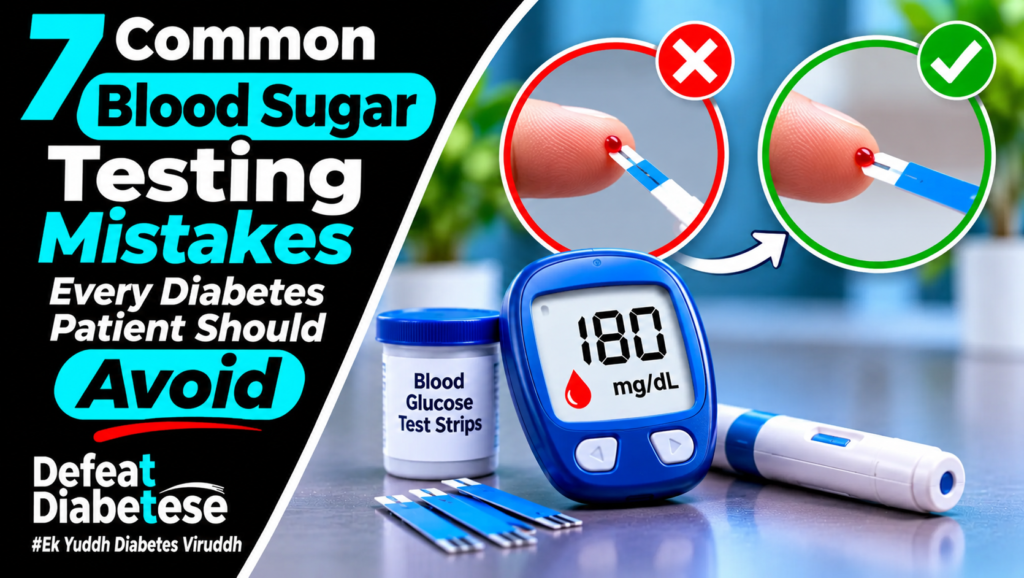
7 Common Blood Sugar Testing Mistakes Every Diabetes Patient Should Avoid
Introduction
Blood sugar testing mistakes can affect the accuracy of glucose readings and make diabetes management more challenging. Regular blood glucose monitoring is an important part of diabetes care, helping individuals understand how food, medication, physical activity, stress, and lifestyle habits influence their glucose levels.
Many people with diabetes use a glucometer at home every day. However, simply checking blood sugar regularly does not guarantee accurate results. Small mistakes during the testing process may produce misleading readings and create unnecessary confusion.
For example, testing blood sugar without washing your hands, using expired test strips, or collecting an insufficient blood sample can affect the reliability of your results.
Incorrect readings may also lead to inappropriate treatment decisions, unnecessary anxiety, or delayed recognition of high or low blood sugar.
Whether you have recently been diagnosed with diabetes or have been managing the condition for several years, understanding the correct blood glucose testing technique is essential.
In this article, we explore seven common blood sugar testing mistakes, their possible consequences, and practical ways to improve the accuracy of home glucose monitoring.
Why Is Accurate Blood Sugar Testing Important?
Blood glucose monitoring provides valuable information about how your body responds to everyday activities and diabetes treatment.
Accurate readings can help individuals and healthcare professionals identify glucose patterns, evaluate treatment effectiveness, and make informed decisions.
Regular blood sugar monitoring may help you:
- Identify high and low blood sugar levels.
- Understand how different foods affect glucose.
- Evaluate the effectiveness of prescribed medications.
- Recognise glucose changes during physical activity.
- Monitor blood sugar during illness.
- Reduce the risk of inappropriate treatment decisions.
- Work towards individual diabetes management goals.
However, inaccurate readings may provide a misleading picture of your actual glucose levels.
This is particularly concerning for individuals who use insulin or medications that can cause hypoglycaemia.
Learning to use your glucose monitoring device correctly is therefore an important part of safe and effective diabetes management.
7 Common Blood Sugar Testing Mistakes and How to Avoid Them
1. Not Washing Your Hands Before Testing Blood Sugar
One of the most common blood sugar testing mistakes is checking glucose without properly washing and drying your hands.
Your fingers may contain traces of food, fruit juice, sugar, sweat, or other substances that can interfere with blood glucose measurements.
For example, handling mangoes, bananas, sweets, or sugary beverages before testing may leave glucose-containing residues on your fingertips.
Even a small amount of sugar contamination can potentially produce a falsely elevated reading.
Similarly, testing with wet fingers may dilute the blood sample and affect the result.
Common mistakes include:
- Testing immediately after eating or handling food.
- Checking glucose with wet hands.
- Relying only on a tissue to clean the fingers.
- Testing before an alcohol swab has completely dried.
- Ignoring visible dirt or sticky substances.
How to avoid this mistake:
Wash your hands thoroughly with soap and water before checking your blood sugar.
Dry them completely using a clean towel.
If an alcohol swab is used according to your device instructions, allow the area to dry completely before testing.
When an unexpectedly high reading occurs, wash and dry your hands and repeat the test using a new strip.
Do not take additional diabetes medication solely because of a potentially contaminated reading.
2. Using Expired or Improperly Stored Test Strips
Blood glucose test strips contain specialised chemicals that react with glucose in a blood sample.
These chemicals are sensitive to environmental conditions, including heat, humidity, and moisture.
Using expired, damaged, or improperly stored test strips may affect the reliability of glucose measurements.
This is especially important in countries such as India, where high temperatures and humidity can create challenges for storing medical supplies.
Common test strip mistakes include:
- Using strips beyond their expiry date.
- Leaving the test strip container open.
- Storing strips in humid bathrooms.
- Exposing strips to direct sunlight.
- Using strips that are incompatible with the glucometer.
- Ignoring the manufacturer’s storage instructions.
Always check the expiry date before using a test strip.
Store strips in their original container and close the lid immediately after removing a strip.
Follow the manufacturer’s recommended storage temperature and humidity conditions.
Use only test strips specifically designed for your glucometer.
Some products have an additional expiry period after opening, so read the instructions carefully.
Never use a damaged strip or attempt to reuse a previously used test strip.
Proper test strip storage is a simple but important step towards obtaining reliable blood glucose readings.
3. Using an Insufficient Blood Sample or Squeezing the Finger Too Hard
Collecting the correct amount of blood is essential for accurate glucose testing.
Different glucometers require different blood sample volumes. An insufficient sample may produce an error message or, depending on the device, an unreliable reading.
Some people squeeze their fingers forcefully when they have difficulty obtaining a blood sample.
Excessive squeezing may cause tissue fluid to mix with the blood, potentially affecting the measurement.
Repeated forceful squeezing can also increase discomfort and bruising.
Common sampling mistakes include:
- Applying too little blood to the test strip.
- Squeezing the fingertip excessively.
- Adding more blood after testing has started when the meter does not support it.
- Applying blood incorrectly to the strip.
- Using an unsuitable lancet depth.
Wash your hands with comfortably warm water to encourage blood flow.
Gently massage your hand towards the fingertip before using the lancet.
Use the side of the fingertip rather than repeatedly pricking the centre.
Adjust the lancing device according to your skin thickness and comfort.
Allow a suitable blood drop to form naturally and apply it according to the meter’s instructions.
If the meter displays an insufficient sample error, follow the manufacturer’s instructions. You may need to repeat the test with a new strip.
4. Checking Blood Sugar at the Wrong Time
Blood glucose levels naturally fluctuate throughout the day.
Meals, physical activity, sleep, stress, illness, and medications can all influence glucose readings.
Checking blood sugar at inconsistent times may make it difficult to compare results and understand glucose patterns.
For example, a reading taken immediately after eating cannot be directly compared with a fasting glucose reading.
Similarly, a reading taken 30 minutes after a meal may differ significantly from a reading taken two hours after the meal begins.
Common timing mistakes include:
- Checking fasting blood sugar after consuming caloric beverages.
- Measuring post-meal glucose at inconsistent intervals.
- Forgetting to record the timing of meals.
- Comparing fasting and post-meal readings directly.
- Ignoring recommended glucose checks around physical activity or medication use.
How to avoid this mistake:
Follow a glucose monitoring schedule recommended by your healthcare professional.
Fasting blood sugar is generally measured after at least eight hours without caloric intake.
Post-meal glucose is commonly checked one to two hours after the beginning of a meal, depending on the individual treatment plan.
Some individuals may also need to check glucose before meals, at bedtime, during illness, or around exercise.
Record the time and circumstances of each reading.
Consistent testing conditions can make glucose patterns easier to interpret and help your healthcare team evaluate treatment effectiveness.
5. Reusing Lancets or Sharing Blood Sugar Testing Equipment
Lancets are small needles used to obtain a blood sample from the fingertip.
Although some people reuse lancets for convenience or to reduce expenses, lancets are generally designed for single use.
Repeated use may make the lancet less sharp, increasing discomfort and potentially causing additional skin irritation.
Sharing lancing devices is particularly dangerous because it can expose individuals to bloodborne infections.
Even replacing the lancet does not make a shared fingerstick device safe.
Common lancet-related mistakes include:
- Reusing the same lancet repeatedly.
- Sharing a lancing device with family members.
- Using damaged or contaminated lancets.
- Disposing of used lancets with ordinary household waste.
- Using an unsuitable puncture depth.
How to avoid this mistake:
Use a new sterile lancet for each blood sugar test.
Never share your personal lancing device with another person.
Home-use blood glucose meters should also generally be assigned to one individual.
Dispose of used lancets in an appropriate puncture-resistant sharps container and follow local disposal guidance.
Clean and maintain your testing equipment according to the manufacturer’s instructions.
Although lancet reuse does not necessarily cause an inaccurate glucose reading, avoiding it is important for safe and hygienic blood glucose monitoring.
6. Ignoring Glucometer Maintenance and Accuracy Checks
A glucometer is a medical device that requires appropriate handling and maintenance.
Although modern blood glucose meters are designed to provide reliable measurements, their performance can be affected by damaged equipment, incompatible strips, unsuitable operating conditions, or other factors.
Home glucose meters also have an expected margin of measurement variation. Two devices may produce slightly different readings even when used correctly.
Certain medical conditions, severe dehydration, abnormal haematocrit levels, and specific medications or substances may interfere with some glucose monitoring systems.
Common glucometer maintenance mistakes include:
- Ignoring repeated device error messages.
- Using incompatible test strips.
- Failing to clean the device as instructed.
- Ignoring low-battery warnings.
- Using the meter outside its recommended temperature range.
- Failing to perform recommended control solution checks.
How to avoid this mistake:
Read the instruction manual supplied with your glucometer.
Keep the device clean, dry, and protected from extreme temperatures.
Replace batteries when required and investigate repeated error messages.
Use control solution testing when recommended by the manufacturer, particularly if you suspect a problem with the meter or strips.
Bring your glucometer to a medical appointment if you are concerned about its accuracy.
Your healthcare professional may help compare your device readings with laboratory glucose measurements taken at approximately the same time.
Remember that laboratory testing and home glucose monitoring serve different purposes and may not produce identical results.
7. Ignoring Unusual Readings or Making Treatment Decisions Too Quickly
One of the most potentially serious blood sugar testing mistakes is failing to respond appropriately to unexpected glucose readings.
Some individuals become anxious after seeing a high reading and immediately take additional medication without following their prescribed treatment plan.
Others may ignore low blood sugar readings because they do not experience noticeable symptoms.
Both situations can create safety concerns.
A single glucose reading may be influenced by food, medication, stress, illness, exercise, or testing errors.
Understanding the circumstances surrounding the reading is important.
Common mistakes include:
- Taking extra insulin without an agreed correction plan.
- Ignoring repeated low blood sugar readings.
- Assuming every unusual reading is a glucometer error.
- Changing medication based on a single result.
- Failing to record recurring glucose fluctuations.
How to avoid this mistake:
If an unexpected reading occurs and you feel well, review your testing technique and repeat the measurement when appropriate.
However, do not delay treatment if you have symptoms of hypoglycaemia or a reading indicating low blood sugar.
For many adults, blood glucose below 70 mg/dL indicates hypoglycaemia.
If you are awake and able to swallow safely, follow your hypoglycaemia treatment plan. This commonly involves taking 15 grams of fast-acting carbohydrates and checking glucose again after 15 minutes.
Severe hypoglycaemia involving unconsciousness, seizures, or inability to swallow requires emergency medical assistance. Do not give food or drink by mouth. Use prescribed glucagon if available and appropriate.
Always follow your personalised treatment plan and discuss recurring abnormal readings with your healthcare professional.
Understanding Blood Sugar Testing Times and Target Levels
Blood glucose targets vary depending on age, diabetes type, medications, pregnancy status, and individual medical conditions.
For many non-pregnant adults with diabetes, commonly recommended glucose targets include:
| Testing Time | Common Target |
|---|---|
| Before meals | 80–130 mg/dL |
| 1–2 hours after the beginning of a meal | Below 180 mg/dL |
| Hypoglycaemia threshold | Below 70 mg/dL |
| HbA1c | Below 7% for many adults |
These values are general treatment targets, not diagnostic criteria or universal recommendations.
Children, pregnant individuals, older adults, and people with certain medical conditions may require different targets.
Your healthcare professional should determine the most appropriate glucose goals and testing frequency for your individual needs.
How to Check Blood Sugar Correctly at Home
Following a consistent testing routine can help improve measurement reliability.
- Prepare your glucometer, compatible test strip, and new sterile lancet.
- Wash your hands with soap and water.
- Dry your hands completely.
- Insert the test strip according to the device instructions.
- Use the lancing device to prick the side of your fingertip.
- Apply the required blood sample to the test strip.
- Wait for the glucometer to display the result.
- Record the reading, time, and relevant circumstances.
- Dispose of the used lancet safely.
Always follow the specific instructions provided with your glucose monitoring device.
When Should You Consult a Doctor?
Contact your healthcare professional if you experience frequent unexplained high or low glucose readings, repeated glucometer errors, or difficulty interpreting your results.
Seek emergency medical care if elevated blood glucose occurs alongside vomiting, abdominal pain, rapid or deep breathing, severe drowsiness, or confusion.
These symptoms may indicate diabetic ketoacidosis or another serious medical condition.
Timely medical assessment can help prevent complications and identify problems with glucose monitoring or diabetes treatment.
Frequently Asked Questions (FAQs)
1. Can unwashed hands cause falsely high blood sugar readings?
Yes. Sugar-containing residues from food or beverages on your fingertips may produce falsely elevated glucose readings.
2. Can expired test strips give incorrect results?
Yes. Expired or improperly stored test strips may provide unreliable measurements because their chemical components can deteriorate.
3. Why do two glucometers show different readings?
Small differences may occur because of normal device measurement variation, testing technique, strip condition, or other factors.
4. How often should diabetes patients check blood sugar?
Testing frequency depends on diabetes type, medication, insulin use, glucose patterns, and individual treatment goals. Follow your healthcare professional’s recommendations.
5. Should I squeeze my finger when checking blood sugar?
Gentle pressure may help obtain a blood sample, but excessive squeezing should be avoided because it may affect sample quality.
6. Is fasting blood sugar the same as random blood sugar?
No. Fasting glucose is measured after a period without caloric intake, while random glucose can be measured at any time.
7. Can a glucometer replace an HbA1c test?
No. A glucometer measures glucose at a particular moment, whereas HbA1c reflects average glucose exposure over approximately two to three months. Both provide different information.
Conclusion
Avoiding common blood sugar testing mistakes is an important step towards safer and more effective diabetes management.
Washing and drying your hands, using appropriate test strips, collecting a suitable blood sample, testing at recommended times, maintaining equipment, and responding appropriately to unusual readings can help improve the reliability of home glucose monitoring.
Accurate readings provide valuable information, but they should always be interpreted alongside your symptoms, medical history, and personalised treatment plan.
At Defeat Diabetese, we believe that patient education, accurate glucose monitoring, and informed healthcare decisions are essential for better long-term diabetes management.
Test correctly, understand your glucose patterns, and take informed steps towards healthier blood sugar control.
Medical Disclaimer: This article is intended for educational purposes only and does not replace professional medical advice, diagnosis, or treatment. Blood glucose targets, testing frequency, and treatment requirements vary between individuals. Always follow your healthcare professional’s recommendations and the manufacturer’s instructions for your glucose monitoring device.